
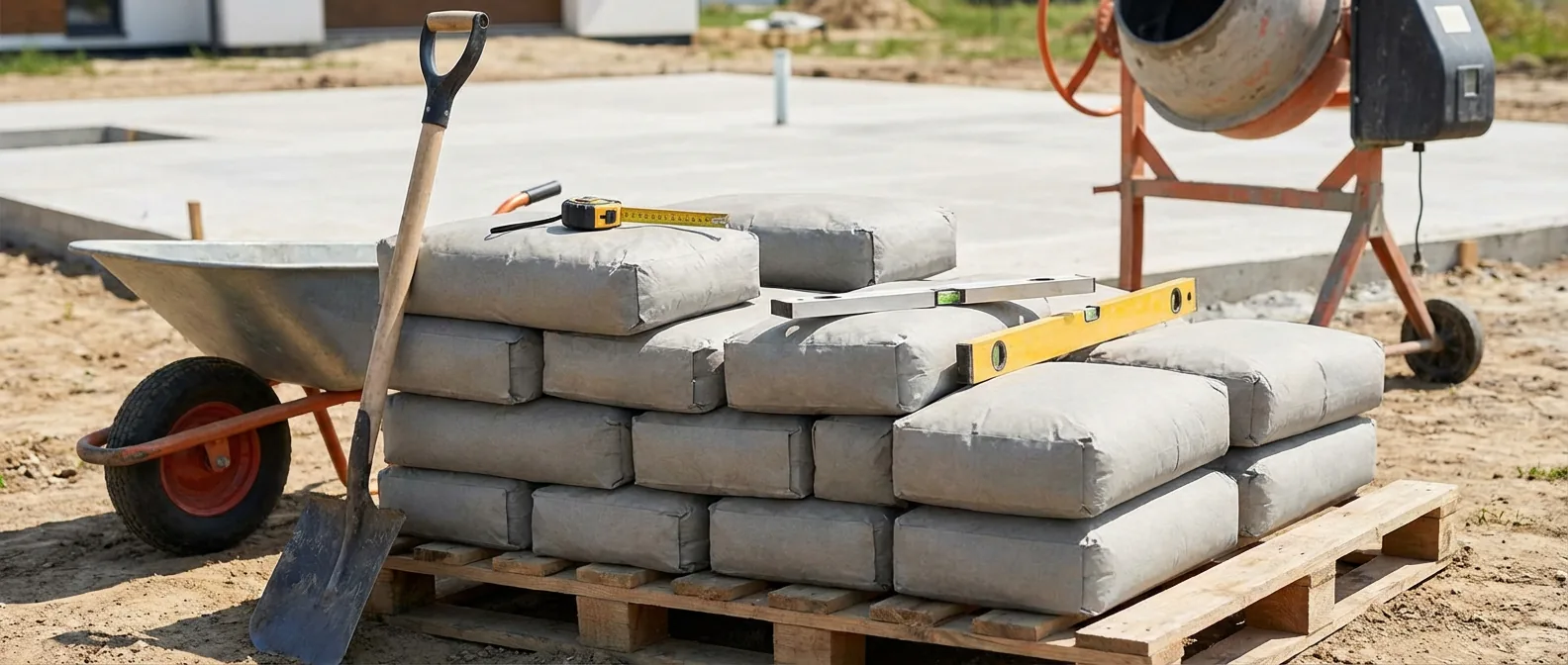
Figuring out how many bags of concrete in a cubic metre can make or break your project — order too little and you’re stalled mid-pour; too much and you waste money and materials. This comprehensive guide arms you with an industry-standard quantities calculator plus hands-on expertise so you can precisely estimate the bags of concrete or cement you need for any volume. From understanding bag sizes and mix ratios to mastering adjustments for waste, this resource empowers Melbourne Northern Suburb builders and DIYers to get it right, first time.
Understanding Concrete Quantities and Measurement Units
What Is a Cubic Metre and Why Is It Used?
A cubic metre (m³) is a standard unit of volume used globally to measure concrete and other materials. It represents a cube measuring 1 metre on each side, defining volume rather than weight. Concrete quantity calculations rely on cubic metres to estimate the amount of material needed accurately.
Using cubic metres simplifies ordering and mixing because concrete components—cement, sand, aggregate, and water—are combined to create a volume rather than just weight. This approach is consistent with Australian Standards (such as AS 3600), ensuring structural reliability and construction compliance.
Different Sizes and Types of Concrete and Cement Bags (20kg, 25kg)
Concrete and cement bags come in common weights tailored for different users and mix requirements, the most typical sizes being 20kg and 25kg bags. These weights influence how many bags you’ll need per cubic metre.
| Bag Size | Weight per Bag (kg) | Typical Use | Approx. Yield (litres) |
|---|---|---|---|
| 20kg | 20 | Small DIY jobs, minor repairs | Approx. 12–15 L of mixed concrete |
| 25kg | 25 | Commercial and residential construction | Approx. 15–18 L of mixed concrete |
Choosing the right bag size directly impacts volume calculation and ensures consistency throughout the project.
General Purpose (GP) Cement and Its Role in Concrete Mix
General Purpose (GP) cement is the most widely used cement type in concrete mixes, commonly available in both 20kg and 25kg bags. GP cement’s versatility makes it ideal for structural elements, slabs, and footings that demand standard strength and hydration properties.
GP cement binds sand and aggregate with water in proportions that affect concrete strength, workability, and durability. Understanding the cement content per cubic metre when using GP cement allows precise estimation for ordering bags.
Common Mix Ratios and Their Impact on Quantity Estimation
The concrete mix ratio specifies the relative volumes of cement, sand, and aggregate and is typically denoted as Cement : Sand : Aggregate. Common ratios include 1:2:3, 1:3:6, and 1:1.5:3 for varying strength grades. These ratios greatly affect the number of bags of cement and overall volume calculation as they dictate cement volume per cubic metre.
| Mix Ratio (Cement : Sand : Aggregate) | Concrete Strength Grade | Cement Content per m³ (kg) | Estimated Bags of 20kg Cement per m³ |
|---|---|---|---|
| 1:2:3 | Medium strength (25 MPa) | 320–350 | 16–18 bags |
| 1:3:6 | Low strength (15 MPa) | 200–220 | 10–11 bags |
| 1:1.5:3 | High strength (30 MPa) | 380–400 | 19–20 bags |
Precise quantity estimation hinges on selecting the correct mix for your project’s structural demands. Proper estimation starts with foundation knowledge—our site preparation essentials before concrete slab installation guide will help ensure accurate volume and bag calculations.
With these fundamentals in place, let’s dive into the core of concrete bag calculation methodologies.
Calculating Bags of Concrete Needed for One Cubic Metre
Step-by-Step Methodology for Quantity Calculation
- Determine the volume of concrete required in cubic metres (m³).
- Identify the mix ratio to be used (e.g., 1:2:3).
- Calculate the cement content in kilograms per m³ based on the mix ratio.
- Convert cement weight to number of bags using bag size (e.g., 20kg).
- Add a waste allowance typically 5-10% depending on job size and site conditions.
Factors Affecting Quantity: Bag Weight, Mix Ratio, and Waste Allowances
Bag weight (20kg vs 25kg) directly impacts the total bags required. For example, 350kg of cement equates to 17.5 bags if using 20kg bags but only 14 bags if 25kg.
Mix ratio variations affect how much cement is needed per cubic metre, as summarized previously. Higher strength mixes require more cement, increasing the bags needed.
Waste allowances address unavoidable spillage, moisture loss, or measurement inaccuracies on site. Industry practice recommends adding 5-10% extra bags to your total calculation, depending on the project’s complexity and site environment.
Conversion Examples: Bags Needed for Different Mixes and Bag Sizes
Consider a 1:2:3 mix ratio requiring roughly 350 kg of cement per cubic metre.
- For 20kg bags: 350 ÷ 20 = 17.5 bags → add 5% waste = 18.4, rounded to 19 bags.
- For 25kg bags: 350 ÷ 25 = 14 bags → add 5% waste = 14.7, rounded to 15 bags.
For a lower strength 1:3:6 mix needing 215 kg cement per cubic metre:
- 20kg bags: 215 ÷ 20 = 10.75 → add 5% waste = 11.3, round up to 12 bags
- 25kg bags: 215 ÷ 25 = 8.6 → add 5% waste = 9 bags
Typical Quantities for 20kg and 25kg Bags of Cement per m³
| Mix Ratio | Bag Size (kg) | Bags per Cubic Metre (Including 5% Waste) |
|---|---|---|
| 1:2:3 | 20 | 19 |
| 1:2:3 | 25 | 15 |
| 1:3:6 | 20 | 12 |
| 1:3:6 | 25 | 9 |
Additionally, cement densities and hydration reactions slightly reduce volume after mixing but these effects are standardised in conventional calculations.
For comprehensive technical backing, the Cement Concrete & Aggregates Australia offers detailed specs on bag sizes and mix proportions.
Next, see how to use an interactive calculator to streamline these computations efficiently in your planning.
Using a Quantities Calculator for Concrete Estimation
Features and Benefits of an Interactive Concrete Quantities Calculator
A quantities calculator accelerates precise volume-to-bag conversions by automating complex math, capturing variables like bag size, mix ratio, and waste allowance. Key features include:
- Input fields for volume (m³) and slab dimensions
- Selection for bag weight (20kg, 25kg)
- Preset common mix ratios or custom input options
- Automatic waste percentage inclusion with manual override
- Instant display of required number of cement bags and total concrete volume
- Printable or downloadable results summary
This tool minimizes human error and speeds material ordering decisions.
How to Input Dimensions and Mix Specifications into the Calculator
Start by entering the desired concrete volume or specific slab length, width, and depth to calculate volume. Select the bag size you plan to purchase and choose the mix ratio suitable for your project purpose (e.g., 1:2:3 for standard slabs). Adjust the waste allowance based on your site conditions — typically 5% for experienced contractors or up to 10% for larger, complex pours.
Interpreting Calculator Results and Making Adjustments
The calculator output gives a recommended number of bags rounded up to the nearest whole bag, ensuring no shortfalls. Results also detail total kilograms of cement, allowing for price comparisons. You can tweak mix designs or bag sizes and instantly see changes in quantities, enhancing planning flexibility.
Printable Charts and Downloadable Materials for On-Site Use
Many calculators also offer downloadable PDF sheets or printable charts summarising quantities for different bag sizes and mix ratios—valuable for builders on-site and foremen to coordinate deliveries effectively.
For those considering decorative or coloured concrete finishes, see our detailed guide on coloured concrete driveway options in Melbourne to understand cost implications and aesthetic choices.
Having mastered the calculation basics and tool use, let’s explore special scenarios that affect concrete bag estimation.
Special Use Cases and Variations in Concrete Bag Estimation
Estimating Bags for Concrete Slabs Using a Concrete Slab Calculator
Concrete slabs often require specific thicknesses and reinforcement, affecting volume. A concrete slab calculator guides users through entering slab length, width, and thickness, outputting exact concrete volume and bag counts based on your selected mix and bag size. Factor in slab shape variations or step downs, as these impact volume calculations.
Calculating GP Cement Bags for Custom Mix Ratios and Applications
Some applications, such as footings versus pathways, may demand adjusted mix ratios for strength or workability. For instance, a 1:1:2 mix might be used for high-strength footings, increasing cement content notably. Use your quantities calculator to enter these custom ratios or consult manufacturer guidelines to refine estimates.
Adjusting Quantities for Different Construction Scenarios (DIY vs Contractors)
DIY builders might benefit from ordering slightly higher waste allowances (up to 10%) to account for inexperience or unexpected site conditions. Contractors with experienced crews often apply 5% waste allowances, leveraging better site management and optimized pouring techniques.
“Ordering precisely reduces delays and avoids material shortages, but careful waste management prevents overspending and unnecessary stockpiling.” – Construction industry expert, Melbourne Northern Suburb
Addressing Common Estimation Errors and How to Avoid Them
- Failing to adjust for waste allowance—always add 5-10% extra bags
- Confusing volume (cubic metres) with weight—bag counts are based on weight conversions
- Neglecting different bag sizes or bag weight variations from suppliers
- Ignoring moisture content effects, especially in humid climates, which can affect volume and mix consistency
- Incorrectly measuring slab dimensions or misreading calculator inputs
Understanding specific project costs, such as those for coloured concrete driveways in Melbourne, can help tailor quantity and budget estimations accurately.
Complement your calculations with practical application by visiting our step-by-step guide to pouring a concrete slab for a shed for relevant on-site insights.
Additionally, when budgeting, refer to our concrete slab cost guide in Melbourne to understand pricing alongside material quantity calculations.
FAQs and Troubleshooting for Concrete Quantity Estimation
How Do I Figure Out How Much Concrete I Need for My Project?
Measure your project dimensions accurately—length, width, and depth—to calculate volume in cubic metres. Using your desired mix ratio and bag size, apply the quantities calculator or manual formula to estimate the number of bags. Always add a waste allowance (recommended 5-10%) for material losses.
How Many Bags of Cement for 1 Cubic Meter in Different Conditions?
Cement bag requirements vary by mix ratio and bag size. For a 1:2:3 mix, expect approximately 19 bags of 20kg cement or 15 bags of 25kg cement per cubic metre, including waste. Lower strength mixes require fewer bags. Adjust for specialty mixes or environmental factors as needed.
What Is the Waste Allowance Percentage When Ordering Bags?
Standard practice is 5-10%, depending on job complexity, site conditions, and operator experience. For controlled commercial projects, 5% waste is typical, whereas DIY jobs may require up to 10% extra to accommodate spillage, incorrect mixing, or minor volume miscalculations.
Can I Use the Calculator for Other Concrete Mixtures Like High Strength or Fast-Setting?
Yes, most calculators allow custom mix input to account for variations like high-strength, fast-setting, or lightweight concretes. Adjust cement ratios and materials accordingly. However, consult technical datasheets or professionals for precise mixes beyond standard ratios.
To address waste and ordering concerns in detail, also consider reviewing local government guidelines on material use and disposal.
Summary: Accurate estimation of how many bags of concrete in a cubic metre depends on understanding volume measurement, bag size, mix ratios, and proper waste allowances. Using a trusted quantities calculator ensures rapid, precise calculations tailored to your project size and specs. With this knowledge, Melbourne Northern Suburb builders and DIYers can order confidently, minimizing costly overages or shortages.
Ready to get exact bag counts for your next concrete project? Try our concrete required calculator today and turn estimations into rock-solid planning.
Frequently Asked Questions
What factors influence the volume of concrete yielded per bag?
The concrete volume yielded per bag depends on the bag weight, mix ratio, cement density, and hydration during mixing. Common 20kg bags typically yield around 12–15 litres, while 25kg bags yield 15–18 litres, affected by water and aggregate proportions in the mix.
How do 20kg and 25kg cement bags compare in terms of quantity needed per cubic metre?
For the same concrete mix, 20kg bags require more units per cubic metre than 25kg bags due to lower weight. For example, a standard 1:2:3 mix needs about 19 bags of 20kg cement or 15 bags of 25kg cement per cubic metre, including waste allowance.
Why is it important to include a waste allowance when calculating concrete bags?
Waste allowance accounts for material lost to spillage, measurement inaccuracies, and moisture effects. Including 5-10% extra bags prevents project delays and underordering, ensuring enough concrete for the entire job without significant shortage or excess.
Which mix ratio is best to use for calculating bags of cement for general construction?
The 1:2:3 mix ratio is commonly recommended for medium strength concrete in general construction. It balances cement, sand, and aggregate volumes, providing reliable strength and durability, and serves as a standard basis for bag quantity calculations.
Is there a difference in bag quantity calculation between DIY and professional contractors?
Yes. DIY builders typically add a higher waste allowance (around 10%) to compensate for inexperience and site variability, while professional contractors often apply a lower waste allowance (~5%) due to optimized procedures and precise measurements.
Can the concrete quantities calculator be adjusted for unusual mix ratios?
Most concrete quantities calculators support custom mix ratio inputs, allowing users to tailor bag estimates for specialized mixes like high-strength or fast-setting concrete by adjusting cement, sand, and aggregate proportions accordingly.
What is the definition of a general purpose (GP) cement bag?
A General Purpose (GP) cement bag contains cement suitable for a wide range of structural concrete applications. Available in 20kg or 25kg sizes, GP cement ensures standard strength and hydration characteristics for slabs, footings, and other common construction uses.
How many cubic metres of concrete does one 20kg bag typically cover?
One 20kg bag generally yields approximately 0.012 to 0.015 cubic metres of mixed concrete, depending on the mix ratio and water content, meaning roughly 65 to 83 such bags are needed to produce one cubic metre of concrete.