
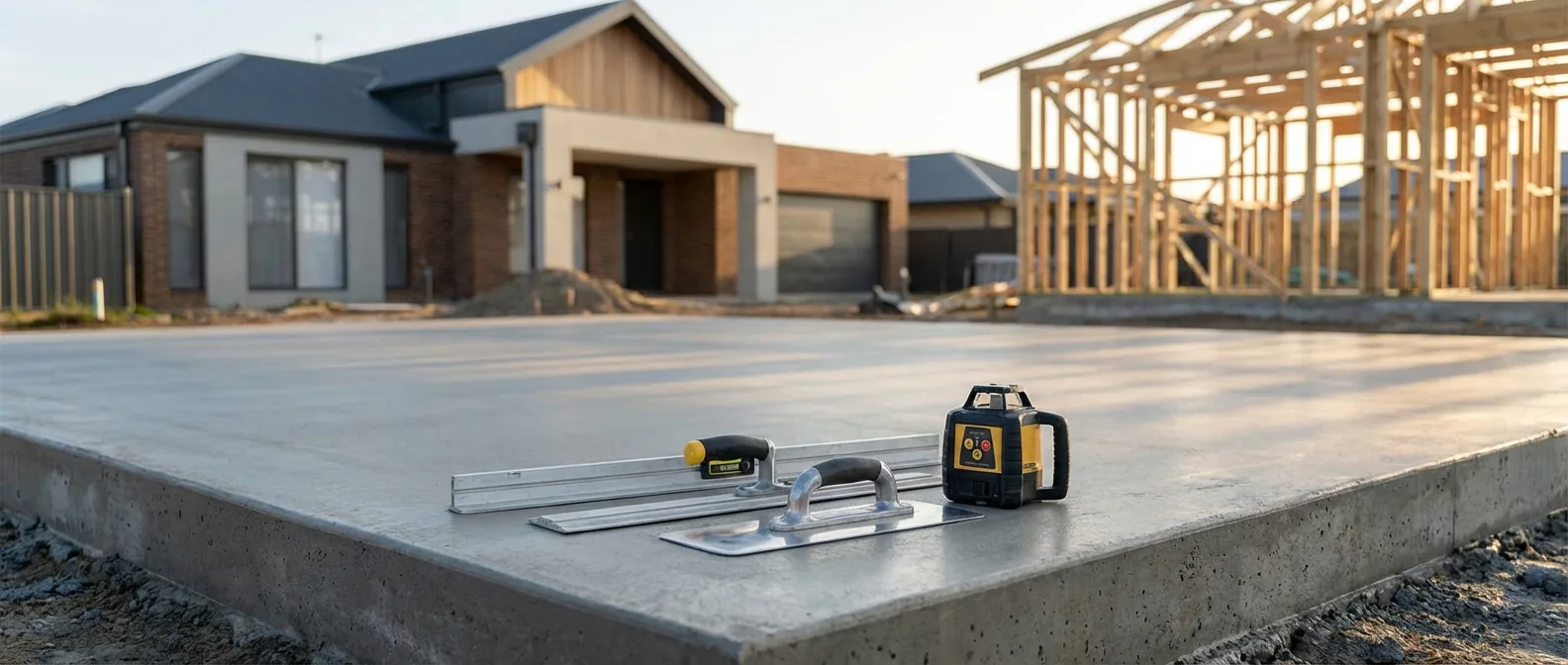
Planning to install a concrete slab for your Melbourne property in 2026? The slab cost pillar and overall slab expenses can vary widely depending on several local factors. This comprehensive guide breaks down concrete slab cost trends, material and labour pricing, slab types, and practical budgeting tips specifically for Melbourne’s northern suburbs to help you plan effectively.
Overview of Concrete Slab Costs in Melbourne (2026)
The local concrete slab rates 2026 reflect a dynamic market influenced by rising material costs and labour wage adjustments. Melbourne’s construction industry continues to evolve, with price drivers such as supply chain constraints, demand fluctuations, and regulatory requirements. Concrete slab costs, including the critical slab cost pillar pricing Melbourne, are impacted by these systemic trends, alongside site-specific conditions.
Average concrete slab costs by slab type in Melbourne vary significantly:
- Garden shed slabs typically range from AUD 90 to 130 per m2, depending on thickness and reinforcement.
- Garage concrete pads can cost between AUD 110 to 160 per m2, given heavier load requirements.
- Structural pillar slabs used as foundational supports tend to demand specialised materials and labour, resulting in slab cost pillar rates upwards of AUD 180 per m2.
A deep dive into pricing trends concrete in Melbourne reveals that cement and aggregate price surges have been influential. This reflects broader market shifts, with some cost stabilization expected in the latter half of 2026. For a broader perspective, it helps to explore varying applications such as coloured concrete driveway options in Melbourne, which illustrate contrasting cost and aesthetic considerations in local concrete projects.
Key factors influencing slab cost pillar prices include slab thickness, reinforcement needs, and site accessibility, all critical in Melbourne’s diverse northern suburban environments.
Understanding these foundational elements sets the stage for a focused cost analysis moving forward.
Detailed Breakdown of Material and Labour Costs
The material costs component of a concrete slab significantly influences overall budgeting. For Melbourne in 2026, the following approximate prices apply:
| Material | Cost Range (AUD) | Notes |
|---|---|---|
| Cement (per tonne) | 250 – 320 | Prices influenced by import costs and local demand |
| Aggregates (per tonne) | 35 – 50 | Crushed rock, sand — variable by supplier location |
| Reinforcement Bars (per tonne) | 900 – 1100 | Steel prices fluctuate; sourced locally and interstate |
Labour costs represent a substantial share of the overall building slab cost. According to Australian Bureau of Statistics (ABS) 2026 wage data, Melbourne construction labour rates have risen 5% compared to 2025 averages, with typical rates between AUD 65 and 85 per hour depending on site complexity and worker experience.
Other key overheads include:
- Transport costs: Concrete delivery for bulky materials can add AUD 150 to 300 depending on distance to northern suburbs sites.
- Equipment hire: Mixing, pumping, or vibrating machinery rental can add AUD 100 to 250 per day.
- Permits and inspections: Depending on Melbourne council requirements, these may cost between AUD 200 and 600.
Effective site preparation is critical in managing slab cost pillars, and challenges such as soil condition or terrain grading can significantly affect both labour and material expenses. For detailed insights, see our comprehensive site preparation essentials before slab construction in Melbourne projects.
This segmented cost view clarifies which elements dominate slab budgets and how Melbourne’s local market affects pricing.
Concrete Slab Cost per Square Metre and per Cubic Metre in Melbourne
The cost of a slab can be calculated on a per square metre (m2) or per cubic metre (m3) basis. Understanding the distinction helps homeowners and builders budget accurately:
- Concrete slab cost per m2 reflects the surface area to be covered, incorporating thickness and finishing.
- Concrete slab cost per m3 accounts for volume—thickness multiplied by area—and is vital when ordering materials.
| Slab Thickness | Cost per m2 (AUD) | Cost per m3 (AUD) | Typical Applications |
|---|---|---|---|
| 75 mm (0.075m) | 90 – 110 | 1200 – 1400 | Lightweight garden slabs, small sheds |
| 100 mm (0.1m) | 110 – 140 | 1100 – 1300 | Garage slabs, general purpose pads |
| 150 mm (0.15m) | 150 – 190 | 1000 – 1200 | Structural slabs, pillars |
The cost variability by slab thickness and grade is a key factor. Thicker slabs use more cement, aggregate, and reinforcement, raising the material cost per square metre but often lowering per cubic metre costs due to economies of scale. Additionally, slab grade specifying desired compressive strength (e.g., 20 MPa vs 32 MPa) influences material selection and price.
When comparing regional pricing adjustments for Melbourne vs other Australian cities, Melbourne slab costs sit towards the mid to higher range due to urban demand and labour rates, surpassing many regional centres but generally lower than Sydney’s peak market. For precise budgeting, understanding how many bags of concrete per cubic metre are required is fundamental, as detailed in our guide on calculating bags of concrete per cubic metre.
These sizing and cost metrics provide a robust framework for projecting Melbourne slab expenses.
Specific Slab Use Cases and Their Cost Implications
Different slab applications incur varying costs — knowing this helps tailor budgets to project scope. Here’s a detailed look at common Melbourne slab types:
Garden Shed Concrete Slab Cost and Size Considerations
Sheds usually require slabs between 75mm and 100mm thick, with minimal reinforcement unless housing heavy equipment. The garden shed concrete slab cost per m2 in Melbourne’s northern suburbs averages AUD 90-130. A smaller 3 x 3 m shed slab might cost around AUD 900 to 1,170 in total. Factors such as slab finish and local soil bearing capacity influence these figures.
For a comprehensive walkthrough, readers can reference our step-by-step guide to pouring a concrete slab for sheds, which complements this cost-focused guide with practical shed slab preparation tips.
Concrete Pad for Garage — Cost Factors and Typical Estimates
Garage slabs require heavier duty construction with thicker concrete (100mm to 150mm) and steel mesh or rebar reinforcement to accommodate vehicle loads. Melbourne concrete slab for garage costs range from AUD 110 to 160 per m2. A typical double garage pad (6 x 6 m) can cost between AUD 3,960 and 5,760.
Load capacity, access for machinery, and concrete finish types (e.g., broom finish vs smooth) further differentiate pricing.
Slab Cost Pillar — Specialized Pricing for Structural Supports
Slab cost pillar pricing refers to slabs designed for vertical structural supports, where higher strength concrete, increased thickness, and specialized formwork escalate costs. These slabs often exceed AUD 180 per m2 in Melbourne. Labour-intensive formwork and reinforcement installation add to the labour component.
These costs require accounting for specialised expertise and sometimes permits that add to the total building slab cost. Beyond standard slabs, this category accounts for critical structural integrity in residential and commercial builds.
While structural slab costs are crucial, concrete slabs in decorative applications like coloured driveways offer a contrasting cost and aesthetic perspective.
Next, we explore tools to simplify estimating these concrete slab costs efficiently.
Using Concrete Slab Cost Calculators in Australia
Concrete slab cost calculators are invaluable for Melbourne homeowners seeking quick, tailored estimates. Key features of quality calculators include:
- User input of slab dimensions (length, width, thickness)
- Material grade selection (e.g., standard, high strength)
- Inclusion of labour cost modifiers based on region
- Allowance for additional costs such as reinforcement or finishes
- Potential to handle multiple slab types (garden shed, garage, pillar)
To use a concrete slab cost calculator for Melbourne projects effectively:
- Measure the slabbing area accurately and determine desired thickness.
- Select concrete grade and reinforcement options relevant to your slab type.
- Input local labour rates or choose Melbourne as your location if the tool supports geo-targeting.
- Review the breakdown of material, labour, and ancillary costs the calculator provides.
- Compare different scenarios by adjusting thickness or finish options to align costs with your budget.
Recommended online calculators tailored for the Australian market include:
These tools provide clear transparency on variations in concrete slab cost per m2 and allow quick adjustments to see the impact of design choices.
Understanding these digital cost assessment methods supports smarter budgeting and informed decision-making for Melbourne projects.
Comparative Cost Scenarios and Budgeting Tips for Melbourne Homeowners
When deciding between slab construction options, comparing costs and planning a robust budget is essential. Let’s examine common cost scenarios:
| Slab Type | Cost Range (AUD per m2) | Pros | Cons |
|---|---|---|---|
| Precast Concrete Slabs | 160 – 220 | Faster installation, factory controlled quality | Higher upfront cost, transport limitations |
| Cast-In-Place Concrete Slabs | 110 – 180 | Customisable, flexible onsite adjustments | Longer cure time, weather dependent scheduling |
Budgeting tips specific to Melbourne’s northern suburbs include:
- Plan for contingency: Allocate at least 10-15% extra funds to cover unexpected site challenges or price fluctuations.
- Schedule smartly: Avoid Melbourne’s rainy seasons when concrete pouring can be delayed, increasing labour costs.
- Engage multiple quotes: Obtain several detailed slab quotes from local builders to benchmark prices fairly.
- Consider slab finish: Simpler broom or exposed aggregate finishes are more affordable than polished or decorative treatments.
- Work with local suppliers: Sourcing materials nearby may reduce transport and logistic costs.
Melbourne homeowners who plan carefully and use tools like the concrete slab cost calculator can save substantially.
FAQs on Concrete Slab Costs in Melbourne
How Much Would a Concrete Slab Cost for Small vs Large Projects?
Small slab projects (under 20 m2) often have a higher per square metre cost due to fixed labour overheads. Larger slabs benefit from economies of scale, reducing costs per m2 but increasing overall budget proportional to size.
What Influences the Garden Shed Slab Cost per m2?
Thickness, reinforcement, site accessibility, and concrete finish significantly impact garden shed slab costs. Unstable soil or restricted site access in Melbourne’s northern suburbs can increase costs.
Are There Seasonal Fluctuations Affecting Slab Costs in Melbourne?
Yes. Winter months often see higher labour costs and longer curing times due to cooler, wetter conditions. Planning pours during drier months can optimize costs.
How to Interpret Quotes from Concrete Suppliers and Builders?
Look for detailed breakdowns of material, labour, equipment hire, and permits. Ensure permit costs specific to your local council are included, and clarify if transport beyond standard distances has surcharges.
For further regulation details, see Victorian Building Authority (VBA) resources, which clarify permit and compliance requirements impacting building slab cost in Melbourne.
By leveraging this 2026-specific, Melbourne-centred guide on how much does a concrete slab cost, you’re well-equipped to effectively budget and plan your next concrete slab project with confidence.
Ready to get your slab project underway? Consult a local concrete specialist today to obtain tailored quotes or explore our recommended calculators to estimate your precise slab cost pillar and slab investment for 2026 Melbourne markets.
Frequently Asked Questions
What factors determine the price of a slab cost pillar in Melbourne?
The slab cost pillar in Melbourne depends on slab thickness, reinforcement needs, concrete strength, site accessibility, and labour intensity. Specialized formwork and permits also increase costs, with pillar slabs typically costing over AUD 180 per m2 due to their structural requirements.
How does Melbourne’s concrete slab cost compare to other Australian cities?
Melbourne’s concrete slab costs are generally mid to high range compared to other Australian cities. Costs reflect urban demand and labour rates that exceed many regional areas but usually remain below Sydney’s peak pricing levels.
Which slab type is more cost-effective: precast or cast-in-place concrete slabs?
Cast-in-place concrete slabs are usually more cost-effective due to lower upfront expenses and flexible onsite installation. Precast slabs cost more upfront but offer faster installation and consistent factory quality.
What is the average concrete slab cost per square metre for a garden shed in Melbourne?
The average garden shed slab cost per m2 in Melbourne ranges from AUD 90 to 130, depending on slab thickness, reinforcement, and site conditions. Smaller sheds have proportionally higher costs per m2 due to labour overhead.
When is the best time to schedule concrete slab pouring in Melbourne for cost savings?
Scheduling concrete pouring during Melbourne’s drier months, typically spring and summer, reduces labour delays and curing times. Avoiding wet and colder seasons like winter can lower labour costs and prevent weather-related disruptions.
How can a concrete slab cost calculator help Melbourne homeowners?
A concrete slab cost calculator helps estimate material, labour, and ancillary costs by inputting slab dimensions, thickness, and concrete grade. It provides tailored cost breakdowns for different slab types, improving budgeting accuracy for Melbourne projects.
Why do labour costs significantly impact the building slab cost in Melbourne?
Labour costs impact building slab costs due to Melbourne’s rising wages, site complexity, and skilled installer demand. Labour rates typically range from AUD 65 to 85 per hour, reflecting the specialised work required for quality slab construction.
Is there a difference in concrete slab cost per m2 versus per m3 for budgeting?
Yes. Cost per m2 reflects surface area coverage including slab thickness and finish, while cost per m3 accounts for volume, essential for material ordering. Both metrics help accurately budget but serve different calculation needs.