
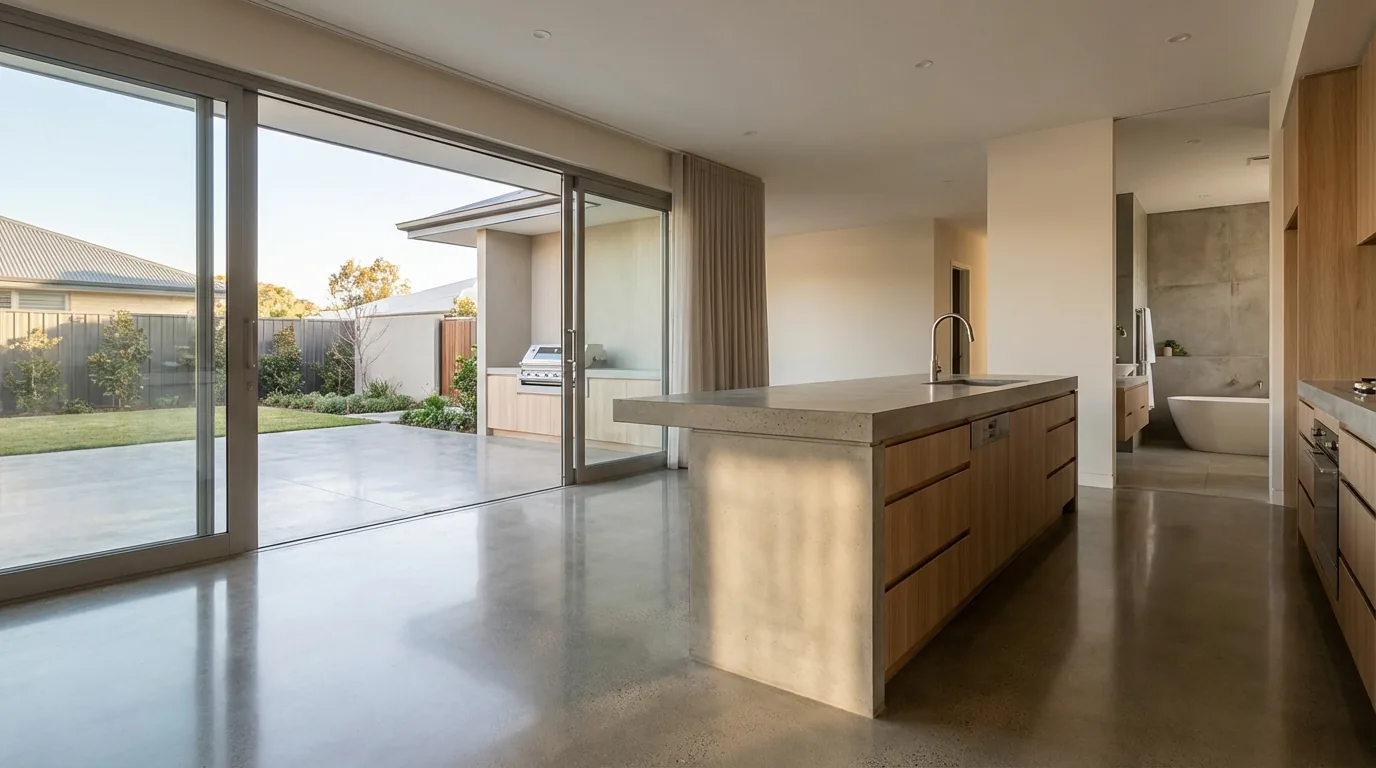
Polished concrete is redefining the indoor flooring landscape in Melbourne’s northern suburbs, combining industrial durability with modern aesthetics. This article dives deep into the indoor uses of polished concrete—specifically in kitchens, bathrooms, and other living spaces—exploring how this versatile surface elevates design while meeting practical demands.
Overview of Indoor Uses of Polished Concrete in Residential Spaces
Definition and Characteristics of Polished Concrete Floors
Polished concrete floors consist of a concrete slab that undergoes a thorough grinding and polishing process to expose aggregates and achieve a smooth, shiny surface. The process involves progressively finer diamond polishing pads, densifiers that harden the surface chemically, and sealants to protect the finish. Key characteristics include high durability, minimal porosity after sealing, and a seamless, reflective sheen that enhances light reflection indoors.
The indoor concrete flooring produced this way is both decorative and functional. Unlike traditional concrete, polished concrete floors indoors feature varying levels of gloss and texture, from matte finishes to high-gloss mirror-like surfaces, adaptable to residential aesthetics.
Benefits of Using Polished Concrete Indoors
Using polished concrete for interior concrete floors offers numerous benefits distinct to residential environments. It provides superior durability against scratches, stains, and wear compared to many traditional flooring options. The density and sealing process confer excellent moisture resistance, critical for indoor spaces prone to humidity or spills—particularly kitchens and bathrooms.
Additionally, polished concrete is prized for its low maintenance requirements, reducing the need for frequent waxing or refinishing. From an environmental standpoint, it utilises existing concrete slabs, minimising material waste and supporting sustainable construction practices recognized by bodies like the Cement Concrete & Aggregates Australia (CCAA).
Comparison of Indoor vs Outdoor Polished Concrete Applications (brief contrast)
While polished concrete boasts performance both indoors and outdoors, the finished concrete floors inside homes prioritize aesthetics, slip resistance, and integration with heated flooring systems. Outdoor surfaces, including polished concrete outer areas, require tougher abrasion resistance and weatherproofing treatments such as outdoor epoxy resin coatings or outdoor epoxy flooring to withstand UV exposure and temperature fluctuations.
In contrast, indoor applications have a smoother finish and higher gloss levels, focusing on design versatility and comfort. This subtle difference ensures polished concrete flourishes as a flooring choice in areas like kitchens and bathrooms, where hygiene and moisture control are paramount.
Common Types of Finished Concrete Floors for Interiors
Indoor polished concrete floors come in various finishes including:
- Matte or satin finishes for a muted natural stone look.
- High-gloss polished for a dramatic reflective effect.
- Exposed aggregate finishes showcasing decorative pebbles or glass fragments embedded within.
- Dyed or coloured concrete with acid stains or integral pigments for vibrant tones.
This array of options allows homeowners and designers to select floorings that fit the mood and function of individual rooms perfectly.
Transitioning from this foundation, let’s explore how these characteristics manifest in the home’s key living hubs, starting with kitchens.
Polished Concrete in Kitchens: Functionality and Style
Advantages of Polished Concrete Kitchen Floors (durability, hygiene)
The polished concrete kitchen floor is increasingly popular for its resilience against heavy foot traffic, dropped utensils, and spills—conditions that can wear down other floor types rapidly. Concrete’s inherent hardness resists dents and chips, while the polished surface is non-porous after proper sealing, preventing stains from oils, wine, or food coloring.
Moreover, its seamless finish inhibits harboring dirt and bacteria, enhancing kitchen hygiene. Surfaces with polished concrete maintain their integrity over years, with minimal need for deep cleaning or topical repairs.
Design Trends and Aesthetic Options for Kitchen Concrete Floors
Modern indoor concrete flooring in kitchens embraces customization like never before. Homeowners in Melbourne’s northern suburbs show a preference for:
- Neutral greys with subtle aggregate exposure for an industrial yet warm appeal.
- Warm earth tones and integral dyes mimicking natural stone or wood hues.
- Geometric patterns and borders created by scoring or staining to delineate zones.
Finishes range from a soft matte to a glass-like sheen, compatible with cabinetry styles from ultra-modern to rustic farmhouse. The versatility of polished concrete allows pairing with both sleek stainless steel appliances and textured timber details.
Installation Process for Polished Concrete in Kitchens
Installing a polished concrete kitchen floor typically follows these key steps:
- Surface Preparation: Existing floors are inspected and any cracks or unevenness repaired; if overlaid, primers ensure bonding.
- Grinding: Using progressively finer diamond grinding pads (starting from coarse to fine grits), the concrete slab is ground to expose the desired level of aggregate.
- Densification: Application of a liquid densifier hardens the concrete surface, increasing abrasion resistance.
- Polishing: Multiple polishing stages are performed to achieve the target gloss level.
- Sealing: A penetrating or topical sealer is applied to protect against stains and moisture, tailored for kitchen use.
This process ensures the floor is both visually appealing and functionally robust for the demands of a kitchen.
Maintenance Tips for Polished Concrete Kitchen Flooring
- Use pH-neutral cleaners to avoid etching the surface.
- Promptly wipe spills to prevent potential discoloration.
- Reseal floors every 2-3 years, depending on foot traffic intensity.
- Place protective pads under heavy appliances or cabinets to prevent scratches.
With minimal maintenance, polished concrete floors retain their shine and hygienic properties for decades.
Next, let’s examine why polished concrete stands out in one of the home’s most moisture-sensitive rooms — the bathroom.
Polished Concrete Bathrooms: Moisture Resistance & Hygiene
Why Polished Concrete is Ideal for Bathroom Floors
The polished concrete bathroom floor excels in managing indoor moisture challenges. Once densified and sealed, concrete becomes highly resistant to water penetration, thwarting mold and mildew growth common in humid environments.
Its seamless finish eliminates grout lines found in tile floors that often crack and harbor bacteria. This promotes a hygienic, easy-to-clean surface meeting Australian bathroom safety standards.
Polished Concrete Bathroom Floor Design Inspirations
Bathroom concrete floors often feature soft, muted tones with a matte or satin finish to reduce slipperiness. Designers integrate features like:
- Non-slip textures achieved through etching or applying slip-resistant sealants.
- Custom aggregates like quartz or recycled glass for subtle sparkle.
- Integrated floor drains that blend into the surface seamlessly.
Such design choices balance safety with soothing aesthetics, essential for wet areas.
Sealing and Slip Resistance Considerations in Bathrooms
Bathroom floors require special attention to slipperiness. To ensure safe use, it is advisable to use sealers certified for slip resistance by authorities such as Safe Work Australia. These coatings maintain a non-slip surface while preserving the polished concrete’s aesthetic appeal.
The sealing layer also protects against water ingress, preventing damage to the slab and prolonging floor life.
Maintenance and Longevity of Polished Concrete Bathroom Floors
- Regular cleaning with mild detergents improves hygiene without damaging finish.
- Periodic resealing every 1-2 years maintains moisture barrier integrity.
- Promptly addressing any surface cracks prevents water infiltration.
With careful maintenance, polished concrete bathroom floors offer decades of reliable, attractive service.
Moving beyond wet zones, polished concrete also brings unique benefits to living rooms, hallways, and other interior spaces.
Polished Concrete for Other Interior Spaces: Living Rooms, Hallways, and More
Comfort and Aesthetic Benefits in Living Areas
In living rooms and hallways, polished concrete floors provide a sleek, modern canvas for various décor styles. While concrete’s hardness is often a concern, pairing with area rugs or underfloor heating softens the sensory experience.
Concrete’s reflective quality enhances natural light, giving rooms a spacious feel. Its neutral tone complements wood, metal, and textile furnishings.
Polished Concrete’s Adaptability to Different Interior Styles
From minimalist and industrial to Scandinavian and contemporary styles, interior concrete floors can be tailored with pigments, aggregates, textures, and finishes. Matte surfaces deliver understated elegance; exposed aggregates add rustic charm.
This adaptability makes polished concrete a preferred choice for multi-purpose spaces in modern Melbourne homes, aligning with evolving design preferences as noted by the Australian Interior Design Association.
Practical Considerations: Noise, Temperature, and Comfort
Concrete floors can reflect sound, posing acoustic challenges in open-plan living. These can be mitigated with soft furnishings and acoustic panels. Many homeowners address concrete’s cool temperature through integration with underfloor heating, enhancing thermal comfort significantly.
Integration with Underfloor Heating and Other Modern Systems
Polished concrete’s excellent thermal mass makes it ideal to use with radiant floor heating, efficiently retaining and radiating warmth. This synergy reduces energy costs and increases indoor comfort year-round.
Modern installations also accommodate electrical and smart-home systems discreetly beneath the floor surface without compromising aesthetics.
Now, let’s review the detailed installation and finishing process, vital to achieving the desired polished concrete indoor floor performance.
Installation and Finishing Process of Indoor Polished Concrete Floors
- Assessment and Preparation: Inspect the existing concrete slab, perform necessary repairs, and prepare the surface by cleaning.
- Grinding: Begin with coarse diamond grinders to remove the top surface, exposing aggregates as desired.
- Densification: Apply a chemical densifier to react with free lime in the concrete, enhancing surface hardness and durability.
- Polishing Stages: Progressively finer grits—from 200 to over 3,000—are used to polish the surface to the specified gloss level.
- Sealing and Finishing: Apply sealants which penetrate or form a protective top layer, providing moisture resistance and stain protection. Add optional protective finishes for enhanced slip resistance or gloss.
Compared to outdoor polishing, indoor finishing focuses on finer gloss, smoother texture, and reduced abrasion resistance needs, prioritizing comfort and style over extreme weather durability. For a closer look at exterior options, consider the coloured concrete driveway options.
Unlike outdoor or industrial applications, timeframes indoors typically range from 3 to 7 days, depending on floor size and complexity. For a detailed breakdown of costs, finishing techniques, and care considerations, refer to our comprehensive guide on polished concrete floors: costs, finishes & care.
Comparing Polished Concrete to Other Indoor Flooring Options
| Flooring Type | Durability | Maintenance | Cost | Aesthetic Flexibility | Environmental Impact |
|---|---|---|---|---|---|
| Polished Concrete | High – excellent abrasion resistance and longevity | Low – infrequent resealing, easy cleaning | Moderate initial, low lifecycle | High – customizable colours and textures | Low – utilises existing slab, sustainable |
| Hardwood | Moderate – prone to dents and scratches | High – regular refinishing required | High initial and maintenance costs | Moderate – limited by wood species and finishes | Moderate – harvested resource impact |
| Tile | High – scratch and water resistant | Moderate – grout maintenance needed | Moderate to high | High – vast design options | High – energy-intensive manufacture |
| Indoor Epoxy Flooring | High – chemical resistant and wear resistant | Moderate – may need periodic re-coating | Moderate | Moderate – typically solid colours | Varies – some environmental concerns with resins |
When comparing indoor flooring options, understanding the differences in durability and maintenance between epoxy vs polished concrete flooring can guide better choices depending on room function and lifestyle.
Polished concrete often outperforms alternatives in lifecycle costs and sustainability, as verified by a 2023 analysis from the US Green Building Council. This underscores its growing appeal in eco-conscious residential construction.
Design and Practical Tips for Maximizing Indoor Polished Concrete Benefits
- Colour Customization: Use integral pigments or acid stains to complement room palettes. Consider natural greys for minimalistic schemes or warm tones to soften industrial edges.
- Texture Variation: Integrate aggregate exposure or light scoring to create visual interest and prevent slip hazards.
- Slip Resistance Enhancements: Apply matt or non-slip sealers in wet-prone areas like kitchens or bathrooms without sacrificing style.
- Finishing Selection: Choose between matte, satin, or high-gloss finishes depending on the desired reflectivity and room function.
- Harmonising with Decor: Pair polished concrete floors with complementary materials such as timber furniture, metal accents, and neutral textiles to create cohesive interiors.
For expanded inspiration featuring current local trends, refer to resources detailing the best coloured concrete options in Melbourne, inspiring indoor-outdoor design cohesion.
Common Challenges and Solutions in Using Polished Concrete Indoors
Tackling Cracks and Surface Imperfections
Cracks may appear due to slab movement or installation errors. Solutions include epoxy crack injection or grinding and refinishing smaller affected areas. Full slab replacement is rare.
Managing Moisture and Humidity in Interior Concrete Floors
Proper sealing and moisture barrier installation during construction prevent humidity issues. Regular inspections help spot early signs of water damage.
Addressing Coldness and Hardness: Comfort Solutions
Installation of underfloor heating and use of area rugs improve thermal and tactile comfort. Polished concrete also integrates well with radiant systems, enhancing warmth retention without damage risk.
Repair and Refinishing Techniques
Routine maintenance involves cleaning with pH-neutral detergents and periodic resealing. Large wear areas benefit from partial repolishing or overlay applications. Specialist contractors provide refinishing services to restore sheen and durability.
Top Tip: Consult certified installers for repair and maintenance to preserve warranties and surface integrity.
Frequently Asked Questions About Indoor Polished Concrete Flooring
Is polished concrete flooring cold and hard?
Polished concrete naturally has a hard surface and cooler feel; however, combining it with underfloor heating systems and soft furnishings mitigates these effects, delivering comfortable indoor conditions.
How often does indoor polished concrete need resealing?
Resealing generally occurs every 2-3 years for high-traffic areas, but less frequently in low-use rooms. Bathroom floors may require more frequent resealing due to moisture exposure.
Can polished concrete be installed over existing flooring?
Yes, but the existing substrate must be stable, level, and free of contaminants. An overlay system may be applied after appropriate surface preparation.
Are polished concrete floors safe in wet areas like kitchens and bathrooms?
When properly sealed with slip-resistant coatings or textures, polished concrete floors meet safety standards for wet indoor areas, providing both hygiene and traction.
How does the cost of indoor polished concrete flooring compare to alternatives?
Initial costs are moderate but competitive with hardwood and tile. Lifecycle costs are generally lower due to durability and reduced maintenance requirements, offering excellent long-term value.
For further detail on these topics, consulting industry standards published by the Australian Building Codes Board (ABCB) can be helpful.
Polished concrete floors bring a unique blend of durability, style, and practicality to indoor environments—from kitchens and bathrooms to living spaces—making them a top flooring choice in Melbourne’s northern suburbs. Their customization potential and long-term benefits translate into distinctive homes that stand the test of time.
Ready to transform your home with the elegance and strength of polished concrete? Contact a local expert to explore tailored solutions and installation options that will elevate your interiors beautifully.
Frequently Asked Questions
What is the process for achieving different finishes on indoor polished concrete floors?
Different finishes on indoor polished concrete floors are achieved through varying grinding grit levels and sealing types. Matte finishes use coarser grits and less sheen, while high-gloss finishes involve finer polishing stages and reflective sealants. Textures like exposed aggregate add decorative surface elements.
How does polished concrete compare to tile flooring in terms of maintenance indoors?
Polished concrete requires less maintenance than tile; it needs infrequent resealing and easy cleaning without grout upkeep. Tiles often need grout sealing and regular cleaning to prevent staining, making polished concrete a lower-maintenance indoor flooring option.
Why is slip resistance important for polished concrete in kitchens and bathrooms?
Slip resistance is crucial in kitchens and bathrooms to prevent falls in moisture-prone areas. Polished concrete achieves this through slip-resistant sealers or textured finishes, ensuring safety while maintaining the floor’s durability and appearance.
Can indoor polished concrete flooring incorporate radiant heating systems?
Yes, polished concrete is highly compatible with radiant floor heating. Its thermal mass efficiently retains and radiates heat, enhancing indoor comfort and energy efficiency when integrated beneath the flooring.
Which design styles are best complemented by polished concrete floors indoors?
Polished concrete suits a wide range of styles from minimalist and industrial to Scandinavian and contemporary. Custom pigment options and textures enable it to complement both rustic and modern interior décor themes seamlessly.
Does polished concrete indoors perform better than outdoor polished concrete?
Indoor polished concrete focuses on higher gloss, smoothness, and aesthetic appeal, while outdoor versions require tougher abrasion and weatherproof coatings. Thus, indoor polished concrete performs better in design finesse and comfort but outdoor variants excel in durability against elements.
When should homeowners consider resealing their indoor polished concrete floors?
Homeowners should reseal polished concrete floors every 2-3 years in high-traffic areas and every 1-2 years in moisture-prone rooms like bathrooms to maintain protection against stains, moisture, and wear.
What are the environmental benefits of using indoor polished concrete floors?
Indoor polished concrete reduces waste by utilizing existing slabs, minimizes the need for additional materials, and has a long lifespan, decreasing replacement frequency. These factors contribute to sustainable residential building practices.