
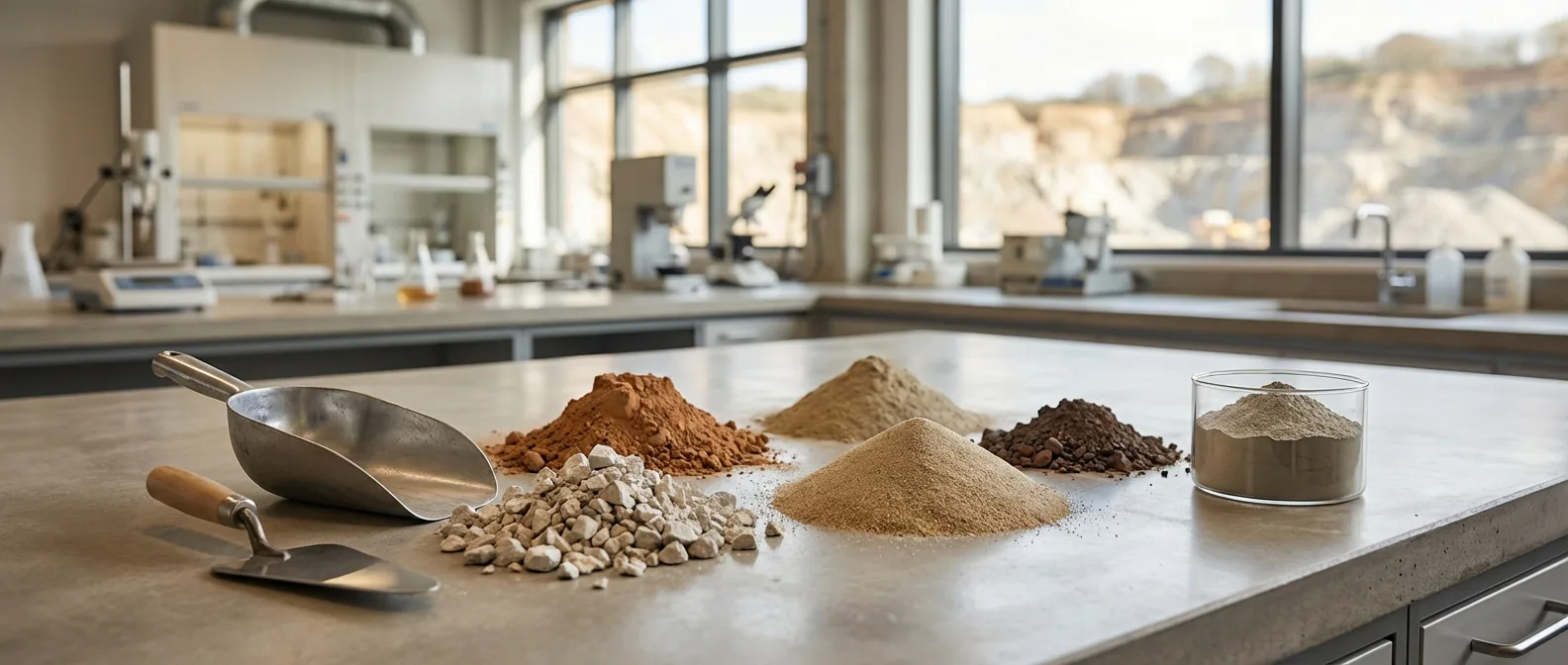
Cement chemistry underpins one of the most fundamental materials in construction. Understanding what is cement made of and the molecular makeup of its ingredients offers vital insight into how different varieties of cement perform in real-world applications, particularly in the outdoor environments of Melbourne’s Northern Suburbs. This article breaks down the chemical components that define cement, explains how they interact during hydration, explores types of cement classified chemistically, and connects these to key concrete properties without venturing into concrete mix designs or reinforcement strategies.
Introduction to Cement Chemistry
Definition and Overview of Cement Chemistry
Cement chemistry refers to the study of the chemical composition and reactions responsible for cement’s formation, hydration, and resulting mechanical and durability characteristics. At its core, cement is a finely ground powder consisting primarily of mineral compounds known as clinker, whose chemical interactions with water create the hardened binder essential to concrete.
The cement composition typically includes oxides of calcium, silicon, aluminum, iron, and small amounts of other elements. These compounds collectively dictate properties from setting time to ultimate concrete strength. The precise chemical makeup varies with raw material sources and manufacturing processes, influencing construction suitability.
Exploring the cement production process, raw materials such as limestone and clay are heated to high temperatures (around 1450°C) in a kiln to produce clinker minerals. This clinker is then ground with gypsum to regulate setting time. The entire process involves complex chemical transformations that define the performance of the final cement product.
For construction professionals or industry stakeholders focused on concrete material science in Melbourne projects, grasping these chemical fundamentals is the first step before addressing practical mixing or strength considerations.
Before delving deeper into cement chemistry, it’s useful to clarify the differences between cement and concrete, as they are often confused but chemically and functionally distinct.
Role of Chemical Composition in Cement Performance
The chemical components in cement not only form the basis of its physical properties but determine its reactivity, durability, and mechanical behaviour within concrete. Variations in the amounts of compounds such as calcium silicates or aluminates can accelerate or retard cement setting, alter early and late strength development, and influence resistance to chemical attacks.
Understanding these factors is essential for tailoring cement formulations to meet specific climatic and environmental challenges encountered in the Melbourne Northern Suburb region, including exposure to moisture, sulphates, and temperature fluctuations.
Basic Cement Manufacturing Process and Chemical Transformation
The manufacturing process transforms raw materials into clinker, predominantly composed of four mineral phases: Tricalcium silicate, Dicalcium silicate, Tricalcium aluminate, and Tetracalcium aluminoferrite. These phases form through a series of chemical reactions during heating, which will be detailed below. Post-clinker production, grinding with gypsum yields the final cement powder ready for use.
This multi-step chemical transformation governs the proportions of each compound, which in turn control cement’s performance characteristics from hydration kinetics to mechanical properties.
Primary Chemical Ingredients of Cement
| Ingredient | Chemical Formula | Structure and Characteristics | Function in Cement |
|---|---|---|---|
| Tricalcium Silicate (C3S) | 3CaO·SiO2 | Alite mineral phase, main clinker constituent, often 50-70% | Produces early strength through rapid hydration, generating calcium silicate hydrate (C-S-H) gel and calcium hydroxide (CH) |
| Dicalcium Silicate (C2S) | 2CaO·SiO2 | Belite mineral phase, slower reacting | Contributes to strength development at later stages; responsible for long-term durability |
| Tricalcium Aluminate (C3A) | 3CaO·Al2O3 | Highly reactive mineral, forms quickly hydrated phases | Controls setting time and early reactions; sensitive to sulphate attack without gypsum regulation |
| Tetracalcium Aluminoferrite (C4AF) | 4CaO·Al2O3·Fe2O3 | Ferroaluminate phase imparting colour (grey hues) | Contributes to cement strength and imparts colour; less impact on hydration compared to silicates |
| Gypsum | CaSO4·2H2O | Added during grinding | Regulates cement setting time, preventing flash setting by controlling C3A hydration |
These chemical ingredients form the clinker’s backbone and, combined with additives, determine cement behaviour. Each has distinct hydration mechanisms and contributes differently to concrete properties such as strength, workability, and durability.
Tricalcium Silicate (C3S) — Structure and Function
C3S is the primary strength-giving component of cement. It hydrates rapidly, producing a significant amount of calcium silicate hydrate (C-S-H), the main phase responsible for cement paste adhesion and strength, especially in the first 7 days.
Dicalcium Silicate (C2S) — Properties and Importance
C2S hydrates more slowly but contributes to the long-term strength gain of concrete, often beyond 28 days. It also enhances durability by producing a stable gel structure less susceptible to chemical degradation.
Tricalcium Aluminate (C3A) — Hydration and Reactivity
C3A reacts quickly with water and gypsum, influencing initial setting and early strength. However, it is vulnerable to sulphate attack if gypsum control is inadequate, leading to potential durability issues.
Tetracalcium Aluminoferrite (C4AF) — Contribution to Color and Strength
C4AF contributes less directly to strength but affects the cement’s hue, typically imparting a greyish colour. It also slightly influences the heat of hydration and interacts with minor constituents.
Gypsum — Regulating Setting Time
The addition of gypsum is critical to prevent immediate stiffening (flash setting) by moderating the rapid hydration of C3A. Gypsum’s sulphate ions interact chemically with aluminates to stabilize the paste during initial setting phases.
This comprehensive understanding of cement ingredients’ chemistry forms a framework for exploring their hydration behaviour next.
The Hydration Process: Cement’s Chemical Reaction with Water
Mechanism of Hydration at Molecular Level
When water is added to cement, each chemical ingredient undergoes complex reactions known collectively as hydration. At a molecular scale, water molecules interact with clinker minerals causing dissolution and precipitation of hydrated products.
The dominant reactions are:
- C3S + Water → C-S-H (Calcium Silicate Hydrate) + CH (Calcium Hydroxide) — Rapid reaction developing early strength.
- C2S + Water → C-S-H + CH — Slow reaction contributing to later strength.
- C3A + Gypsum + Water → Ettringite — Controls setting time, forming a needle-shaped hydrate.
This process transforms the fluid cement paste into a rigid network, binding aggregate and filler in concrete.
Role of Cement Ingredients in Hydration Products Formation
Each clinker phase creates unique hydration products:
- C-S-H gel: Primary binding phase with gelatinous, amorphous structure promoting strong bonding.
- Calcium Hydroxide (CH): Crystalline byproduct providing alkaline environment but more porous than C-S-H.
- Ettringite: Early hydrate controlling setting but potentially causing expansion if formed excessively later.
Gypsum regulates ettringite formation by controlling the C3A reaction rate, preventing flash set. The balance of these products determines mechanical strength and microstructure quality.
Influence of Hydration on Tensile and Compressive Strength
Hydration development directly impacts both the compressive strength of concrete and its limited tensile strength of concrete. C3S hydration contributes predominantly to early compressive strength, establishing initial load-bearing capacity. C2S ongoing hydration supports strength gain over weeks to months, enhancing durability.
While concrete intrinsically has low tensile strength due to its brittle nature, cement hydration products bond the matrix, marginally enhancing concrete tensile stress resistance. The strength improvements correlate with the degree and completeness of hydration.
Chemical Byproducts and Their Effects on Durability
Some hydration byproducts, especially calcium hydroxide, may pose durability concerns. CH can react with atmospheric CO2 leading to carbonation, or with environmental sulphates causing expansive formations damaging concrete. Proper control of clinker chemistry and additives like pozzolanic materials mitigate these risks by binding CH into more stable compounds or reducing porosity.
The molecular insights here are essential to understanding the classification of cement types by chemistry discussed next.
Varieties of Cement: Classification Based on Chemical Composition
| Type of Cement | Chemical Characteristics | Setting Time / Strength | Common Applications |
|---|---|---|---|
| Ordinary Portland Cement (OPC) | Typical C3S (50–70%), C2S (15–30%), C3A (5–10%), C4AF (5–15%) with gypsum | Standard setting, balanced early and late strength | General construction, pavements, foundations |
| Sulphate Resistant Cement (SRC) | Low C3A (<5%) to resist sulphate attack | Similar or slower setting, enhanced durability against sulphates | Marine structures, sewer systems, aggressive soils |
| Rapid Hardening Cement | Higher C3S content, finely ground clinker | Fast setting and strength gain within 3 days | Cold weather concreting, fast track construction |
| White Cement | Low iron and manganese; high purity raw materials | Similar to OPC but white in color | Architectural finishes, decorative work |
| Low Heat Cement | Higher C2S, lower C3S and C3A | Slower strength gain; reduced heat of hydration | Mass concrete, dams, large foundations |
Ordinary Portland Cement (OPC) — Standard Chemistry and Applications
OPC remains the most widely used cement type, distinguished by its chemistry facilitating a balanced hydration profile delivering reliable strength development at typical setting times.
Sulphate Resistant Cement — Chemical Adaptations and Usage
SRC is specifically designed by minimizing C3A content to mitigate sulphate attack, a chemical erosion process aggravated by certain environmental conditions common in Melbourne’s coastal regions.
Rapid Hardening Cement — Modified Chemistry for Early Strength
By increasing C3S levels and reducing clinker particle size, rapid hardening cement gains strength swiftly, essential for projects requiring expedited construction timelines.
Other Specialized Cements (White Cement, Low Heat Cement, etc.) — Chemical Insights
Variants like white cement reduce coloured oxides for aesthetics, while low heat cement adjusts the silicate ratio to limit heat generation during long hydration—critical for massive structures.
These classifications demonstrate how manipulating cement chemistry alters performance to suit diverse applications.
How Cement Chemistry Influences Concrete Material Properties
Understanding cement chemistry is crucial for optimizing various concrete properties, including decorative finishes like coloured concrete driveway options, where the interaction between cement chemistry and pigments affects final surface quality.
Chemical Basis of Concrete Strength (Compressive and Tensile)
The chemistry of cement dictates the formation and quality of hydration products, which physically bind concrete components and enable load transfer. Higher C3S proportions typically enhance early concrete strength compressive, crucial for construction schedules. The microstructure of C-S-H gel formed during hydration confers improved resistance to external loading and crack propagation, marginally increasing concrete tensile stress. Knowledge of concrete mix ratios for 25–32 MPa strength in Australia is beneficial when considering these effects.
Interaction Between Cement Chemistry and Concrete Durability
Durability depends on how chemical composition affects porosity, chemical resistance, and expansion tendencies of concrete. For example, low C3A cements reduce vulnerability to sulphate attack, a critical characteristic for sustainable structures. Understanding MPa meaning and concrete strength classes also helps in assessing performance expectations shaped by cement chemistry.
Effect of Cement Ingredients on Concrete Setting Time and Workability
Gypsum and aluminate content regulate setting time, meeting project timeline demands. Additionally, some ingredients affect rheology, influencing concrete mix workability without altering water content. This is evaluated using concrete slump test procedures and ideal slump values, which indirectly reflect hydration product effects.
Molecular Factors Affecting Long-Term Concrete Performance
Long-term performance hinges on stable hydration products and minimized deleterious reactions such as alkali-silica reaction or carbonation. Cement chemistry’s role is central in minimizing these effects by controlling elemental proportions, while reinforcement strategy decisions can also influence overall performance, as shown in comparing fibre and steel reinforcement in concrete applications.
Concrete practitioners seeking guidance on concrete mix ratios and strength will find understanding cement chemistry essential before specifying mixtures.
Pozzolanic Materials and Their Chemical Role in Cement
Definition and Examples of Pozzolans
Pozzolanic materials are siliceous or aluminosiliceous compounds which, when mixed with calcium hydroxide produced during cement hydration, chemically react to form additional cementitious compounds, enhancing concrete strength and durability. Common pozzolans include fly ash, silica fume, volcanic ash, and slag.
Chemical Reaction of Pozzolanic Materials with Cement Hydrates
Pozzolans consume calcium hydroxide through a chemical reaction forming more calcium silicate hydrate (C-S-H), refining the pore structure and reducing permeability. This secondary hydration process increases long-term strength and resistance to chemical attack, especially sulphates.
Impact on Cement Strength and Sulphate Resistance
The pozzolanic reaction improves sulphate resistance by lowering available CH that reacts adversely with external sulphates. Enhanced microstructure reduces pathways for corrosive agents, extending concrete life in aggressive environments.
Environmental and Durability Benefits of Pozzolanic Additives
Using pozzolanic materials reduces reliance on clinker (and thus CO2 emissions), supporting sustainable construction goals. Moreover, their ability to improve durability reduces maintenance and replacement costs, providing economic and environmental advantages.
Summary and Future Outlook on Cement Chemistry
Recap of Key Cement Ingredients and Their Functions
- Tricalcium silicate (C3S) drives early strength development.
- Dicalcium silicate (C2S) supports long-term strength and durability.
- Tricalcium aluminate (C3A) affects setting behaviour and chemical resistance.
- Tetracalcium aluminoferrite (C4AF) impacts colour and mild strength contributions.
- Gypsum regulates setting time to prevent flash set.
- Pozzolanic materials chemically enhance hydration and durability while promoting sustainability.
Emerging Trends in Cement Chemistry for Sustainable Construction
In the pursuit of reducing cement’s carbon footprint, researchers focus on developing novel clinker substitutes, optimizing pozzolanic blends, and exploring alternative mineral phases to reduce heat release and increase lifespan. Low energy cements, alkali-activated binders, and carbon-cured cements represent promising avenues being explored globally, including in Australian research centers such as the University of Melbourne’s Portland Sustainability Centre.
Potential Innovations in Cement Composition and Applications
Advanced analytical techniques, including X-ray diffraction and calorimetry, enable precise control over clinker chemistry and hydration kinetics, facilitating tailor-made cements with optimized performance attributes. Future cements may incorporate nanomaterials to improve microstructure or additives neutralizing environmental attack mechanisms.
For professionals keen to stay ahead in Melbourne’s dynamic construction environment, integrating these chemical insights will ensure selection of the right cement type for every project specification.
Understanding cement’s molecular foundation enriches knowledge about concrete’s behaviour, offering a springboard into practical mixing and strength strategies elaborated in resources like our concrete mix ratios for 25–32 MPa strength in Australia.
Ready to deepen your construction material expertise? Explore our sectional guides on concrete strength and mix design, armed now with a solid foundation in the chemistry of cement.
Frequently Asked Questions
What is the difference between cement and concrete?
Cement is a binding material made of clinker and gypsum, while concrete is a composite material made of cement, water, aggregates, and additives. Cement acts as the glue in concrete, which forms the hard, structural material used in construction.
How do pozzolanic materials improve cement quality?
Pozzolanic materials react chemically with calcium hydroxide from cement hydration to form additional cementitious compounds. This refines concrete’s microstructure, increases strength, reduces permeability, and enhances durability against chemical attacks like sulphate erosion.
Why is gypsum added to cement during manufacturing?
Gypsum controls the setting time of cement by regulating the hydration of tricalcium aluminate (C3A). It prevents flash setting, ensuring the cement paste hardens gradually and remains workable during mixing and placement.
Which type of cement is best for sulfate resistance?
Sulphate Resistant Cement (SRC) has low tricalcium aluminate (C3A) content, making it highly resistant to sulphate attack. It is ideal for marine environments, sewage systems, and soils with aggressive sulphate presence.
Can the chemical composition of cement affect its colour?
Yes. Tetracalcium aluminoferrite (C4AF) imparts grey hues to cement, while white cement uses low iron and manganese content to produce a white colour, suited for architectural and decorative applications.
How does the hydration process affect concrete strength?
Hydration converts cement minerals into binding compounds like calcium silicate hydrate, which provide early and long-term strength. Rapid hydration of C3S produces early compressive strength, while C2S contributes to strength gain over time.
Is concrete simply a mixture of cement, water, and aggregates?
Concrete is a mixture of cement, water, aggregates (sand, gravel), and often additives. Cement hydration binds the aggregates into a solid mass with defined mechanical properties, including compressive strength and limited tensile resistance.
What factors in cement chemistry influence concrete’s tensile strength?
Cement chemistry affects concrete’s tensile strength by determining the quality and density of hydration products like C-S-H gel. Although concrete has low tensile strength inherently, improved hydration and reduced porosity marginally enhance tensile stress resistance.