
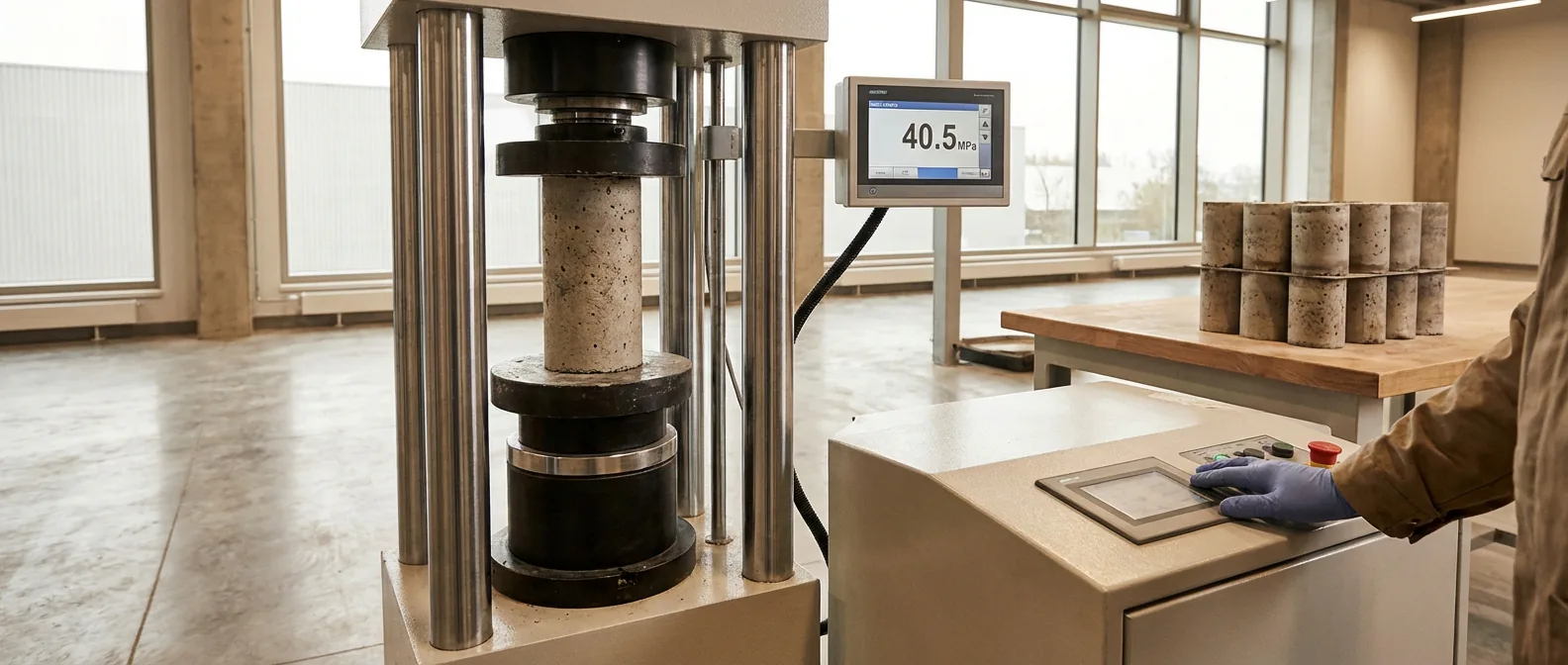
MPa is a crucial term in construction, yet its true meaning in concrete often confuses many homeowners, builders, and engineers around Melbourne’s northern suburbs. This article unpacks the MPa explanation clearly, translating technical jargon into practical insights. We cover everything from the basic definition to the significance of common concrete strength MPa classes like 20 MPa and 32 MPa, helping you make confident concrete choices for your projects.
Understanding MPa: Definition and Role in Concrete
What is MPa? Megapascal as a Unit of Pressure
MPa stands for megapascal, a metric unit measuring pressure or stress. One megapascal equals one million pascals (Pa), where a pascal quantifies one newton per square meter (one newton is roughly the force exerted by a small apple’s weight). In engineering, MPa gauges how much pressure or force a material can withstand per square millimeter of cross-sectional area.
When applied to concrete, MPa measures the compressive strength, meaning concrete’s ability to resist being squashed or crushed. The higher the MPa, the stronger the concrete’s resistance to compression, a key factor in building safety and durability.
MPa Explanation in Layman’s Terms
Think of MPa as the “strength score” for concrete. When you step on a concrete floor, the floor experiences pressure from your weight. MPa tells us how much pressure the concrete can endure before failing. For example, 20 MPa concrete can withstand about 20 million newtons of force per square meter, making it suitable for many residential floors and driveways.
Effectively, MPa can be imagined as how much weight a concrete block can bear on every square millimeter before it cracks or crushes.
How MPa Relates to Concrete’s Compressive Strength
Compressive strength is the paramount mechanical property of concrete for structural applications. MPa represents this strength at a standard testing age—usually 28 days after curing—indicating when the concrete should reach its design strength.
The compressive strength is obtained by applying increasing pressure on a concrete sample in a controlled lab environment until it breaks. The pressure value at failure is expressed in MPa and forms the benchmark strength class of that concrete batch.
Clarifying the distinction between cement and concrete helps in understanding MPa measurements and their impact on structural materials. See our explainer on differences between cement and concrete.
Why MPa is Important in Specifying Concrete Strength
MPa figures guide architects, engineers, builders, and suppliers in selecting appropriate concrete grades, matching safety requirements with project demands. Choosing too low an MPa risks structural failure, while unnecessarily high MPa increases costs.
In Melbourne’s northern suburb construction, understanding these strengths ensures appropriate materials withstand environmental stresses (e.g., weather, load) for long-term stability and regulatory compliance.
Clarifying these fundamentals sets the foundation for grasping how MPa values translate to real-world construction.
MPa Concrete Meaning and Its Significance in Construction
What Does MPa Stand for in Concrete Context?
In the concrete world, MPa specifically indicates the design compressive strength of concrete. It answers the key question: “How strong is the concrete mix?” This is often seen labeled on concrete bags or delivery tickets, for example, “20 MPa concrete” or “32 MPa concrete.”
Simply put, MPa in concrete is the numerical representation of how much load the cured concrete can safely bear without failing.
Understanding the fundamental components of cement, including its ingredients and types, is essential when considering concrete strength and MPa ratings; learn more in our article on cement ingredients and types.
The Concept of Compressive Strength in Structural Concrete
Structural concrete relies principally on its compressive strength to support buildings, bridges, pavements, and other infrastructure. This strength depends on factors like the cement type, aggregate quality, water-to-cement ratio, and curing conditions.
The assigned MPa value is a reliable engineering estimate that assures stakeholders about concrete’s ability to support specified loads and stresses over time.
Real-World Implications of MPa Values for Builders and Engineers
- Safety Assurance: Specifying the correct MPa prevents structural compromise and collapses.
- Cost Efficiency: Over-stressing concrete strength inflates project budgets unnecessarily.
- Durability: Adequate strength ensures longevity against daily wear and environmental damage.
- Compliance: Meeting Australian concrete standards and building codes depends on correct MPa identification.
MPa and Load-Bearing Capacity of Concrete
The load-bearing capacity of concrete relates directly to its MPa rating. For example, 32 MPa concrete (also known as N32 concrete) can bear heavier loads than 20 MPa concrete, making it suitable for high-stress elements like beams, slabs, and load-bearing walls.
Builders in Melbourne’s northern suburbs often match MPa concrete grades to the structural role—using lower grades like 20 MPa for non-load-bearing slabs and higher MPa for foundational elements.
With a clear understanding of concrete’s MPa meaning, people can better plan and specify materials that balance strength, safety, and cost.
Concrete Strength Classes Explained: Common MPa Ratings
Understanding Concrete Grade Notation (e.g., N32 Concrete)
Concrete grades are often denoted in terms like “N32” or “20 MPa concrete.” The letter–number code commonly corresponds to the characteristic compressive strength of that concrete measured in megapascals. For example, N32 concrete implies a concrete mix designed to reach 32 MPa compressive strength at 28 days.
This notation helps Australian builders and engineers quickly identify suitable mixes per standards such as AS 1379 and AS 3600.
For a detailed breakdown of mix ratios required to achieve 25–32 MPa concrete strength in Australian conditions, refer to our guide on mix ratios for 25–32 MPa concrete.
Typical Strength Classes: 20 MPa Concrete, 32 MPa Concrete, and Others
| Concrete Grade | MPa Rating | Common Uses |
|---|---|---|
| 20 MPa Concrete | 20 MPa | Driveways, patios, footpaths, residential slabs |
| N32 Concrete (32 MPa Concrete) | 32 MPa | Structural slabs, beams, load-bearing walls, commercial construction |
| 25 MPa Concrete | 25 MPa | Intermediate strength for moderate load applications |
| 40 MPa Concrete | 40+ MPa | Heavy duty structures, bridges, high-rise foundations |
How Strength Classes Influence Concrete Selection for Projects
- Residential Builds: 20 MPa concrete suffices for many residential floors and driveways.
- Load-Bearing Elements: 32 MPa or greater is required for beams and foundation footings to support heavy structural loads.
- Heavy Civil Works: Higher MPa grades like 40 MPa ensure durability under extreme stress like bridges or industrial flooring.
Choosing the correct concrete strength avoids future repairs, unsafe structures, and non-compliance penalties. For choosing the right strength class for coloured concrete driveway options in Melbourne, see our in-depth guide on coloured concrete driveway options.
Australian Concrete Standards and MPa Classifications
The Australian Standards AS 1379 and AS 3600 provide classifications and testing protocols for concrete strength, guiding how MPa ratings correspond to structural requirements. These standards ensure uniformity, safety, and performance reliability.
Following these Australian concrete standards protects builders and homeowners by guaranteeing that 20 MPa concrete in Melbourne has the same strength expectations throughout the region.
Visual and Practical Interpretation of Concrete Strength MPa
Charts and Tables Showing MPa Values with Corresponding Concrete Grades
| Concrete Grade | MPa (Megapascals) | Typical Structural Application |
|---|---|---|
| 20 MPa Concrete | 20 | Residential driveways, garden paths, patios |
| 25 MPa Concrete | 25 | Domestic slabs with moderate loads |
| N32 Concrete (32 MPa Concrete) | 32 | Structural slabs, beams, lintels |
| 40 MPa Concrete | 40+ | Industrial floors, highway bridges |
Analogies to Understand MPa Values in Everyday Terms
Imagine pressing concrete with a force equivalent to the weight of several cars stacked per square meter. 20 MPa concrete might support a compact car’s weight placed on one square millimeter area, whereas 32 MPa can carry heavier loads without cracking.
This analogy shows how MPa directly translates into concrete’s practical ability to handle pressure.
Practical Examples: Choosing the Right MPa Concrete for Different Applications (outdoor, load-bearing, residential)
- Outdoor Applications: For driveways and patios exposed to weather yet low load, 20 MPa concrete is economical and adequate.
- Load-Bearing Walls: Use 32 MPa concrete for pillars and walls expected to support roof or upper floors safely.
- Residential Floors: Mixed-strength application, often 25–32 MPa, depending on expected use and soil conditions.
These MPa strength classes are critical when selecting materials for durable, coloured concrete surfaces — learn more about the best coloured concrete driveway options in Melbourne.
How Curing Affects Achieving Target MPa Strength
Curing concrete properly — maintaining moisture and temperature for up to 28 days — enables hydration reactions that increase strength to the desired MPa rating. Inadequate curing can severely reduce the final compressive strength, risking structural integrity.
In Melbourne’s varying climate, controlling curing conditions is especially vital to meet the specified MPa values in concrete applications.
Frequently Asked Questions About MPa in Concrete
How is MPa Tested in Concrete (Brief Overview)?
Concrete MPa is tested by casting standard 150mm concrete cylinders or cubes, curing them under controlled conditions, and compressing them in a testing machine until they fail. The maximum pressure sustained before failure determines the MPa rating. This method aligns with Australian Standards (e.g., AS 1012.9.1).
Can Concrete Strength MPa Increase Over Time?
Yes. While 28 days is the standard benchmark, concrete can continue to gain strength at a slower rate for months or years, especially with good curing. However, most design calculations use 28-day MPa as the definitive strength for safety and regulatory reasons.
Differences Between MPa Values and Concrete Durability
MPa measures compressive strength but does not alone dictate durability factors like permeability, freeze-thaw resistance, or chemical attack endurance. Durability depends on mix design, additives, and exposure conditions as well.
How Does MPa Affect Concrete Pricing and Availability?
Higher MPa concretes often require more cement, better aggregates, and stricter quality control, increasing costs. Therefore, selecting unnecessarily high MPa concrete wastes money, while too low risks failure and repair.
Are There Regional Variations in MPa Concrete Standards?
Yes, environmental factors like temperature and moisture can influence concrete performance. Australian standards accommodate these via exposure classes, and builders in Melbourne’s northern suburbs often adjust mix designs or choose strength classes accordingly to meet local conditions.
Workability tests like concrete slump influence the achievable MPa strength, making quality control vital during mixing and pouring. Learn about the concrete slump test procedure and ideal values for better quality control.
For questions about how different reinforcement methods affect concrete strength and durability, refer to our comparison article on fibre vs steel reinforced concrete.
Frequently Asked Questions
What is the difference between 20 MPa and 32 MPa concrete?
20 MPa concrete is suitable for light-duty applications like driveways and patios, while 32 MPa concrete offers higher strength for structural elements such as beams and load-bearing walls. The higher MPa value means greater compressive strength and load-bearing capacity.
How does curing time affect the MPa strength of concrete?
Proper curing for up to 28 days allows concrete to reach its designed MPa compressive strength by enabling hydration. Insufficient curing can reduce strength, causing the concrete to fall short of its intended MPa rating and potentially compromising durability.
Why is MPa used instead of other units to measure concrete strength?
MPa (megapascal) is a standardized metric unit that precisely measures pressure or compressive stress per square millimeter, making it ideal for quantifying concrete’s strength in engineering and construction globally.
Can two concretes with the same MPa have different durability?
Yes, MPa only measures compressive strength. Durability depends on additional factors like mix design, additives, permeability, and exposure conditions, so two concretes with the same MPa may perform differently over time.
What factors most influence the MPa rating of concrete?
Key influences include the water-to-cement ratio, cement type, quality of aggregates, and curing conditions. Adjusting these factors changes hydration efficiency and thus determines the MPa compressive strength achieved at 28 days.
How does N32 concrete differ from just calling it 32 MPa concrete?
N32 concrete is a designation indicating a mix designed to achieve 32 MPa compressive strength at 28 days, aligning with Australian standards. The “N” prefix commonly denotes standard structural concrete grades.
Which MPa concrete strength is best for residential flooring?
Concrete with a strength of around 20 to 25 MPa is generally suitable for typical residential floors, balancing durability and cost efficiency for foot traffic and light loads.
How do Australian concrete standards relate to MPa classifications?
Australian standards like AS 1379 and AS 3600 set guidelines for classifying and testing concrete by MPa strength, ensuring uniform performance, safety, and regulatory compliance across construction projects.