
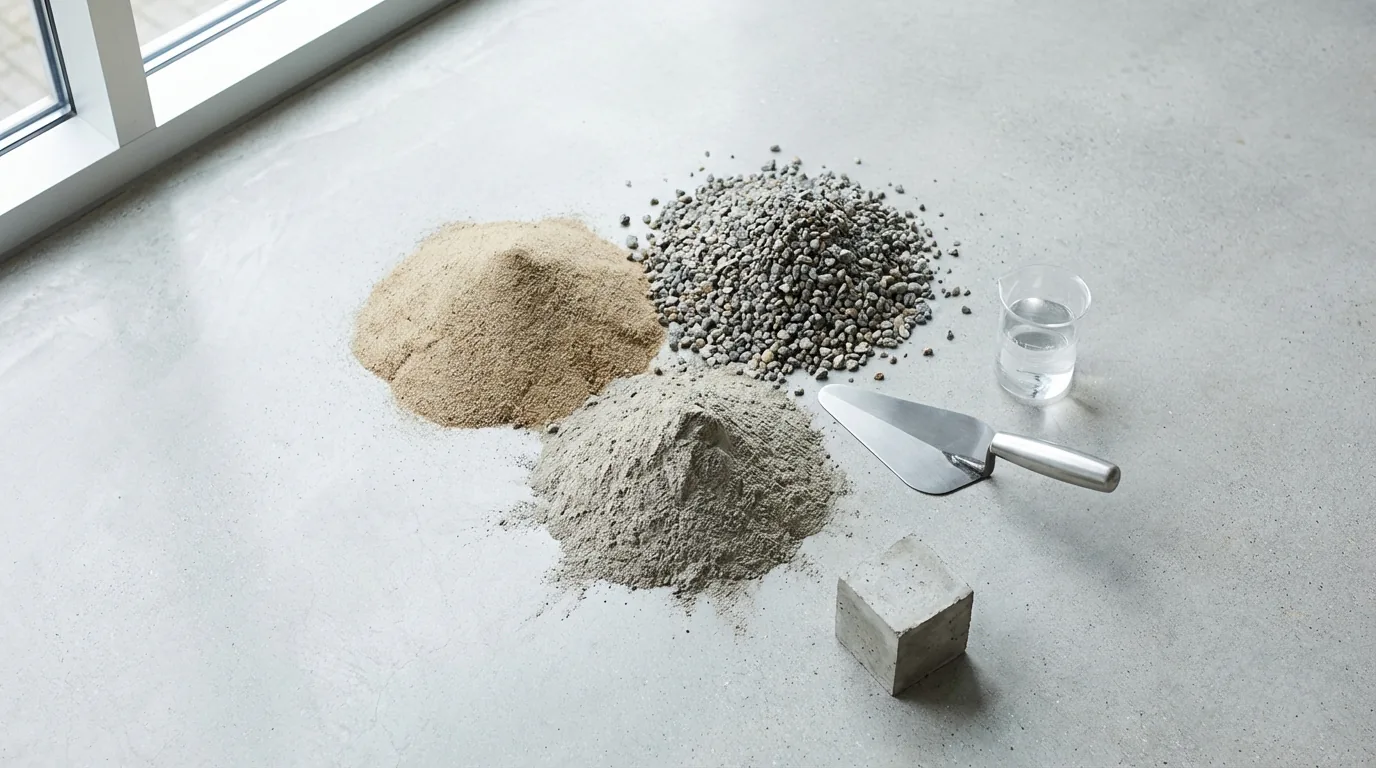
Mix ratios pillar is a critical aspect of constructing durable, load-bearing columns that secure structural integrity in any building project. Mastering the right combination of cement, sand, gravel, and water for pillars ensures their strength and longevity, especially in Melbourne’s diverse Northern Suburb climate.
This guide dives deep into tailored concrete mix ratio principles for pillars, revealing why standard mixes won’t suffice and how precise mixing proportions influence concrete strength (MPa) and durability. Whether you’re a civil engineer or construction supervisor, you’ll gain practical, code-compliant techniques for achieving optimal pillar performance.
Understanding the Importance of Mix Ratios for Pillars
Why Pillars Require Specialized Mix Proportions
Pillars, or vertical load-bearing columns, endure immense compressive forces and play a pivotal role in structural stability. Unlike slabs or driveways, pillars must resist vertical loads, lateral forces, and environmental stresses without failing or deforming. Hence, the mix ratios pillar must provide enhanced mechanical strength and durability compared to general-purpose concrete.
Incorrect mix ratios can lead to weak interfaces, poor bonding, and ultimately, structural failure. Precisely adjusted ratios ensure appropriate bonding between cement paste and aggregates, balancing workability with strength and minimizing the risk of cracking.
Differences Between Pillar Mix Ratios and Standard Concrete Mixes
Standard concrete mix ratios, like 1:2:4 (cement:sand:gravel), typically balance cost and general performance without prioritizing high strength. In contrast, pillar mixes increase cement content and control water addition to boost the water and cement ratio for maximum compressive strength and weather resistance. This results in denser, more cohesive concrete for columns.
Moreover, pillars often use higher-grade concrete mixes such as M20 or M25 (delivering 20-25 MPa compressive strength) compared with slabs that may accept M15 or lower grades.
Another distinction is aggregate grading and size; pillars use well-graded, high-quality aggregates that reduce voids and enhance bond strength.
While our focus here is on structural pillar mix ratios, understanding variations like those used in coloured concrete driveway options in Melbourne can provide perspective on mix adaptations for different uses.
Role of Mix Ratios in Structural Integrity and Durability of Pillars
The interplay of cement, sand, gravel, and water fundamentally dictates concrete’s microstructure in pillars. Proper ratios allow optimal hydration kinetics, reducing porosity and increasing density, which directly strengthen the pillar.
Durability also depends on maintaining an ideal water and cement ratio—too much water weakens concrete by increasing porosity, while too little compromises workability and hydration. The right proportions mitigate shrinkage cracks and resist weather deterioration, vital for outdoor pillars exposed to Melbourne’s variable seasons.
Ultimately, specialized mix ratios enable the pillar to carry heavy loads over long periods without deformation or failure, securing the building’s safety.
Understanding these nuances prepares us to explore the vital core components of pillar concrete mix ratios.
Core Components of Pillar Concrete Mix Ratios
Cement to Sand to Gravel Ratio for Pillars
The foundation of pillar concrete lies in balancing the three aggregate components: cement (binder), sand (fine aggregate), and gravel (coarse aggregate). A typical mix ratio cement for pillars is:
| Component | Recommended Ratio (By Volume) |
|---|---|
| Cement | 1 |
| Sand | 1.5 to 2 |
| Gravel | 3 to 4 |
For example, an M25 pillar mix often uses 1:1.5:3 ratio, providing a good balance of strength and workability. Increasing cement proportion strengthens the concrete matrix, improving load capacity.
High-quality aggregates with proper grading ensure better cement to sand to gravel ratio performance by reducing voids and improving compactness.
Understanding the fundamental components is crucial; learn more about cement ingredients and types to optimize your pillar mixes.
Clarifying the differences between cement and concrete helps in correctly proportioning pillar mixes—see our comprehensive comparison of cement vs concrete.
Citing Australian Standards AS 3600 for compliant mixing ratios and aggregate specifications is recommended for this section.
Australian Standards AS 3600 Concrete Structures provides authoritative guidelines on mix designs and material requirements.
Water and Cement Ratio: Maintaining the Optimal Water-Cement Ratio
The water and cement ratio (w/c ratio) is critical for concrete strength and durability. This ratio defines the mass of water divided by the mass of cement in the mix. Optimal w/c ratio values for pillars typically range between 0.4 and 0.6. Lower values yield higher strength, but can reduce workability if too low.
Excess water dilutes cement paste, increasing porosity and weakening bond strength. Insufficient water inhibits cement hydration, resulting in incomplete curing. Maintaining this balance ensures mechanical integrity and long-term durability.
Importance of Aggregate Quality and Grading in Pillar Mixes
Aggregates account for roughly 60-80% of concrete volume, therefore their grading and quality control are crucial. Well-graded aggregates, including a mix of particle sizes from fine sand to coarse gravel, minimize void spaces, reducing the amount of cement paste needed and improving strength.
For pillars, use aggregates free of impurities such as clay or organic material. Consistent shape and size distribution (angular gravel for bonding) increase mechanical interlock within the mix, supporting vertical load transfer.
With the components clarified, we move to precise calculations for mixing concrete proportions tailored for pillars.
Calculating and Adjusting Mixing Concrete Proportions for Pillars
Step-by-Step Method to Calculate Pillar Mix Ratios by Volume and Weight
- Determine Concrete Grade: Select the required grade for your pillar (e.g., M20, M25) based on structural loads and design codes.
- Establish Base Mix Ratio: Reference standard ratios (e.g., M25 = 1:1.5:3) as the starting point.
- Calculate Material Quantities per Cubic Meter: Use the formula:
- Cement volume = Total concrete volume ÷ Sum of ratio parts × Cement ratio part
- Repeat for sand and gravel.
- Convert Volumes to Weight: Multiply volumes by material densities (Density cement ≈ 1440 kg/m³, sand ≈ 1600 kg/m³, gravel ≈ 1500 kg/m³).
- Calculate Water Volume: Calculate water based on the chosen water and cement ratio (e.g., w/c = 0.5, water weight = 0.5 × cement weight).
- Adjust for Field Waste Percentage: Include 5-10% more materials to cover losses.
For example, for 1 m³ of M25 pillar concrete with ratio 1:1.5:3, the volume parts add to 5.5.
- Cement volume = 1 ÷ 5.5 ≈ 0.182 m³
- Sand volume = 1.5 × 0.182 = 0.273 m³
- Gravel volume = 3 × 0.182 = 0.546 m³
Weight can then be calculated via densities.
Adjusting Mix Ratios for Different Pillar Sizes and Load Requirements
Larger or heavily loaded pillars require adjustments: higher cement content or lower water-cement ratio to increase strength and reduce permeability. For small pillars on low loads, a less rich mix is acceptable.
Structural engineers may specify elevated grades (like M30 or M35) for high-rise building pillars, necessitating 1:1:2 or richer mixes with lower w/c ratios of 0.4 or below.
Always verify mix adjustments comply with local standards, such as Australian Standards AS 3600.
Incorporating Additives and Admixtures Without Compromising Strength
Additives such as plasticizers, accelerators, or waterproofing admixtures can improve workability and durability without increasing water. Use admixtures approved for pillar applications to avoid strength loss.
For example, water-reducing agents maintain desired slump while lowering w/c ratio, enhancing strength—especially important for outdoor pillars in Melbourne’s temperate climate with occasional moisture exposure.
After mastering calculations, a grasp of standard pillar mix grades and their specific ratios enhances reliable design.
Standard Concrete Mix Ratios and Grades Suitable for Pillars
Recommended Mix Ratios for Common Concrete Grades (M20, M25, M30) in Pillars
| Concrete Grade | Cement : Sand : Gravel (Volume) | Typical Compressive Strength (MPa) |
|---|---|---|
| M20 | 1 : 1.5 : 3 | 20 |
| M25 | 1 : 1.5 : 2.75 | 25 |
| M30 | 1 : 1 : 2 | 30 |
These grades offer increasing strength to suit varying pillar load requirements, with the concrete ratio volume progressively richer in cement and finer aggregates.
Comparing Standard Mix Ratios with Pillar-Specific Mixtures
While M20 might suffice for non-critical pillars, high-load pillars demand mixes with reduced sand content and higher cement to sand ratios (closer to 1:1) allowing better bonding and compactness. Mixing beyond the standard ratios can also incorporate quality enhancements like reduced w/c ratio and admixtures.
Ensuring Compliance with Construction Codes and Structural Standards
Adherence to relevant standards such as AS 3600-2018 Concrete Structures ensures the structural integrity of pillars. Certification also requires regular testing and documentation for load-bearing concrete. These codes define criteria for ratios, strengths, curing methods, and testing protocols.
For an in-depth look at exact mix ratios that achieve 25–32 MPa strength suitable for structural applications, refer to our guide on 25–32 MPa concrete mix ratios for Australian standards.
Understanding grades sets the stage for hands-on application described next.
Practical Guide: How to Mix Concrete Specifically for Pillars
Preparing Materials and Tools for Accurate Mixing
- Clean, calibrated measuring buckets or scales for volume and weight accuracy
- Quality cement, well-graded sand and gravel aggregates
- Water source with measured delivery using calibrated vessel
- Electric mixer or manual mixing tools (shovels, mixing trays)
- Personal protective equipment
Proper preparation prevents errors in mix ratios affecting pillar strength.
Stepwise Instructions to Achieve the Desired Concrete Mix Ratio for Pillars
- Measure Materials: Accurately portion cement, sand, and gravel as per the calculated mix ratio by weight or volume.
- Dry Mix: Combine cement, sand, and gravel in the mixer or tray, mixing thoroughly until the blend is homogeneous.
- Add Water Gradually: Introduce water slowly while continuously mixing to reach the targeted workability without exceeding the designed water and cement ratio.
- Mix Completely: Continue mixing for 3–5 minutes to ensure uniform consistency, avoiding dry pockets or overly wet patches.
- Use Promptly: Use mixed concrete within 30-60 minutes of preparation to prevent premature setting and strength loss.
For insights on preparing mixes for aesthetic concrete work, see our detailed guide on best coloured concrete driveway options for Melbourne.
Field Tips for Maintaining Consistency and Avoiding Common Mixing Errors
- Always measure water carefully—excess water weakens pillars dramatically.
- Keep mixing equipment clean to avoid contamination and hardened concrete lumps.
- Verify consistency visually; overly wet or crumbly mixes indicate ratio errors.
- Control aggregate moisture content as wet aggregates can alter effective water-cement ratios.
- Use admixtures judiciously as per manufacturer recommendations and adjust water accordingly.
- For further practical insights on mix adaptations including finishes, see our article on best coloured concrete driveway options for Melbourne.
Next, we explore critical methods to verify the strength and durability of these pillar mixes in real-world scenarios.
Evaluating and Verifying Pillar Concrete Strength and Durability
Testing Methods for Concrete Strength in Pillars (Compression Tests, etc.)
Compressive strength testing is the industry standard for assessing pillar concrete. Samples (usually cubes or cylinders) are cast simultaneously with column pours, curing under controlled conditions, then tested using hydraulic presses after 7, 14, or 28 days to assess strength gain.
Non-destructive testing methods like rebound hammer or ultrasonic pulse velocity tests supplement compression tests on site for early integrity assessment but are not replacements for standardized testing.
Effect of Mix Ratios on Long-Term Durability and Weather Resistance
Concrete with a low water and cement ratio and optimized mixture proportion of concrete resists moisture penetration, freeze-thaw damage, and chemical attack better. This ensures pillars maintain structural integrity for decades.
Improper mix ratios accelerating permeability increase corrosion risks for any embedded reinforcement, significantly shortening pillar lifespan.
Monitoring Water-Cement Ratios for Optimal Pillar Performance
Field checks, including slump assays and weight measurements, support on-site adherence to specified w/c ratios. Corrections can be applied before concrete placement to avert long-term performance issues.
Understanding mechanical results linked to exact ratios allows engineers to optimize mixtures dynamically in response to testing feedback.
To properly evaluate your pillar’s load-bearing capacity, understanding MPa strength classes in concrete is essential; further details are available in our MPa strength classes explanation.
Maintaining proper workability is critical; learn about concrete slump test procedures and ideal values for pillar mixes.
Troubleshooting and Best Practices for Concrete Mixing in Pillar Construction
Common Problems in Pillar Mix Ratios and How to Correct Them
- Excessive Water: Leads to weak, porous concrete. Remedy by reducing water or adding water-reducing admixtures.
- Insufficient Cement: Results in poor bonding; increase cement dosage or use better quality materials.
- Improper Aggregate Grading: Causes segregation or voids; adjust sand/gravel ratio or source higher-quality aggregates.
- Inconsistent Mixing: Leads to non-uniform properties; enforce strict mixing protocols and training.
Best Practices for Mixing Concrete on Outdoor Construction Sites
- Maintain clean, calibrated tools for precise measurement.
- Do not alter mix ratios arbitrarily; consult engineers for adjustments.
- Store materials properly to prevent contamination or moisture ingress.
- Schedule mixing during cooler parts of the day to curb setting acceleration in hot weather.
- Implement regular quality checks including slump and sample testing.
- Proper curing after placement is essential to achieve rated strength.
Selecting the right reinforcement type, such as fibre or steel, is paramount to addressing specific structural challenges in pillar construction. Our detailed comparison of fibre vs steel reinforced concrete options for pillars sheds light on which reinforcement suits various load demands and environmental conditions.
Case Studies of Successful Pillar Mix Implementations
One Melbourne Northern Suburb project increased cement proportion from 1:2:4 to 1:1.5:3 for pillars supporting a multi-storey community hall. Post-adjustment tests showed a 15% strength gain and reduced cracking—direct benefits of tailored mix ratios.
Another case used admixture-enhanced mixes to achieve low w/c ratios that resisted Melbourne’s seasonal moisture, promoting longer structural lifespan.
For reinforcement strategy insights relevant to such optimizations, explore our article on fibre and steel reinforced concrete options for pillars.
FAQs and Advanced Tips on Mix Ratios for Pillars
How Do Variations in Mix Ratio Affect Pillar Load-Bearing Capacity?
Higher cement ratios and lower water-cement ratios increase compressive strength, enabling pillars to carry heavier loads. Conversely, excess water or sand weakens the concrete matrix, lowering capacity.
Can Pillar Mix Ratios be Modified for Specific Climate Conditions?
Yes. For humid or wet conditions, reducing water content and integrating waterproofing admixtures improves durability. Hot climates benefit from set retarders to avoid premature curing.
What are the Cost Implications of Different Mix Proportions for Pillars?
Increasing cement and use of admixtures raise material costs but improve longevity and reduce maintenance, often lowering lifecycle costs. Cost-benefit analysis is recommended per project.
How Does the Mix Ratio Influence the Curing Time of Pillar Concrete?
Rich mixes with optimal water-cement ratios cure more effectively within 28 days, reaching designed strength faster. Poorly proportioned mixes elongate curing and risk underperformance.
For detailed discussions on mixing techniques, refer to 25–32 MPa concrete mix ratios for Australian standards.
Conclusion
Accurate mix ratios pillar form the backbone of structurally sound, durable columns capable of supporting demanding loads under Melbourne Northern Suburb conditions. Understanding and applying precise concrete mix ratio principles—balancing cement to sand to gravel ratio and the critical water and cement ratio—enables engineers and construction professionals to craft pillars enduring decades.
By systematically calculating and adjusting proportions, adhering to standardized grades, utilizing quality materials, and verifying concrete strength through testing, stakeholders minimize failure risks and optimize construction longevity.
Ready to build pillars that last? Start applying these tailored mix designs to your next project and cement your structure’s strength and resilience.
Frequently Asked Questions
What is the ideal cement ratio in a concrete mix for pillars?
The ideal cement ratio for pillar concrete typically ranges from 1:1.5 to 1:2 when mixed with sand and gravel. This higher cement content enhances strength and durability, critical for vertical load-bearing structures like pillars.
How does the water and cement ratio influence pillar concrete strength?
The water and cement ratio controls concrete hydration and porosity. A lower ratio (around 0.4–0.5) produces stronger, denser concrete by reducing capillary voids, while higher ratios weaken pillars by increasing permeability and reducing compressive strength.
Why do pillar concrete mix ratios differ from those used in slabs or pavements?
Pillars require higher strength and durability to bear vertical loads and resist environmental stresses. Hence, their mixes have increased cement content and lower water ratios compared to slabs or pavements, ensuring better bonding and reduced permeability.
Which concrete grade is best suited for heavily loaded pillars?
Grades M25 and above, such as M30 or M35, are recommended for heavily loaded pillars. These grades offer higher compressive strengths (25–35 MPa) and improved durability suitable for structural columns under significant load.
Can additives improve pillar concrete mix without compromising strength?
Yes, additives like plasticizers and water-reducing agents enhance workability and reduce water demand, maintaining or improving strength and durability without compromising the structural integrity of pillar concrete.
How do aggregate grading differences impact the mix ratio for pillars?
Well-graded aggregates reduce voids, allowing for a more cohesive matrix and less cement paste needed. Poor grading causes segregation and weak zones, negatively affecting strength and durability of pillar concrete.
Is it better to use volume or weight measurements for mixing concrete for pillars?
Weight measurements provide higher accuracy for pillar concrete mixing, ensuring precise proportioning of cement, sand, gravel, and water, which is essential for achieving the required strength and durability standards.
How do mix ratios affect the curing time of concrete pillars?
Concrete mixes with optimal cement and water ratios cure more efficiently, reaching design strength faster, typically within 28 days. Overly wet or poorly proportioned mixes delay curing and may result in lower final strength.