
How long does concrete sealer take to dry? If you’re planning a project in Melbourne’s northern suburbs, understanding the real timelines for concrete sealer dry times saves you costly delays and ensures durable, beautiful surfaces. This guide cuts through the technical jargon with accurate, scenario-based timelines and expert insights tailored to Australia’s climate, helping both homeowners and professionals get it right the first time.
Understanding Concrete Sealer Dry Times: Definitions and Key Concepts
What Does “Dry Time” Mean? (Surface Dry, Tack-Free, Fully Cured)
When discussing concrete sealer dry times, it’s essential to distinguish between three key stages: surface dry, tack-free, and fully cured. “Surface dry” means the sealer feels dry to the touch, typically within minutes to an hour after application, but it hasn’t hardened beneath. The tack-free stage follows, where no sticky residue remains when lightly touched—an indicator that solvents or water in the sealer have evaporated enough for the surface to be considered dry, often within 1–4 hours depending on the sealer type and conditions. Finally, fully cured indicates that the sealer’s chemical bonds have completely hardened, providing maximum durability and protection. This process can take from several hours to days, or even weeks in some cases.
Understanding these stages prevents premature traffic or application of additional coatings, which can lead to sealer failure or surface defects.
Distinction Between Drying and Curing Processes
Many confuse drying with curing. Drying is the physical evaporation of solvents or water, allowing the sealer’s surface to harden. Curing, however, involves the chemical reaction within the sealer—polymer cross-linking or hardening—that builds strength and adhesion. While drying may happen relatively quickly, curing continues well afterward. For example, acrylic sealers dry fast but can take 24–72 hours to cure fully. Epoxy sealers often require longer cure times due to their chemical composition.
Why Accurate Dry Time Estimates Matter for Project Planning
Accurate dry time knowledge directly impacts scheduling, budget, and outcome quality. For contractors in Melbourne’s northern suburbs, where weather varies seasonally, misjudging dry times can cause project delays or necessitate costly rework. Homeowners applying sealers themselves benefit by avoiding premature foot or vehicle traffic that can mar finishes. Reliable dry time estimates also guide when subsequent treatments—like applying additional coats or installing overlays—should occur. This awareness ensures lasting results and project success.
With clear definitions in place, we now explore how various sealer types affect drying timelines.
Concrete Sealer Drying Timelines by Sealer Type
Acrylic Sealers Dry Times and Typical Use Cases
Acrylic concrete sealers are water- or solvent-based films that dry fast and are popular for their ease of application and UV resistance. Typically, surface dry occurs within 30 minutes to 2 hours, tack-free in 1–4 hours, and fully cured by 24–48 hours under ideal conditions (20–25°C, 50% humidity). They are widely used on driveways and patios where moderate protection and aesthetic enhancements are needed. However, curing beyond dry time is critical for long-term durability.
Epoxy Sealer Dry Times and Practical Considerations
Epoxy sealers create thicker, more durable films but involve complex chemical curing. Surface dry often takes 4–6 hours, tack-free 6–12 hours, and full cure can require 3–7 days. Lower temperatures or humidity extend these times. Epoxy is excellent for industrial floors or high-traffic areas. Users must allow full curing before subjecting surfaces to foot or vehicle traffic to avoid damage or tacky residues.
Polyurethane Sealers: Dry and Cure Timelines Explained
Polyurethane sealers offer strong chemical resistance and abrasion protection. They typically exhibit a surface dry time of 1–3 hours, become tack-free in 3–6 hours, and require 48–72 hours or more for complete cure. These timelines vary with moisture-cured versus solvent-cured types. Polyurethane sealers suit both interior and exterior works, including driveways, where durability is paramount.
Variations in Manufacturer Dry Time Guidelines
Manufacturer-recommended dry times provide a baseline but often assume ideal lab settings. Real-world Melbourne conditions—fluctuating temperature and humidity—alter these expectations. It’s common to see surface dry times adjusted by ±30–50%, with full curing extended by days if conditions are suboptimal. Always consult technical datasheets alongside local climate data for realistic scheduling.
| Sealer Type | Surface Dry Time | Tack-Free Time | Full Cure Time | Typical Uses |
|---|---|---|---|---|
| Acrylic | 30 min – 2 hrs | 1 – 4 hrs | 24 – 48 hrs | Residential driveways, patios |
| Epoxy | 4 – 6 hrs | 6 – 12 hrs | 3 – 7 days | Industrial floors, heavy traffic |
| Polyurethane | 1 – 3 hrs | 3 – 6 hrs | 48 – 72+ hrs | Driveways, chemical-resistant surfaces |
Understanding these timelines specific to sealer type is crucial before factoring in environmental influences, which next we examine.
Environmental Factors Influencing Dry Times
Impact of Temperature on Dry and Cure Times
Temperature profoundly affects drying speed—higher temperatures accelerate solvent evaporation and chemical reactions, thereby shortening dry and cure times. For example, at 30°C, acrylic sealer curing may conclude in 24 hours versus 48 hours at 15°C. Below 10°C, chemical reactions slow significantly, sometimes halting curing entirely. Melbourne northern suburbs experience temperature swings from mild winters (~10–15°C) to hot summers (~25–35°C), necessitating seasonal adjustment to drying expectations.
Humidity and Moisture Effects on Sealer Drying
High humidity slows evaporation, extending surface dry and tack-free stages. Moisture presence on concrete can prevent proper adhesion and prolong cure. Humidity levels above 70% are particularly challenging for water-based acrylic sealers. Sealers like moisture-cured polyurethanes may require dry substrates to commence curing properly. Proper moisture control before application is vital in coastal or rainy seasons around Melbourne.
Wind and Airflow Considerations
Wind or good airflow promotes evaporation, reducing dry times, but excessive wind can cause premature film formation or dust contamination in the sealer layer. Moderate conditions (gentle breeze) are ideal. Enclosed or stagnant air environments, common in urban patios, may increase drying durations.
Specifics of the Australian Climate and Regional Variations
The Australian climate, particularly in Melbourne’s northern suburbs, features four distinct seasons with variable temperature and humidity. Late spring and early autumn offer the most favourable drying conditions—warm, dry days with mild winds. Winter months bring cooler temperatures and increased moisture, lengthening curing times. Understanding these regional climatic factors helps in planning sealing projects with precision.
With environment effects accounted for, let’s examine how application and surface specifics influence drying.
Application and Surface Variables Affecting Dry Times
Selecting the appropriate sealer and applying it correctly is vital; our article on how to seal a concrete driveway in Australia offers pro tips on preparation and application methods that complement this drying timeline overview.
How Application Thickness and Method Alter Drying
- Thickness: Thicker sealer layers retain solvents longer, extending surface dry and cure times. Ultra-thin coats dry quickly but may lack durability; heavy coats may remain tacky for days.
- Application Method: Sprayers create finer mist coatings that dry faster but risk overspray and uneven coverage. Rollers lay down thicker, more uniform films but prolong dry times slightly.
Role of Concrete Surface Porosity and Condition
- Highly porous concrete absorbs more sealer, potentially requiring several coats, each increasing overall dry time.
- Surface imperfections or residual moisture can trap solvents, slowing evaporation.
- Proper surface preparation that matches porosity requirements optimises drying efficiency.
Tools and Techniques: Rollers vs Sprayers Dry Time Implications
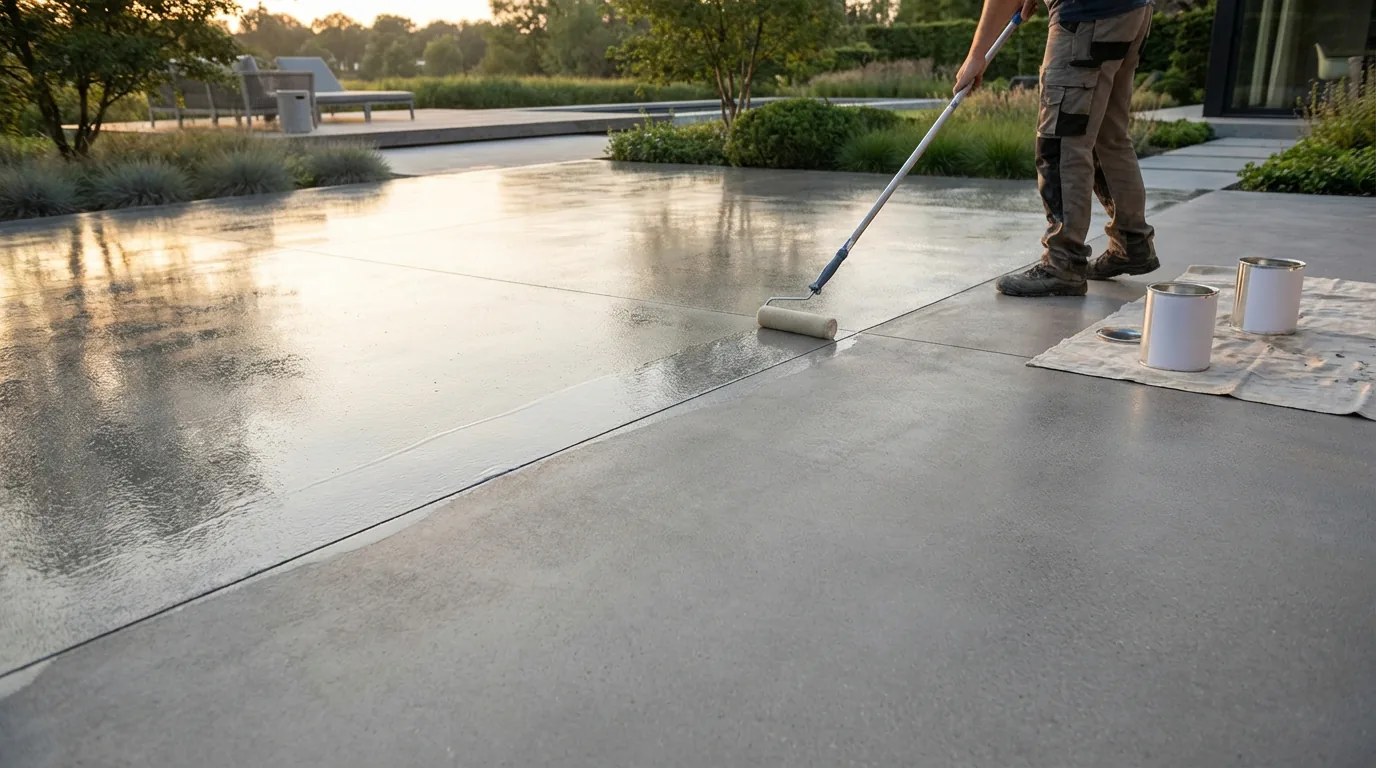
Roller applications usually create thicker sealant layers, resulting in longer solvent retention and increased drying time. Conversely, sprayers can achieve thinner, more even coats that dry faster but require skill to avoid drips or pooling. Selecting the right tool depends on balance between desired dry time and finish quality.
Selecting the appropriate sealer and applying it correctly is vital; our article on how to seal a concrete driveway in Australia offers pro tips on preparation and application methods that complement this drying timeline overview.
Real-World Drying Timelines: Practical Charts and Scenario-Based Estimates
Dry Time Chart: Surface Dry to Fully Cured by Sealer Type
| Project Type | Sealer Type | Surface Dry | Tack-Free | Fully Cured | Foot Traffic Allowed | Vehicle Traffic Allowed |
|---|---|---|---|---|---|---|
| Residential Driveway | Acrylic | 1 hr | 3 hrs | 48 hrs | 3–6 hrs | 48–72 hrs |
| Concrete Pavers | Epoxy | 6 hrs | 12 hrs | 7 days | 24 hrs | 7 days |
| Patio Area | Polyurethane | 2 hrs | 4–6 hrs | 72 hrs | 6–12 hrs | 72 hrs |
Sample Timelines for Common Projects (Driveways, Pavers, Patios)
Example 1: Melbourne northern suburb driveway sealed with acrylic sealer at 22°C and 50% humidity. Surface dry in 1 hour, safe for foot traffic after 3 hours, vehicle traffic permissible after 48 hours.
Example 2: Concrete pavers in shaded area sealed with epoxy sealing during cooler 15°C weather. Surface dried by 6 hours, tack-free at noon the next day, but full cure delayed up to 7 days before traffic.
When Is Sealed Concrete Ready for Foot and Vehicle Traffic?
Acrylic sealers typically permit foot traffic within hours, but avoid vehicle or heavy load access until at least 48 hours post-application. Epoxy requires longer cure times; foot traffic can be allowed after 24 hours if tack-free, but vehicle use only after full cure (up to 7 days). Polyurethane sealers allow light foot traffic at 6–12 hours, with vehicle traffic restricted until curing completes. Timing adjustment based on seasonal climate is critical to avoid surface damage.
Understanding dry times is key, especially if you plan to install coloured finishes—discover detailed insights in our article on the coloured concrete driveway options in Melbourne.
Troubleshooting Common Drying Issues and Best Practices
Tackiness and Slow Drying Causes and Solutions
- Cause: High humidity, low temperature, excessive sealer thickness.
- Solution: Apply thin coats during dry, warmer periods and ensure good airflow. Use dehumidifiers or fans indoors.
- Cause: Contaminated or damp concrete surface slowing adhesion.
- Solution: Thoroughly dry and clean the surface before sealing.
Film Formation Problems and How to Avoid Them
- Cause: Applying sealer in direct sun or very hot weather causing uneven drying and blistering.
- Solution: Seal during morning or late afternoon shadowed hours.
- Cause: Applying new coat before previous layer is fully cured.
- Solution: Respect manufacturer recommended dry and cure times between layers.
Tips to Accelerate Dry Times Without Compromising Quality
- Seal on days with predicted low humidity and temperatures between 20–25°C. Check meteorological sources like the Bureau of Meteorology Australia.
- Use fans or increase airflow to speed evaporation indoors.
- Apply multiple thin coats rather than one thick coat.
- Avoid sealing during rainy or damp weather to prevent moisture interference.
Following these best practices minimizes drying complications encountered by Melbourne home and commercial projects.
Expert Insights and FAQs on Concrete Sealer Drying
Expert Interview Excerpts on Dry Time Expectations
“In Melbourne’s variable climate, planning your sealing around seasonal dry spells can mean the difference between a smooth cure and a tacky finish. We always advise clients to check forecasts and avoid application in high humidity or cold conditions,” says John Mathews, a coatings specialist with 15 years’ experience in Northern Melbourne. “Patience is key—rushing surface traffic after sealing leads to costly patch-ups.”
Frequently Asked Questions Addressing Lingering Doubts
- Q: How do you differentiate between sealer “dry to touch” and “fully cured” practically?
A: “Dry to touch” means no tackiness when lightly touched, usually allowing foot traffic. “Fully cured” means internal chemical hardening is complete to bear vehicular or heavy loads, which can take days. - Q: What are the best environmental conditions for sealing concrete to reduce dry time?
A: Ideal conditions are 20–25°C temperatures, low humidity (<60%), mild wind, and dry surfaces. - Q: Can drying problems be prevented on humid or rainy days?
A: Avoid sealing during such periods, or use indoor fans and dehumidifiers to improve airflow and evaporation. - Q: Are there safe accelerants to speed drying?
A: Some manufacturers offer additives, but use cautiously as they may reduce sealer longevity or cause surface defects. - Q: How do regional climate differences in Australia alter drying times?
A: Cooler, wetter regions like Melbourne’s northern suburbs generally experience slower curing, requiring longer wait times compared to drier states like Queensland.
For a detailed comparison of epoxy, acrylic, and polyurethane concrete sealers drying times and performance, see our comprehensive Epoxy vs Acrylic vs Polyurethane Sealers: Driveway Showdown. For information on longevity and sealing properties, our review of the best concrete sealers: types, uses & lifespan (2026) complements drying time considerations perfectly.
Choosing the right product is crucial — explore options in our article on the best sealer for concrete pavers: wet look vs penetrating to match drying timelines with your project needs.
Conclusion
Concrete sealer dry times vary widely by sealer type, environmental conditions, application method, and surface characteristics. In Melbourne’s northern suburbs, understanding these variables and planning accordingly ensures smooth, effective sealing projects that stand the test of time. Acrylic sealers dry quickly but require mindful curing, epoxies offer strength with longer cures, and polyurethanes balance protection and dry time. Always consider climate, apply optimal thickness, and wait for full cure before subjecting surfaces to traffic. Utilizing our real-world timelines and troubleshooting tips helps you avoid common pitfalls and achieves professional-grade results.
Ready to plan your next concrete sealing project with confidence? Stay informed with expert advice and region-specific insights for durable and attractive concrete finishes.
Frequently Asked Questions
What factors cause variations in concrete sealer dry times?
Concrete sealer dry times vary due to sealer type, application thickness, ambient temperature, humidity, and airflow. Surface porosity and preparation also influence drying. Cooler, humid, or stagnant conditions generally extend dry and cure times compared to warm, dry, and ventilated environments.
How does drying time differ between acrylic and epoxy concrete sealers?
Acrylic sealers typically dry to touch within 30 minutes to 2 hours and fully cure in 24–48 hours. Epoxy sealers take longer, with surface dry in 4–6 hours and full curing requiring 3–7 days due to their chemical curing process and thicker film formation.
Why is curing time important after the concrete sealer surface feels dry?
Curing time allows internal chemical reactions to harden the sealer fully, ensuring durability and adhesion. Though a sealed surface may feel dry early, full curing prevents damage from traffic and environmental exposure, extending the lifespan of the sealer.
When is it safe to apply additional coats on a concrete sealer?
Additional coats should be applied only after the previous layer is tack-free or fully cured as recommended by the manufacturer. Premature recoating can trap solvents and cause poor adhesion or surface defects like blistering or tackiness.
Can environmental conditions speed up or slow down concrete sealer dry times?
Yes, higher temperatures and good airflow accelerate solvent evaporation and curing, reducing dry times. Conversely, low temperatures, high humidity, and stagnant air slow drying and curing significantly, potentially extending wait times by 30–50% or more.
Which concrete sealer dries fastest: acrylic, epoxy, or polyurethane?
Acrylic sealers dry fastest, often becoming surface dry within 30 minutes to 2 hours. Polyurethane sealers dry slower, typically 1–3 hours surface dry, while epoxy sealers take the longest, around 4–6 hours for surface dry and several days for full cure.
How do roller and sprayer application methods affect concrete sealer dry times?
Rollers apply thicker, uniform sealer coats that retain solvents longer, increasing dry times. Sprayers produce thinner, faster-drying films but require skill to avoid uneven coverage. Choosing the method balances drying speed with finish quality.
What is the difference between “surface dry” and “tack-free” stages in concrete sealing?
“Surface dry” means the sealer feels dry to the touch but may still be soft underneath. “Tack-free” means no sticky residue remains when lightly touched, indicating sufficient solvent evaporation for safe light contact or subsequent treatments.