
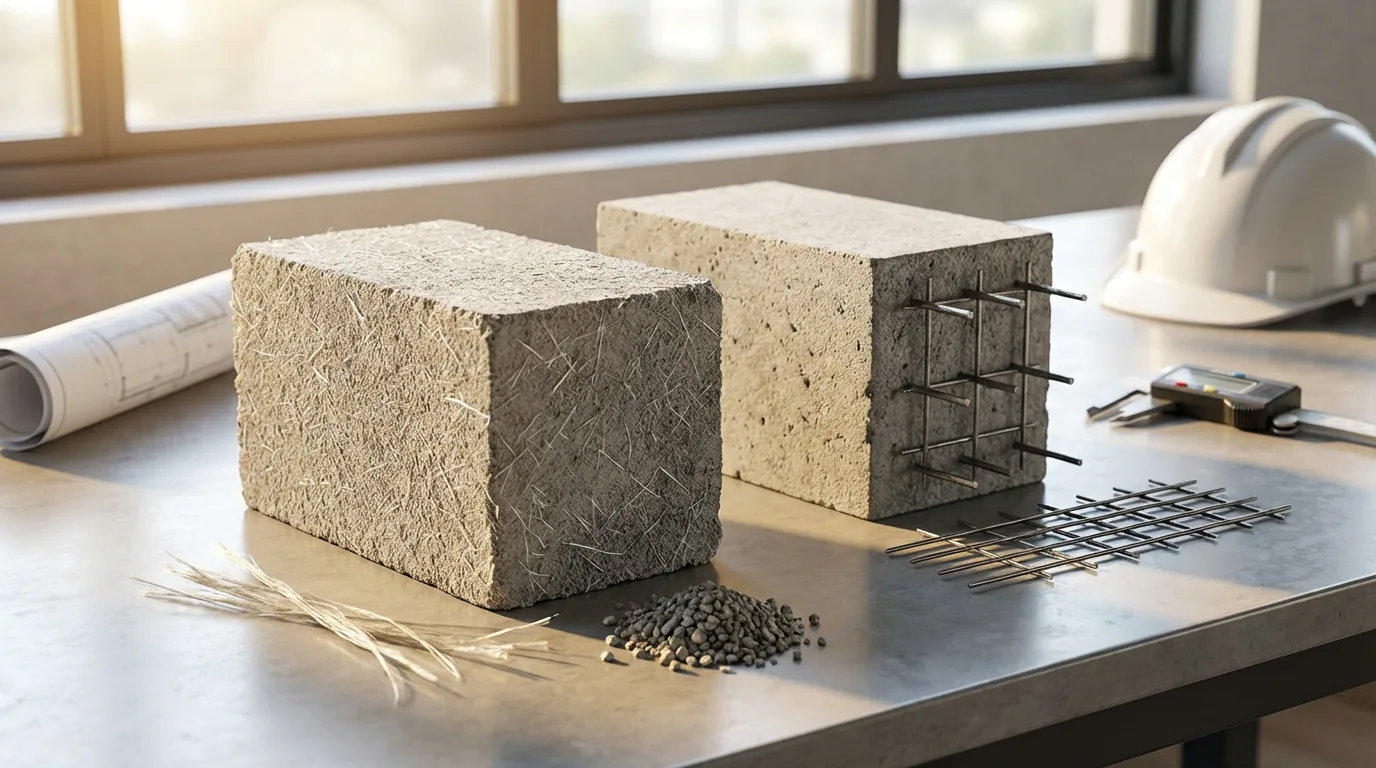
Reinforced concrete stands as the backbone of modern infrastructure, providing the essential strength and durability demanded by outdoor construction projects. However, the choice between fibre reinforced concrete and steel reinforced concrete is critical to ensure optimal performance, longevity, and sustainability. This reinforcement overview explores these two dominant reinforcement methods, comparing their material properties, durability, cost effectiveness, and suitability specifically for Melbourne’s Northern Suburb and similar outdoor environments. Whether you’re a builder, engineer, or informed DIYer, understanding the nuances of these materials will guide your construction decisions toward structural excellence and environmental responsibility.
Understanding Reinforced Concrete: Materials and Basics
What Is Reinforced Concrete? Definitions and Core Concepts
Reinforced concrete integrates concrete’s compressive strength with added reinforcement materials to enhance tensile and flexural capabilities. This combination addresses concrete’s inherent brittleness under tensile forces, enabling structures to better resist loads, shocks, and environmental stresses typical in outdoor settings.
The reinforcement methods fall mainly into two categories: steel reinforced concrete, where steel bars or mesh (rebars) provide traditional reinforcement; and fibre reinforced concrete, which embeds discrete fibres made from various materials (polypropylene, glass, steel) throughout the concrete matrix to control crack propagation and improve toughness.
For those unfamiliar with the base materials involved in reinforced concrete, our detailed exploration of cement composition and ingredient types provides foundational knowledge essential for reinforcement decisions.
Clarifying the differences between cement and concrete helps in understanding the reinforcement overview discussed here.
Overview of Reinforcement Materials: Steel vs Fibre Types
- Steel Reinforced Concrete: Uses steel rebars or meshes positioned longitudinally within concrete to bear tensile stresses.
- Fibre Reinforced Concrete (FRC): Disperses fibres uniformly to enhance impact resistance and control micro-cracking.
- Fibreglass Concrete Reinforcement: A subtype of FRC using glass fibres—often called fiberglass or fibreglass concrete reinforcement—to improve durability and corrosion resistance.
Common Types of Fibre Reinforced Concrete (FRC, fibreglass concrete reinforcement, fiber concrete)
FRC varieties differ based on fibre composition, length, and volume fraction. Common fibre types include:
- Polypropylene Fibres: Economical, improve abrasion resistance and reduce shrinkage cracking.
- Steel Fibres: Provide additional load-bearing capacity and toughness, sometimes used alongside steel rebars.
- Glass Fibres (Fibreglass Concrete Reinforcement): Offer corrosion resistance ideal for marine or chemically aggressive environments.
- Synthetic Fibres: Enhance impact and fatigue resistance without adding significant weight.
Basic Properties of Steel Reinforced Cement (rebar, steel reinforcement)
Steel reinforcement typically uses carbon steel rebars that bond effectively with concrete, providing high tensile strength and ductility. The rigidity of steel rebars complements concrete’s compression strength, making it the traditional reinforcement choice in structural and heavy-load applications. However, steel is vulnerable to corrosion, especially in moist or marine environments, leading to potential durability issues unless properly protected.
A deeper knowledge of cement composition and ingredient types and the differences between cement and concrete underpins how reinforcement materials interact with the concrete matrix, affecting overall structural integrity.
Material Properties and Performance Comparison
Tensile Strength and Load-Bearing Capacities of Fibre vs Steel Reinforced Concrete
Steel reinforced concrete (SRC) offers tensile strengths typically ranging from 400 to 600 MPa, thanks to the high-strength steel rebars embedded within. SRC’s load-bearing capacity excels in structural framework and heavy infrastructure, sustaining dynamic and static stresses effectively. To optimize the tensile strength and load-bearing capacity of fibre and steel reinforced concrete, understanding the concrete mix ratios for 25–32 MPa strength is crucial.
Fibre reinforced concrete (FRC), including frc concrete and fiber concrete, enhances tensile strength by controlling crack widths and distributing stresses evenly at the micro-level. Typical fibre tensile strengths vary significantly—steel fibres up to 2000 MPa versus polypropylene fibres around 500 MPa. However, FRC’s tensile enhancement is more about toughness and durability rather than pure load-bearing capacity. For evaluating reinforced concrete materials, consulting concrete mix ratios and strength guidelines ensures performance suitability.
| Property | Steel Reinforced Concrete | Fibre Reinforced Concrete (FRC) |
|---|---|---|
| Tensile Strength (MPa) | 400 – 600 | Varies: 500 – 2000 (fibre dependent) |
| Modulus of Elasticity (GPa) | 200 | 10 – 70 (composite effect) |
| Crack Control | Through rebar placement | Distributes micro-cracks uniformly |
| Impact Resistance | Moderate | High (improved toughness) |
Durability and Corrosion Resistance in Outdoor Construction
Durability is pivotal for outdoor applications. Steel rebars, while structurally strong, are prone to corrosion if the concrete cover is compromised, especially in marine, freeze-thaw, or chemically aggressive environments. This corrosion leads to expansion, cracking, and spalling — necessitating regular maintenance.
By contrast, fiberglass concrete reinforcement and synthetic fibres resist corrosion and chemical attack, offering superior resilience to marine and weather-exposed conditions typical of Melbourne’s Northern Suburb coastal zones. Fibre concretes also exhibit improved freeze-thaw resistance due to controlled microcrack propagation, reducing overall damage progression.
Impact of Material Composition on Concrete Performance (including fibre concrete and steel rebar interaction)
Innovative composites now combine steel rebar with fibres to harness synergistic effects — fibres manage crack initiation and propagation while steel rebars maintain macroscopic load capacity. This hybrid approach addresses limitations inherent in each material, delivering enhanced toughness, ductility, and durability even under cyclic outdoor loads. Material composition balance is critical; excessive fibres may impede concrete workability, while insufficient fibre content reduces effectiveness.
Innovation Trends: Advances in Fiberglass and Fibre Reinforced Concrete Materials
Recent developments in fibre technologies include:
- Enhanced fibreglass concrete reinforcement fibres with alkali-resistant coatings extend durability in alkaline cement environments.
- Engineered hybrid fibres combining carbon, polypropylene, and steel components for tailored performance.
- Nanofibre additives enhancing bonding and microstructure density, improving mechanical properties substantially.
According to a 2023 study in Cement and Concrete Composites, these innovations reduce maintenance needs and improve lifecycle performance dramatically in outdoor applications.
For detailed understanding, consulting concrete mix ratios for 25–32 MPa strength and concrete mix ratios and strength guidelines ensures that reinforcement materials achieve their full potential.
Practical Outdoor Construction Applications and Suitability
Use Cases: Fibre Reinforced Concrete in Pavements, Marine Structures, and Bridges
Fibre reinforced concrete excels in conditions requiring crack resistance and durability. Typical applications in Melbourne’s Northern Suburb include:
- Pavements: Fibre concretes resist shrinkage cracks and improve fatigue life, ideal for footpaths and light traffic zones.
- Marine structures: Fibreglass and synthetic fibres enhance resistance to chlorides and seawater corrosion.
- Bridge decks: FRC reduces repair frequency by mitigating microcracking, enhancing safety and longevity.
Use Cases: Steel Reinforced Concrete in Heavy Load-Bearing Outdoor Projects
Steel reinforced concrete’s proven high tensile strength makes it the preferred choice for:
- Foundations and columns that bear significant static and dynamic loads.
- Heavy-duty transport infrastructure such as highways, ramps, and heavily trafficked bridges.
- Structural marine elements where load capacity outweighs corrosion concerns and where protective coatings may be applied.
Maintenance Requirements and Longevity of Fibre vs Steel Reinforced Concrete
FRC typically requires less frequent maintenance due to its inherent crack control and corrosion resistance. In contrast, steel reinforcement demands vigilant inspection and potential anti-corrosion treatments to mitigate rust damage. In environments with aggressive weather exposure—freeze-thaw cycles, UV radiation typical of Melbourne’s northern suburbs—FRC’s lower maintenance profile improves lifecycle cost efficiency.
Environmental Exposure and Weathering Effects on Reinforced Concrete Materials
Weathering impacts concrete significantly. Aggressive environmental factors such as moisture ingress, UV radiation, temperature fluctuations, and de-icing salts accelerate deterioration. Fibre concretes with non-corrodible fibres withstand these better, while steel reinforced concrete requires adequate concrete cover and sometimes corrosion inhibitors.
In selecting materials, it is useful to consider concrete slump test procedures and values to ensure optimal workability for outdoor conditions.
When considering reinforcement methods for coloured concrete driveway options in Melbourne, it’s essential to choose materials that ensure both aesthetic and structural durability.
Environmental Impact and Sustainability Considerations
Carbon Footprint and Lifecycle Analysis of Fibre vs Steel Reinforcement
Steel production is energy-intensive and contributes significantly to carbon emissions, with estimates indicating up to 1.85 tonnes of CO2 per tonne of steel produced. Conversely, fibres such as polypropylene and fiberglass generally have lower embodied energy but vary in environmental impact depending on manufacturing processes.
Lifecycle analyses (LCA) suggest that fibre reinforced concrete reduces lifecycle emissions by reducing repair and demolition cycles. According to a 2023 EPA report, fibre reinforcement’s longer durability and reduced maintenance contribute to smaller overall carbon footprints in marine and pavement applications compared to steel rebars.
Recyclability and Environmental Costs of Reinforced Cement Materials
Steel reinforcement is highly recyclable, often recovered during demolition and reused, which mitigates some environmental costs. Fibres can be more challenging to recover, especially synthetic varieties, potentially complicating end-of-life concrete recycling.
Sustainable Innovations in Fibre and Fiberglass Concrete Reinforcement
- Development of bio-based fibre alternatives.
- Improved fibreglass coatings enhancing durability and recyclability.
- Hybrid systems promoting reduced steel use thereby lowering embodied carbon.
Industry Standards and Regulations Impacting Eco-Friendly Reinforced Concrete
Compliance with standards like ASTM C1116 for fibre reinforced concrete and ASTM A615 for steel reinforcement ensures eco-efficient practices. Additionally, Australian Standard AS 3600 guides concrete structures including sustainable material usage.
Cost-Benefit Analysis and Economic Considerations
Initial Material and Installation Costs: Fibre vs Steel Reinforced Concrete
Steel reinforcement materials are generally cheaper per unit weight but require more extensive labour for accurate placement and formwork, increasing installation costs. Fibre reinforced concrete may have higher upfront material costs — particularly with specialized fibres such as fibreglass — but reduces labour time due to uniform mixing.
| Cost Factor | Steel Reinforced Concrete | Fibre Reinforced Concrete |
|---|---|---|
| Material Cost per m³ | Approx. AUD 150 – 220 | Approx. AUD 180 – 260 |
| Installation Labour | High (rebar tying, positioning) | Lower (fibres mixed in batch) |
| Maintenance Over 20 Years | Moderate to High (anti-corrosion treatments) | Low to Moderate |
Long-Term Maintenance and Repair Costs
Steel reinforced concrete can incur higher lifecycle maintenance costs, especially in coastal or sulfate-rich soils common to parts of Melbourne’s Northern Suburbs, where corrosion risk is elevated. Fibre reinforced concrete tends to reduce repair events owing to superior crack control and corrosion resistance.
Cost Efficiency in Various Outdoor Construction Scenarios
For light to medium load pavements and marine infrastructure, fibre reinforced concrete often achieves better cost efficiency over 25 years by minimizing repair and downtime. For heavy infrastructure, steel reinforced concrete remains more favourable despite higher potential maintenance due to superior strength capacity.
Market Trends and Pricing Forecast for Reinforcement Materials
With increasing steel prices and supply chain volatility (2023–2024), fibre materials have gained market traction for their consistent availability and environmental appeal. Forecasts predict continued fibre innovation will further improve cost effectiveness and performance.
Industry Standards, Codes, and Quality Assurance
Relevant ASTM, ISO, and Other Global Standards for Reinforced Concrete
Key standards include:
- ASTM C1116: Specification for fibre reinforced concrete materials
- ASTM A615: Requirements for steel reinforcement bars
- ISO 22965: Concrete and fibre reinforced concrete norms
- AS 3600 (Australia): Concrete structures standard guiding reinforcement requirements
Quality and Certification Requirements for Fibre and Steel Reinforced Concrete Materials
Material certification ensures reinforcement properties meet design intents. Certifications verify tensile strength, durability, and chemical composition. For fibreglass concrete reinforcement, alkali resistance certification is critical to confirm longevity within alkaline cement matrices.
Emerging Testing Protocols for New Fibre Reinforcement Technologies
New testing standards focusing on crack control, fibre dispersion uniformity, and long-term durability are evolving, with in-depth protocols detailed in resources such as testing standards and procedures for fibre reinforced concrete. These emerging protocols assist engineers in validating innovative materials.
Compliance Challenges and Best Practices in Outdoor Reinforced Concrete Projects
Challenges include ensuring uniform fibre distribution, verifying corrosion protection in steel reinforcements, and maintaining adherence to environmental standards. Best practices involve onsite verification, non-destructive testing, and rigorous material sourcing.
Future Innovations and Expert Insights in Reinforced Concrete
Cutting-Edge Developments in Fiberglass and Fibre Reinforcement Technologies
Experts highlight breakthroughs such as:
- Nano-engineered fibres with enhanced bonding and strength.
- Smart fibres capable of self-sensing structural integrity through embedded sensors.
- Biodegradable fibre composites inducing sustainability.
Hybrid Reinforcement Systems Combining Fibre and Steel
Hybrid systems utilize the macro-strength of steel rebars with micro-crack control via fibres. Recent commercial projects in Australia demonstrate reduced steel requirements (up to 30%), lowering carbon footprints and material costs while maintaining safety and durability.
Expert Opinions on the Future of Reinforcement Materials in Construction
“The integration of fibre reinforcement, particularly fibreglass-based technologies, marks a pivotal shift in sustainable infrastructure engineering. Hybrid systems will define next-generation concrete performance.” – Dr Lisa Huang, Materials Engineer, University of Melbourne, 2024
Predicting Trends in Material Adoption for Outdoor Structural Projects
With regulatory focus on sustainability and lifecycle costs rising, fibre reinforced concrete adoption is forecasted to increase in the Melbourne Northern Suburb and similar climates, especially where corrosion and maintenance costs challenge steel reinforcement longevity.
Summary Comparison and Decision Guide for Reinforcement Choice
| Criteria | Fibre Reinforced Concrete | Steel Reinforced Concrete |
|---|---|---|
| Tensile Strength | Moderate – High (depending on fibre) | High |
| Durability (Outdoor Exposure) | High – superior corrosion resistance | Moderate – susceptible to corrosion |
| Maintenance | Low | Medium to High |
| Cost (Material + Installation) | Higher upfront, lower lifecycle cost | Lower upfront, potentially higher lifecycle cost |
| Environmental Impact | Lower overall carbon footprint | Higher embodied energy and carbon |
| Best Applications | Pavements, marine structures, light to medium loads | Structural supports, heavy load-bearing elements |
- When choosing reinforcement materials, consider project load requirements, environmental exposure, and maintenance capabilities.
- For reinforced concrete choices for outdoor projects like driveways, fibre reinforced concrete offers durability with aesthetic versatility.
- Hybrid systems may offer the best balance of strength and longevity in challenging environments.
FAQs on Fibre and Steel Reinforced Concrete
What maintenance practices extend the lifespan of fibre reinforced concrete outdoors?
Routine inspection for surface damage, ensuring proper drainage, and applying protective sealants can significantly prolong fibre reinforced concrete lifespan, although it generally requires less frequent intervention than steel reinforced counterparts.
How does fibre reinforced concrete perform under extreme weather compared to steel?
FRC exhibits superior resistance to freeze-thaw cycles, UV exposure, and chemical attack due to non-corrodible fibres dispersing stresses and preventing crack propagation, while steel reinforcement may degrade without protective measures.
Are there hybrid solutions combining fibre and steel reinforcement?
Yes. Hybrid solutions merge the tensile strength of steel rebars with the crack control and toughness of fibres. These systems reduce steel volume requirements, optimize material costs, and increase durability, making them commercially viable for many outdoor applications.
What are the environmental certification labels to look for in reinforced concrete materials?
Certifications to note include compliance with ASTM C1116 for fibre concretes, ASTM A615 for steel reinforcements, and ISO 14040 standards for lifecycle assessments. Additionally, look for regional ecological certifications such as LEED or Green Star ratings applicable to construction projects.
How do costs scale for large infrastructure projects using fibre vs steel reinforcement?
Costs scale based on material volumes and installation complexity. Fibre reinforced concrete often shows cost savings over the project lifecycle due to reduced maintenance, while steel reinforced projects may have lower initial material costs but potentially higher repair expenses. Detailed scenario analysis is essential for precise budgeting.
Frequently Asked Questions
What is the primary function of fibre reinforcement in concrete?
Fibre reinforcement primarily controls crack propagation and enhances toughness in concrete, improving impact resistance and durability. It distributes micro-cracks evenly, reducing damage progression especially in outdoor or aggressive environmental conditions.
How does steel reinforcement improve concrete’s structural performance?
Steel reinforcement improves concrete by providing high tensile strength and ductility, allowing the concrete to withstand heavy loads and dynamic stresses. Steel rebars complement concrete’s compressive strength, making structures strong and resilient in demanding applications.
Which reinforcement method offers better corrosion resistance for marine environments?
Fibre reinforced concrete, especially with fibreglass and synthetic fibres, offers superior corrosion resistance in marine environments compared to steel reinforcement, which is prone to rust and requires protective coatings to maintain durability outdoors.
Why might hybrid reinforcement systems be advantageous in outdoor construction?
Hybrid systems combine steel’s high tensile strength with fibres’ crack control, enhancing overall durability and toughness. This synergy reduces steel quantity needed, lowers maintenance, and improves lifespan under cyclic and harsh environmental loads.
Can fibre reinforced concrete reduce long-term maintenance costs compared to steel reinforced concrete?
Yes, fibre reinforced concrete typically lowers maintenance costs due to its enhanced crack control and corrosion resistance, which reduces repair frequency and extends the structure’s service life in outdoor and aggressive environments.
How do material costs and installation differ between fibre and steel reinforced concrete?
Steel reinforcement has lower material costs but higher installation labour due to rebar positioning. Fibre reinforced concrete has higher upfront material costs but reduces installation time by mixing fibres directly, often leading to better lifecycle cost efficiency.
What environmental impacts should be considered when choosing reinforcement materials?
Consider embodied carbon and recyclability; steel has a higher carbon footprint but is recyclable, whereas fibres generally have lower embodied energy but can complicate concrete recycling. Lifecycle durability and maintenance needs also affect overall environmental impact.
Is fibre reinforced concrete suitable for heavy load-bearing structural elements?
Fibre reinforced concrete alone is generally less suited for heavy load-bearing elements due to lower pure tensile strength compared to steel reinforcement; however, it is excellent for controlling cracks and enhancing durability when used alongside steel in hybrid applications.