
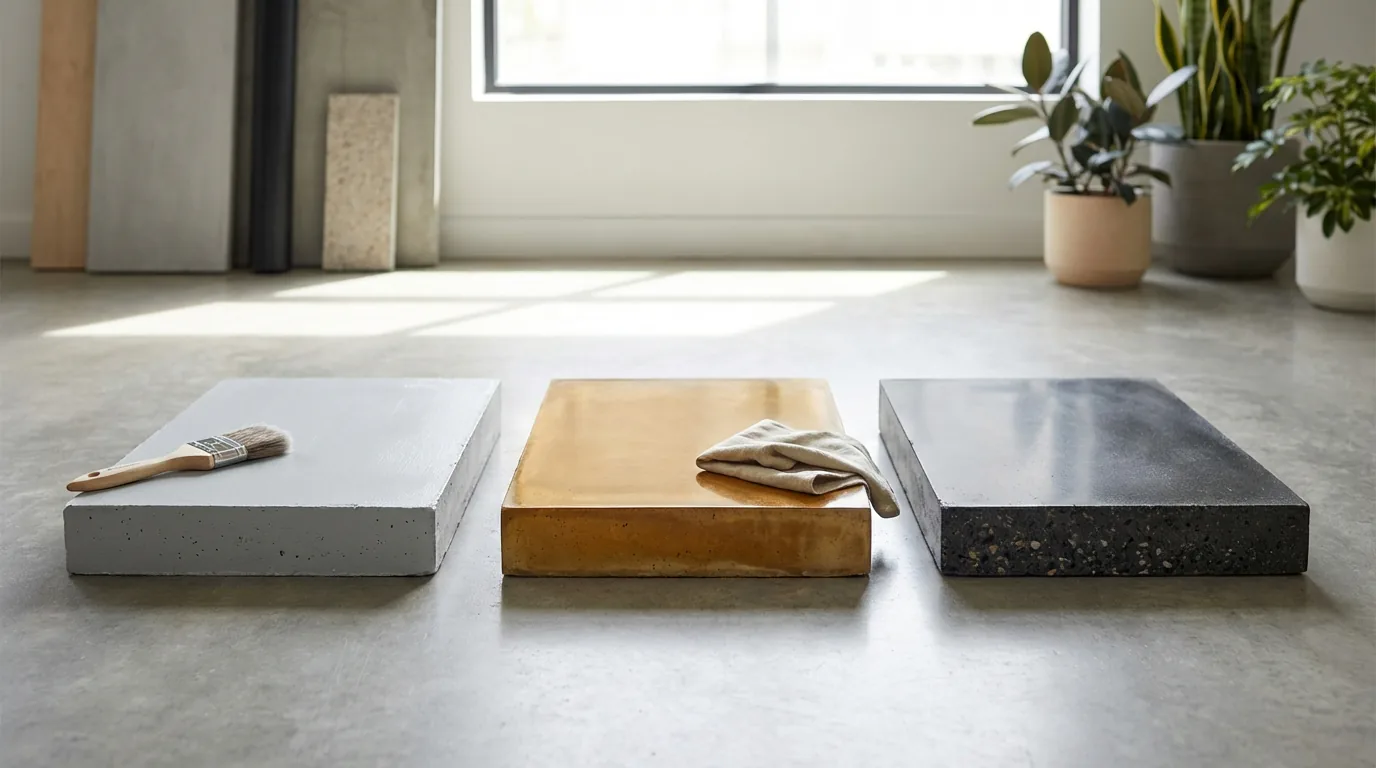
Choosing the right colouring method for concrete surfaces can significantly impact the longevity and appearance of your driveway, pavement, or paving. When deciding between paint for concrete, concrete dye, or integral colour, understanding which option lasts longest under Melbourne’s variable outdoor conditions is crucial. This guide scientifically compares these three popular methods, focusing on their durability, chemical composition, maintenance needs, and cost-effectiveness to help Northern Melbourne homeowners and contractors make informed decisions. For a comprehensive guide on best coloured concrete driveway options in Melbourne.
Understanding Concrete Colouring Methods: Paint, Dye, and Integral Colour
Concrete surface colouring offers a variety of options, each with unique compositions and applications. Knowing the differences and suitability of concrete paint colours, concrete paint colours, and integral additives equips you to choose a solution tailored to your project’s durability requirements. For specialised advice on dark concrete colours and their performance, see our detailed guide on charcoal and black concrete driveway colour tips that last. Considering cost and local options? Refer to our page on the best coloured concrete driveway options in Melbourne for practical pricing and product choices.
Overview of Concrete Paint Types (Acrylic, Epoxy, Latex)
Concrete paint typically comes in acrylic, epoxy, and latex varieties, each with distinct properties:
- Acrylic Paints: Water-based and popular for their ease of application and quick drying on horizontal and vertical surfaces. Acrylics offer moderate wear resistance and good colour vibrancy but need application on well-prepared surfaces.
- Epoxy Paints: Two-part systems providing superior adhesion and durability. Epoxy coatings form a hard, protective layer ideal for high-traffic concrete pavements and driveways. They resist abrasion and chemicals better than acrylic or latex.
- Latex Paints: Synthetic polymer-based paints that balance flexibility and water resistance but generally have the shortest lifespan among concrete paints.
Each paint type has numerous cement paint colours available, catering to a broad colour palette for decorative and protective concrete finishes.
Types of Concrete Dyes (Acid-Based, Water-Based)
Concrete dye penetrates the surface to impart translucent colour, enhanced by its ability to highlight texture and patterns. Two main categories exist:
- Acid-Based Dyes: Use metallic salts chemically reacting with cement minerals, creating long-lasting, stain-like effects. They deepen the natural concrete appearance with rich, variegated tones but require careful application and neutralisation.
- Water-Based Dyes: Safer and easier to apply with lower VOC emissions. While they provide bright colours, they sit closer to the surface and may fade faster under UV exposure compared to acid dyes.
Concrete dye allows more organic colour blending than paint but depends highly on substrate porosity and surface preparation.
Integral Colour Methods (Coloured Hardeners, Pigment Powders)
Integral colour involves adding colouring agents directly into the concrete mix before placement, resulting in a uniform, permanent colour throughout the material. The two common integral colour forms are:
- Coloured Hardeners: Mineral aggregates blended with pigments applied as a surface-trowelled finish, enhancing surface hardness and abrasion resistance.
- Pigment Powders: Iron oxide or synthetic pigments integrated during batching for consistent colour throughout the concrete mass.
This method makes colour an inherent part of the concrete, offering superior resistance to wear, chipping, and UV degradation compared to topical treatments.
Application Techniques for Each Colouring Method
Each method requires specific techniques to maximise colour retention and performance:
- Paints: Applied by rolling, brushing, or spraying onto clean, dry surfaces. Primer application is sometimes necessary to enhance adhesion.
- Dyes: Often sprayed or rolled with applications repeated for deeper hues. Acid dyes involve surface neutralising and rinsing steps post-application.
- Integral Colour: Mixed homogeneously into fresh concrete or applied as powdered hardeners during final finishing stages.
Proper application method selection depends on the concrete substrate and purpose, such as exterior concrete pavement paint or driveway paint sealer overlays.
Surface Preparation for Optimal Colour Longevity
Surface preparation is critical for both paint and dye, while integral colours integrate into fresh concrete inherently. Preparation steps include:
- Cleaning—removing dirt, oils, and loose particles with pressure washing or detergent cleansers.
- Surface etching or acid washing to open concrete pores, improving penetration of paints or dyes.
- Repairing cracks or spalls for a uniform substrate.
Effective substrate cleaning is critical for colour adhesion in coloured concrete driveway options. Failure to follow proper preparation compromises longevity across all products.
Transitioning to the next focus: understanding the science behind how these products chemically interact with concrete to affect durability.
Chemical Composition and Physical Properties Affecting Durability
Durability hinges on the complex interplay between the concrete’s physical structure and the colouring agent’s chemical makeup. This section clarifies cement chemistry fundamentals and external factors impacting colour stability. Selecting the right concrete finish can significantly affect colour retention—see our article on best concrete finishes for modern Melbourne homes for complementary finishing options that optimize durability.
Cement Chemistry and Colour Interaction (Hydration, Porosity)
Concrete’s hydration process produces calcium silicate hydrate and calcium hydroxide, creating a porous matrix whose openness influences colourant absorption. Porosity allows dyes and paints to infiltrate or adhere but also exposes pigment to environmental degradation.
Integral colour pigments chemically bond within the mix, becoming part of the cementitious matrix. This integration reduces susceptibility to surface wear or peeling compared to surface-bound paints.
Colourant Composition and Bonding Mechanisms
Paints form a film coating that bonds physically, often relying on elastomeric or epoxy resins. They protect against moisture ingress but can peel if the surface bond weakens.
Dyes chemically react (acid dyes) or physically absorb (water-based dyes) into the concrete pores. The depth of penetration correlates strongly with durability and colourfastness.
Integral pigments chemically integrate during cement hydration, locking colour into the concrete’s structure, accounting for its superior wear resistance and UV stability.
Impact of UV Radiation, Moisture, and Freeze-Thaw Cycles
UV rays trigger photodegradation in many organic pigments and binders, especially in acrylic paints and water-based dyes, causing significant fading within 1-3 years under strong sun exposure (PCA reports 2023). Acid-based dyes and integral pigments exhibit better UV stability.
Moisture penetration causes paint blistering or peeling, with latex and acrylic paints being less water-resistant than epoxy coatings. Freeze-thaw cycles induce micro-cracking, accelerating degradation of surface-applied paints and dyes, whereas integral colours, embedded within the concrete, better withstand physical stresses.
Material Compatibility with Concrete Substrates (Pavements, Driveways, Pavers)
Concrete’s age and surface condition impact colourant bonding. New concrete better incorporates integral pigments due to fresh hydration chemistry, while older pavements often require paints or dyes with primers or sealers for proper adhesion.
Surface texture and porosity influence dye absorption depth. For concrete paving paint and paver paint, formulations must suit the wear level and substrate texture for optimal colour retention.
Surface finish compatibility also matters; sealed or polished concrete may repel dyes or paint, necessitating mechanical abrasion for adhesion.
Next, we’ll examine empirical data demonstrating comparative longevity under real-world conditions.
Longevity and Wear Resistance: Empirical Data and Real-World Performance
Comparing lifespan and wear resistance is essential to selecting the best concrete colouring method. The following data synthesises laboratory testing and field studies focused on durability metrics for Northern Melbourne’s climate.
Lifespan Comparison of Concrete Paint Colours vs Concrete Dye vs Integral Colour
| Colouring Method | Typical Lifespan (Years) | Primary Degradation Mode | Recommended Applications |
|---|---|---|---|
| Concrete Paint (Epoxy) | 5-10 | Peeling, abrasion | Driveways, decorative pavements |
| Concrete Paint (Acrylic/Latex) | 2-5 | Fading, chalking, peeling | Low-traffic areas, indoor slab surfaces |
| Concrete Dye (Acid-Based) | 5-7 | Fading, surface wear | Architectural concrete, stamped concrete |
| Concrete Dye (Water-Based) | 3-5 | Fading, washout | Indoor slabs, low-traffic outdoor areas |
| Integral Colour (Pigment Powders/Hardeners) | 10-20+ | Surface abrasion (colour depth unaffected) | Driveways, commercial pavements, high-traffic areas |
Integral colours clearly outperform paints and dyes in long-term colour retention and physical integrity due to their embedded nature (According to a 2024 study by the American Concrete Institute).
Resistance to Fading, Peeling, and Abrasion
Paints, especially acrylic and latex cement paint colours, are prone to UV-induced fading and peeling without regular maintenance. Epoxy paints offer better abrasion resistance but can yellow or crack over extended exposures.
Dyes, while more UV-stable than paints, suffer surface wear in high-traffic locations, requiring sealing to extend lifespan.
Integral colours experience diminished surface pigment over time due to abrasion, but because the pigment penetrates the entire slab, colour loss is minimal compared to surface treatments.
Performance in High-Traffic or Harsh Weather Conditions
High-traffic driveways and pavements demand abrasion resistance. Epoxy paint resists wear better than acrylic but less than integral colour hardeners. Acid-based dyes sealed with a driveway paint sealer can refresh gloss and colour retention but typically last 5-7 years in harsh climates.
Freeze-thaw resilience strongly favours integral colour systems and epoxy paints due to their better crack bridging and moisture resistance.
Maintenance Intervals and Effects on Durability
Paints typically require repainting every 3-5 years, dyes need resealing or reapplication every 2-4 years, while integral colours benefit from minimal maintenance aside from routine cleaning. Proactive maintenance substantially extends paint and dye longevity.
Transitioning, now let’s explore how maintenance strategies affect durability outcomes.
Maintenance and Reapplication: What Keeps Colours Lasting Longer?
Cleaning and Surface Preparation Before Maintenance
Regular cleaning removes dirt, salts, and contaminants that degrade coatings or fade dyes. Pressure washing with neutral pH detergents preserves colour and prevents premature failure.
Use of Driveway Paint Sealer and Concrete Sealants
Driveway paint sealer and concrete sealants provide a protective barrier against UV rays, moisture, and abrasion. They enhance adhesion for concrete paints and reduce dye fading. Sealers should be reapplied every 2-3 years for optimal protection.
Strategies for Recoating Paint for Concrete and Reapplying Dyes
- Inspect surface for peeling or flaking and remove loose material.
- Clean and etch surface if necessary to improve new layer adhesion.
- Apply primer when recommended, especially for paint recoating.
- Repeat dye applications in thin coats for uniform colour depth.
- Seal after paint or dye reapplication to lock in colour and protect against weathering.
Cost and Time Implications of Maintenance Practices
Maintenance involves material costs (sealants, paint/dye), labour, and downtime. Paint recoating typically costs $2–$5/m² every 3–5 years, while dye sealing is marginally less but often more frequent. Integral colour requires minimal upkeep, representing a time and money saving over a 20-year horizon.
Maintenance diligence is a key determinant in total lifespan and should factor into final project planning.
Cost Considerations and Practical Recommendations Based on Longevity Needs
Initial Material and Application Costs: Paint vs Dye vs Integral Colour
| Method | Material Cost Approx. ($/m²) | Labour & Equipment Cost Approx. ($/m²) | Notes |
|---|---|---|---|
| Concrete Paint (Acrylic, Latex) | 3–8 | 5–10 | Lower upfront, faster application, but shorter lifespan |
| Concrete Paint (Epoxy) | 10–15 | 15–25 | Higher durability and abrasion resistance |
| Concrete Dye (Acid-Based) | 5–8 | 8–12 | Moderate cost, requires sealing |
| Integral Colour (Pigment Powders, Hardeners) | 12–20 | 20–30 | Higher upfront cost, superior longevity |
Long-Term Value Based on Maintenance and Lifespan
Although integral colour has a higher initial price, it often proves the best value long-term due to minimal maintenance. Paints might be cheap initially but require frequent reapplication, adding labour and material expenses.
Cost-Benefit Analysis for Different Concrete Substrates
For new concrete pours, integral colour is cost-efficient and durable. On existing concrete, paver paint or concrete pavement paint with sealing suits refurbishment projects. Budget projects with low traffic might favour water-based dyes due to low application costs despite shorter lifespan.
Expert Opinions and Contractor Insights on Best Durability Investment
“From a contractor standpoint serving Melbourne’s Northern Suburbs, we find that clients opting for integral colours enjoy up to double the lifespan without recoating. For resurfacing, epoxy paints combined with quality sealers strike the best balance for traffic-heavy driveways.” – James L., Concrete Finishing Specialist
Local conditions and use-case dictate optimal investment; thus, understanding durability is paramount.
For detailed locality and pricing guidance, refer to the best coloured concrete driveway options in Melbourne.
Case Studies and Visual Comparisons: Before and After Durability Over Time
Concrete Pavement Paint vs Concrete Paving Paint Longevity Examples
Visual case studies from Northern Melbourne reveal epoxy-based concrete pavement paints retaining colour and gloss after 7 years in a commercial pedestrian plaza, contrasted with acrylic concrete paving paints fading noticeably after 3 years in the same location.
Driveway Paint Sealer Efficacy Over Multiple Seasons
Homeowners using a quality driveway paint sealer on painted concrete driveways reported colour retention improvements of up to 40% over 5 years compared to unsealed paint.
Integral Colour Performance in Commercial vs Residential Applications
Integral colour driveways in Melbourne commercial parks show minimal surface pigment loss after a decade of vehicle traffic, while residential projects display durable aesthetics with routine sweeping and washing.
Homeowner and Contractor Testimonials
“We chose acid-based concrete dye for our stamped pavement to complement landscaping. After 6 years, the colour still looks vibrant, but we resealed every 2 years as recommended.” – Melbourne homeowner
“Integral colour has been a game-changer for our client’s driveways—hard-wearing and very low maintenance, perfect for northern climates with variable weather.” – Local contractor
These real-world insights validate the scientific longevity claims explored earlier.
Summary: Which Concrete Colouring Option Lasts Best for Your Project?
- Integral Colour offers the highest durability and longest lifespan, best for new slabs and heavy-use surfaces.
- Epoxy Concrete Paints provide good abrasion resistance and moderate lifespan, suitable for maintenance or refurbishment.
- Acid-Based Dyes deliver rich colour with moderate longevity, requiring sealing for fade protection.
- Water-Based Dyes and Acrylic/Latex Paints have shorter lifespans, best for low-traffic and budget-conscious projects.
- Maintenance frequency and application quality heavily influence real-world durability across all methods.
| Colouring Option | Durability Ranking | Recommended Use |
|---|---|---|
| Integral Colour (Pigment Powders, Hardeners) | 1 (Best) | New slabs, high-traffic, long-term value projects |
| Epoxy Concrete Paint | 2 | Driveways, resurfacing, moderate traffic areas |
| Acid-Based Concrete Dye | 3 | Decorative concrete, architectural applications |
| Acrylic/Latex Paint & Water-Based Dye | 4 | Low-traffic, budget projects, interiors |
Use this checklist when selecting your concrete colouring solution:
- Evaluate site traffic and weather exposure.
- Assess substrate condition and type (new vs aged concrete).
- Consider your maintenance capabilities and frequency.
- Balance upfront costs against long-term durability and upkeep.
- Choose products with proven local performance in Melbourne’s northern suburbs.
Making a durability-focused decision ensures your coloured concrete surface stays vibrant and functional for years.
Ready to fortify your concrete project’s longevity with the ideal colouring method? Contact local experts to discuss options tailored to your needs and budget.
Frequently Asked Questions
What are the main differences between concrete paint, dye, and integral colour?
Concrete paint forms a protective surface coating, dye penetrates concrete pores for translucent colour, while integral colour embeds pigments directly into the concrete mix for uniform, long-lasting colour throughout.
How does the maintenance requirements vary between concrete paints and dyes?
Paints generally require repainting every 3-5 years, while dyes need resealing or reapplication every 2-4 years to prevent fading and wear. Regular cleaning and sealing extend both types’ lifespan but integral colour needs minimal maintenance.
Which lasts longer: epoxy concrete paint or acid-based concrete dye?
Epoxy concrete paint typically lasts 5-10 years, offering superior abrasion resistance. Acid-based concrete dye lasts around 5-7 years but requires sealing to maintain colour vibrancy and protect against fading.
Why is integral colour considered the most durable option for concrete colouring?
Integral colour pigments chemically bond within the concrete during mixing, making the colour uniform and permanent throughout the slab, which provides superior resistance to UV fading, abrasion, peeling, and weathering compared to surface treatments.
Can concrete dye be used on sealed or polished concrete surfaces?
Concrete dye is generally ineffective on sealed or polished surfaces because these finishes repel penetration. Mechanical abrasion or removing sealant is required first to allow dye absorption and proper colouring.
When is it better to choose concrete paint over integral colour?
Concrete paint suits existing or aged concrete needing refurbishment, offering quicker application and lower upfront cost. Integral colour is best for new pours, while paint is preferred for low-traffic projects or budget constraints.
Does UV exposure affect the longevity of concrete paint colours and dyes?
Yes, UV radiation causes fading and degradation in acrylic paints and water-based dyes within 1-3 years. Acid-based dyes and epoxy paints resist UV better, but integral colours have the highest UV stability due to pigment integration.
How do freeze-thaw cycles impact the durability of concrete colouring methods?
Freeze-thaw cycles promote micro-cracking that damages surface-applied paints and dyes, leading to peeling and colour loss. Integral colour and epoxy paints better withstand these cycles due to deeper bonding and moisture resistance.