
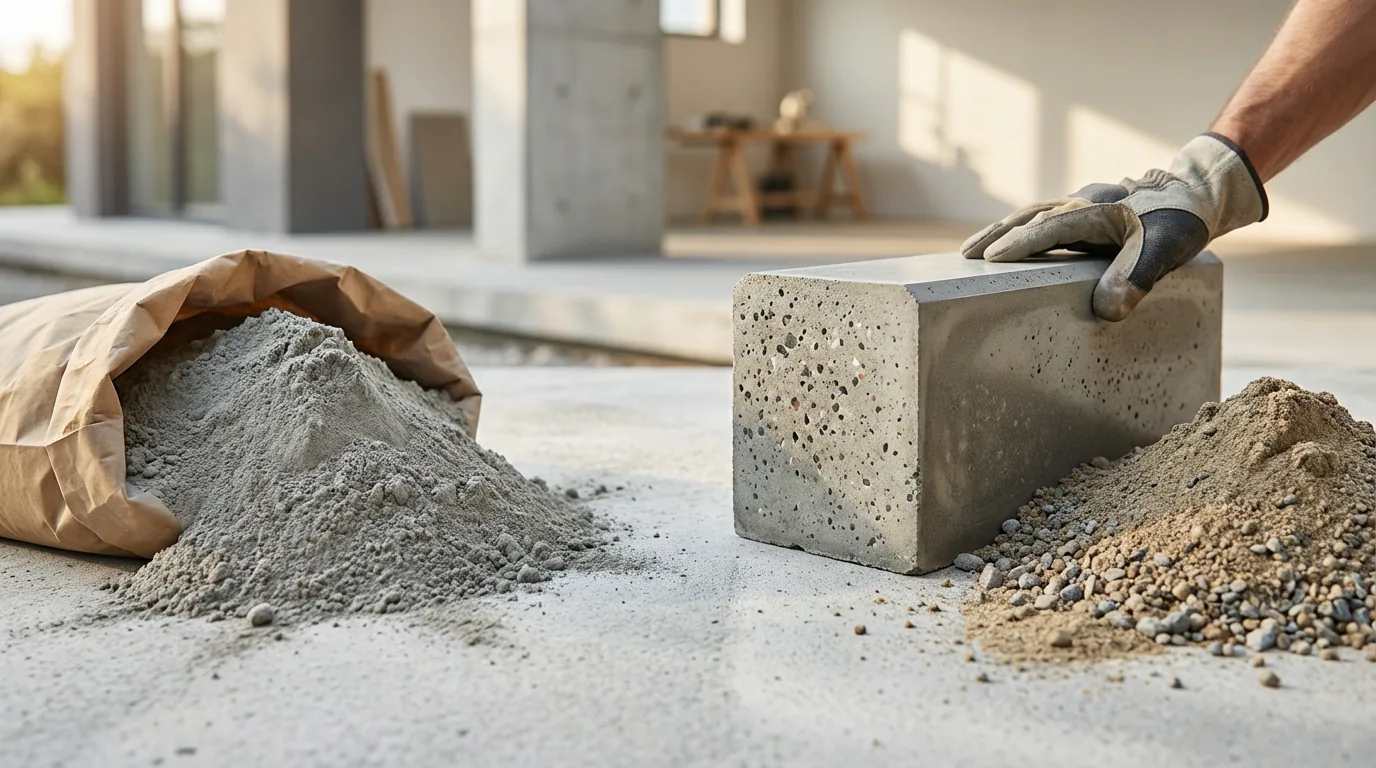
Cement vs concrete—two terms often used interchangeably, yet they represent very different materials vital to any home construction or renovation project. For homeowners and DIY enthusiasts in Melbourne’s northern suburbs, understanding this distinction is key to selecting the right material for your outdoor spaces, driveways, or patio projects.
This guide breaks down exactly what cement and concrete are, how they differ, and why mixing them up can lead to costly mistakes. We’ll also clear up common misconceptions and offer practical advice tailored to your home building needs.
Understanding Cement: The Basics
What Is Cement?
Cement is a fine powdery substance that acts as a binding agent. It forms the “glue” in many construction materials and is essential in making concrete and mortar. When mixed with water, cement undergoes a chemical reaction called hydration, hardening and binding other materials together.
It’s important to note that cement by itself is not suitable for building structures because it is brittle and cracks easily once dried.
Cement Ingredients and Varieties
The basic raw materials used to manufacture cement include:
- Limestone: the primary source of calcium carbonate
- Clay or shale: provide silica, alumina, and iron
- Gypsum: added during grinding to control set time
Cement ingredients are finely ground and heated to high temperatures to form clinker, which is then ground again to produce cement powder.
When it comes to varieties, the most common cement type used in home construction is Portland cement. This widely available and versatile cement provides good strength and setting properties suitable for most residential applications.
Other types include:
- Blended Cements: those mixed with supplementary materials like fly ash or slag for improved durability or environmental benefits
- Rapid-hardening cement: sets faster, ideal for urgent repairs
For a more detailed breakdown, check out our article on cement ingredients and types.
Common Types of Cement for Home Use
- Ordinary Portland Cement (OPC): standard cement used in most DIY projects and residential construction
- White Cement: aesthetic applications like decorative work
- Rapid-hardening Cement: quicker curing for small repairs
Choosing the right cement type depends on your project’s requirements like curing time, strength, and appearance.
With this foundation on cement, we now turn to understanding concrete and how cement plays its crucial role.
What Is Concrete and How Is It Made?
Key Components of Concrete
Concrete is a composite construction material made by mixing cement, water, sand (fine aggregate), and gravel or crushed stone (coarse aggregate). Unlike cement, concrete forms the actual structural element once hardened.
The main components of concrete are:
- Cement: Acts as the binder
- Water: Facilitates the hydration process
- Sand: Fills gaps and provides bulk
- Aggregates: Provide strength and volume
The Hydration Process: How Cement Binds Concrete
When water is added to cement, a chemical reaction called hydration occurs. This reaction causes the cement particles to harden and bind the aggregates together into a solid mass. The hydration process is what transforms a loose mixture into strong, durable concrete.
The curing time, quality of water, and environmental conditions can all influence the final strength of concrete.
Basic Concrete Mix for Home Projects
Creating a basic concrete mix involves the following simple steps:
- Measure the materials: A typical mix ratio is 1 part cement: 2 parts sand: 4 parts gravel.
- Mix dry ingredients thoroughly until the color is uniform.
- Add water gradually while mixing to achieve a workable consistency; avoid adding too much water.
- Pour the concrete promptly into molds or the desired area.
- Allow concrete to cure properly by keeping it moist for several days.
For more in-depth guidance on mixing, see our concrete mix ratios and strength guide and 25–32 MPa concrete mix ratios in Australia.
Cement vs Concrete: Breaking Down the Differences
| Aspect | Cement | Concrete |
|---|---|---|
| Definition | Powdery substance, key ingredient in concrete | A mixture of cement, aggregates, water, hardened to form a building material |
| Composition | Made from limestone, clay, gypsum | Cement + sand + gravel + water + possible additives |
| Structure | Brittle when set, not suitable alone for structural use | Strong, durable, used for foundations, slabs, outdoor projects |
| Use | Binding agent | Construction material |
| Appearance | Fine, powdery texture | Solid mass, rough or smooth surface |
| Setting Process | Hydrates and hardens when mixed with water | Hydrates with cement to bind aggregates and cure into solid |
The key takeaway is that cement is an ingredient, while concrete is the final building material made using cement as the key binder. Without the aggregates and water, cement alone lacks the strength and durability required for construction.
Understanding these differences helps prevent common mistakes, such as ordering cement when concrete is needed or attempting to use cement alone for patching.
Using quality concrete mixes for driveways and outdoor projects ensures durability and visual appeal in your home constructions.
Common Misconceptions About Cement and Concrete
Cement vs Concrete Confusion Simplified
- Myth: Cement and concrete are the same.
Reality: Cement is a component of concrete, not the final material. - Myth: You can use cement alone to repair cracks.
Reality: Cement is too brittle and prone to cracking, repairs should use concrete or mortar mixes. - Myth: More water makes the concrete stronger.
Reality: Excess water weakens concrete strength and durability.
Debunking DIY Myths Related to Cement and Concrete
- Myth: Quick-setting cement cures faster and is always better.
Reality: Rapid setting can compromise strength if not properly handled. - Myth: Additives and admixtures are only for industrial uses.
Reality: Basic additives can improve workability and curing for home projects.
Understanding Concrete Additives and Their Role
Additives or admixtures added during mixing can enhance properties like water retention, curing time, or freeze resistance. Common additives include plasticisers and retarders. However, for most small-scale home projects, a simple concrete mix suffices.
For further clarity on concrete properties, the differences between fibre and steel reinforced concrete may also be of interest.
Testing expert-recommended concrete slump test procedure and ideal values helps ensure your mix has the correct consistency for strength and workability.
Practical Uses of Cement and Concrete in Home Construction
Typical Home and Outdoor Projects for Cement
While cement itself isn’t used directly for structural construction, it has specific DIY applications such as:
- Priming existing concrete surfaces before overlaying
- Making mortar for bricklaying or block laying
- Small patch repairs with premixed cementitious products
Concrete Applications Around the Home
Concrete is the go-to material for many household projects, including:
- Patio slabs and garden paths
- Driveways and garage floors
- Outdoor steps and retaining walls
- Foundations and footings for sheds or carports
These applications demand the strength and durability concrete provides.
To enhance outdoor areas aesthetically, explore coloured concrete driveway options which combine durability with visual appeal.
Choosing Between Cement and Concrete for Your Project
For projects requiring structural integrity, always opt for concrete rather than cement alone. Selecting the right concrete mix depends on your project, environment, and load requirements.
Visual and Comparative Tools: Making Sense of Cement and Concrete
Infographic: Cement vs Concrete at a Glance
[Insert user-friendly infographic visually summarising the differences: cement as powder, concrete as hardened mix with aggregates, key uses and properties]
Comparison Table: Cement vs Concrete Key Properties
Refer to the detailed table in the Cement vs Concrete: Breaking Down the Differences section for clear side-by-side properties.
Simple Diagrams Explaining Material Makeup
[Insert labeled diagrams showing layers/composition of concrete: cement, sand, gravel, water]
These visual aids help first-time builders and DIYers easily grasp how cement fits into the larger concrete material and what makes concrete so robust.
Summary and Key Takeaways for Homeowners and DIYers
- Cement is a powdered binding material made from limestone, clay, and gypsum, used to bind aggregates in concrete.
- Concrete is a composite material made of cement, sand, gravel, and water, curing into a strong, durable building material.
- Cement alone is brittle and unsuitable for construction; always use concrete for structural or outdoor projects.
- Understanding the components and hydration process helps avoid common DIY mistakes and ensures project success.
- For improved strength or aesthetics (like driveways), consider specialised concrete mixes and coloured concrete driveway options.
By applying these principles, Melbourne northern suburb homeowners can confidently approach their construction or renovation projects without confusion, saving time, money, and effort.
For more detailed advice on mix ratios and strengths, refer to our linked sibling articles, and consider professional guidance for critical structural work.
Frequently Asked Questions
What is the main difference between cement and concrete?
The main difference is that cement is a powdery binding material, while concrete is a hardened composite made from cement, aggregates like sand and gravel, and water. Cement acts as the glue in concrete, which forms the durable building material.
How does the hydration process affect cement and concrete?
Hydration is a chemical reaction when water is added to cement, causing it to harden and bind aggregates together. This process transforms a loose mixture into solid concrete, determining its strength and durability once fully cured.
Why can’t cement be used alone for building structures?
Cement alone is brittle and cracks easily when dried, making it unsuitable for structural use. It must be mixed with aggregates and water to form concrete, which has the required strength and durability for construction.
Which cement types are commonly used for home construction?
Ordinary Portland Cement (OPC) is most common for residential projects. Other types include white cement for decorative purposes and rapid-hardening cement for quick repairs, each chosen based on specific project needs.
Can more water improve the strength of concrete?
No, adding excess water weakens concrete by reducing its overall strength and durability. The correct water-to-cement ratio is crucial to achieving a strong, workable concrete mix.
How do concrete additives improve its performance?
Concrete additives or admixtures can enhance properties like workability, curing time, water retention, and resistance to freeze-thaw cycles. For most home projects, simple mixes suffice, but additives improve specific performance needs.
What are the practical uses of cement versus concrete in home projects?
Cement is mainly used as a binding agent in mortars and small patch repairs. Concrete is used for structural and outdoor applications such as patios, driveways, foundations, and steps, where strength and durability are required.
Is concrete always better than cement for DIY repairs?
For most repairs requiring strength, concrete or mortar mixes are better since cement alone is brittle. However, cement is suitable as a primer or in combination with other materials for specific small patch repairs.