
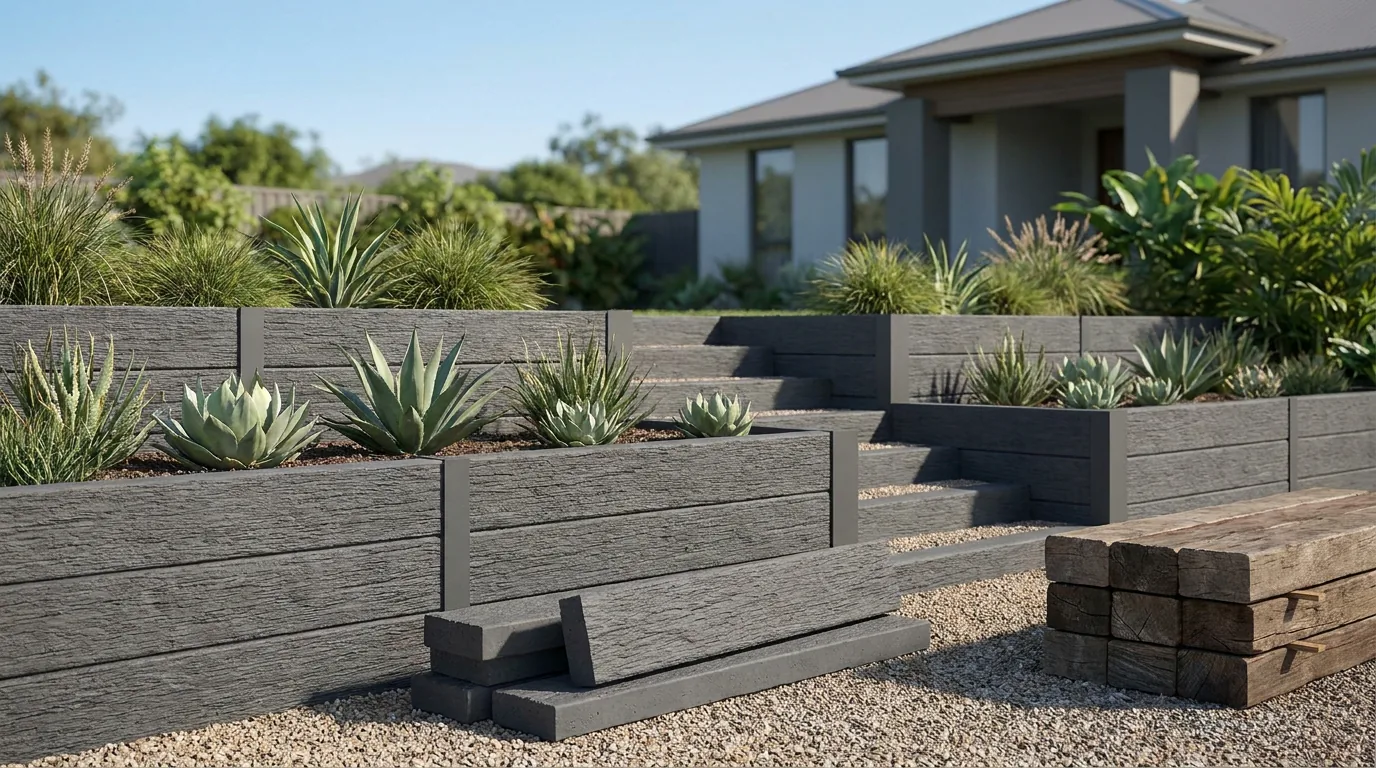
Ridgi concrete sleepers have become a popular choice for retaining walls and landscaping projects across Melbourne’s northern suburbs, combining structural integrity with design flexibility. This article offers a comprehensive Ridgi sleepers comparison, covering their sizes, surface finishes, pros and cons, and how they measure up against alternative concrete sleepers available locally. Whether you’re a landscaper, builder, or homeowner, understanding the distinctions between plain, decorative, and textured Ridgi sleepers—and their alternatives—will help you select the right product for your next outdoor construction venture.
Introduction to Ridgi Concrete Sleepers and Their Use in Retaining Walls
Overview of Ridgi Concrete Sleepers as a Product Line
Ridgi concrete sleepers represent a robust product line designed to meet various landscaping and retaining wall needs, primarily serving the outdoor construction services sector. Manufactured with high-strength concrete and engineered for durability, these sleepers come in multiple sizes and finishes to suit different design preferences and structural demands. Their reputation in Melbourne’s northern suburb landscaping scene is built on consistent quality and adaptability to diverse soil and environmental conditions.
Common Applications: Focus on Ridgi Retaining Walls
Ridgi sleepers are especially prominent in retaining wall construction, an essential component in managing soil stability and creating level outdoor spaces on uneven terrain. The Ridgi retaining wall systems benefit from the product’s load-bearing capacity and weather resistance. These sleepers provide both functional support and the option for aesthetic appeal, thanks to their availability in plain, decorative, and textured forms. Retaining walls built with Ridgi products are common in residential gardens, commercial developments, and civil projects within Melbourne’s northern suburbs.
Importance of Choosing the Right Concrete Sleepers for Outdoor Construction
Selecting the appropriate concrete sleeper sizes and types is crucial for project success. Factors such as wall height, soil type, drainage requirements, and design goals must guide product choice. Ridgi sleepers need to be matched to project specifications to ensure load-bearing adequacy and long-term stability, while considering aesthetic integration with the landscape. Using sleepers unsuitable for the site conditions or design can result in premature failure or excessive maintenance costs, impacting the overall investment.
Industry standards, such as those set by
Standards Australia, underline the need for conforming to structural requirements in retaining wall construction. Moreover, consulting resources from the
Australian Institute of Landscape Architects (AILA) can guide the aesthetic balancing act of functionality versus design.
With a foundational understanding of Ridgi sleepers’ role in retaining walls and landscaping, let’s delve deeper into their specific sizes, finishes, and technical distinctions.
Detailed Ridgi Sleepers Comparison: Sizes, Types & Surface Finishes
Concrete Sleeper Lengths and Sizes Available from Ridgi
Ridgi offers a range of standardized concrete sleeper lengths designed to accommodate various retaining wall heights and structural loads. Common sizes include:
| Sleepers Length (mm) | Height (mm) | Width (mm) | Typical Use |
|---|---|---|---|
| 1800 | 200 | 75 | Low retaining walls or garden edging |
| 2400 | 200 | 75 | Standard retaining walls & landscaping |
| 3000 | 200 | 75 | Higher retaining walls requiring extra strength |
| 3600 | 200 | 75 | Heavy load-bearing or large-scale landscaping |
The consistent cross-sectional dimensions simplify design calculations and ensure uniform load distribution. Suppliers in Melbourne’s northern suburbs regularly stock these sizes, offering flexibility in project planning.
Plain Concrete Sleepers vs Decorative Concrete Sleepers in Ridgi’s Range
Plain concrete sleepers are typically smooth, utilitarian blocks that prioritize function over style. Their minimalist appearance suits projects where the structural element is either hidden or the focus is on simplicity and cost-efficiency.
By contrast, decorative concrete sleepers incorporate various finishes and patterns to elevate their visual impact. Ridgi’s decorative range includes options with exposed aggregate surfaces, stamped patterns, and colour blends designed to replicate natural stone or timber textures. Decorative sleepers not only enhance curb appeal but can also increase the perceived value of landscaping projects, especially in residential and commercial applications requiring refined aesthetics.
Textured Concrete Sleepers: Features and Visual Appeal
Textured concrete sleepers offer a middle ground between plain and decorative styles. Using surface treatment techniques such as sandblasting, stamping, or aggregate exposure, these sleepers provide tactile surfaces that resist slipping and add subtle visual interest. Textured finishes also help disguise minor surface wear or staining, maintaining an attractive appearance over time.
Manufacturing textured Ridgi sleepers involves advanced moulding and curing processes to ensure uniformity and durability. These variations support diverse landscape design needs, from rustic garden walls to modern outdoor entertainments areas.
Load Bearing Capacity and Structural Considerations per Type
Load capacity is a critical factor in sleeper selection. Ridgi sleepers’ compressive strength typically ranges between 35-45 MPa, depending on the product line and curing process. The load-bearing capacity varies primarily with sleeper length and reinforcement, which is particularly important for taller retaining walls or those bearing significant lateral soil pressure.
Plain sleepers tend to offer the highest structural capacity due to their simpler design, as decorative finishes may marginally reduce effective cross-sectional strength. However, Ridgi ensures that decorative and textured sleepers are engineered to comply with structural requirements, using embedded reinforcement where necessary.
In all cases, adherence to engineering guidelines such as those from the
AS 4678 Earth Retaining Structures standard is essential for safety.
For complementary design ideas and cohesive landscaping strategies, exploring coloured concrete driveway options Melbourne is recommended to integrate outdoor surfaces seamlessly.
Additionally, trusted research from
CSIRO highlights the importance of selecting concrete products formulated for long-term outdoor durability, ensuring the sustained performance of structures such as sleepers and retaining walls.
Having established detailed product specifications and finishes, the next section examines the strengths and weaknesses of Ridgi concrete sleepers in practice.
Pros and Cons of Ridgi Concrete Sleepers
Durability and Weather Resistance of Ridgi Sleepers
- Pros: Ridgi sleepers exhibit excellent durability owing to high-grade concrete formulations and quality-controlled manufacturing. This resilience ensures they withstand freeze-thaw cycles, UV exposure, and saline coastal environments common in some parts of Melbourne’s northern suburbs.
- Long-term performance: Industry reports suggest Ridgi concrete sleepers maintain structural integrity and appearance for 30+ years under typical outdoor conditions.
- Maintenance: Minimal upkeep is necessary, with occasional cleaning or moss removal often sufficient.
Compared to timber or steel alternatives, Ridgi sleepers resist rot, corrosion, and insect damage, providing a more sustainable and cost-effective solution over time.
Aesthetic Versatility: Plain vs Decorative vs Textured Finishes
- Plain sleepers suit projects prioritising cost-effectiveness and simplicity.
- Decorative options enhance visual appeal and offer designers and homeowners options tailored to modern outdoor aesthetics.
- Textured sleepers deliver practical grip and subtle design enhancements, ideal for landscaped paths or garden walls requiring both safety and style.
- Trade-off: Decorative and textured sleepers can be priced 15-30% higher than plain variants, reflecting the additional labour and materials.
Cost Efficiency and Installation Considerations
- Ridgi concrete sleepers have competitive pricing aligned with local manufacturing and distribution efficiencies.
- Heavier weight compared to timber sleepers demands mechanical handling during installation, possibly increasing labour costs.
- Decorative sleepers may require more precise placement and alignment, potentially extending installation time slightly.
- Overall, Ridgi sleepers offer strong value for money over their lifespan compared to alternatives prone to faster degradation.
Limitations or Challenges in Using Ridgi Concrete Sleepers
- Their weight can complicate transport and manual handling, necessitating equipment rental or professional installation, especially for larger sizes.
- Limited colour options compared with some competitors offering more bespoke pigmentation.
- For very high retaining walls or unusual soil types, custom engineered solutions may be required beyond standard Ridgi product lines.
- Decorative or textured surfaces may be prone to surface chips or stains if exposed to aggressive conditions, although protection with sealers can mitigate this.
To enhance durability, especially for decorative sleepers, project planners may consider products like the Dulux Avista concrete sealer for driveways, which also benefits retaining walls by protecting finishes and extending lifespan.
Further reassurance on the weather resistance and maintenance recommendations for concrete sleepers can be found in technical guides issued by
Standards Australia, assisting planners in maximising lifespan.
With these considerations in mind, we now compare Ridgi sleepers to alternative concrete sleeper brands available in Melbourne and broader Australia.
Benchmarking Ridgi Sleepers Against Alternative Concrete Sleepers
Comparative Analysis of Ridgi Sleepers vs Other Leading Brands
| Feature | Ridgi Sleepers | Competitor A | Competitor B |
|---|---|---|---|
| Standard Length Range (mm) | 1800–3600 | 2000–3000 | 1800–3600 |
| Surface Finishes | Plain, Decorative, Textured | Plain, Textured | Plain, Decorative |
| Load Bearing Capacity (MPa) | 35–45 | 30–40 | 32–42 |
| Warranty (Years) | 20 | 15 | 25 |
| Average Price per Unit | $$$ | $$ | $$$$ |
| Available Locally in Melbourne | Yes | Limited | Yes |
This comparison highlights that Ridgi sleepers strike a balance between competitive pricing and superior structural and aesthetic options. Competitor A offers lower price points but with fewer finish options and slightly lower durability. Competitor B, while offering extensive warranties and finishes, comes at a premium cost.
Differences in Sizes, Textures, and Durability
Ridgi’s extensive size range meets diverse retaining wall demands, whereas some alternative products limit length choices, potentially impacting design flexibility. The availability of both decorative and textured options within Ridgi’s line enables better aesthetic customization compared to many competitors that focus mainly on plain or one finish type.
Durability-wise, Ridgi sleepers perform strongly in standardized tests and field applications. Their mid-range warranty is comparable to industry expectations, adding buyer confidence.
Price Comparison and Value Propositions
While not the cheapest option, Ridgi’s price reflects quality manufacturing, local availability, and comprehensive finish options. Lifecycle cost analyses conducted by Melbourne construction firms indicate Ridgi sleepers offer better value long term given reduced maintenance requirements and replacement frequency.
Suitability for Different Retaining Wall Designs and Outdoor Uses
For low to medium-height retaining walls in residential gardens, Ridgi sleepers suit most design aesthetics and structural needs. For high-load or complex civil projects, reinforced solutions from Ridgi or competitors may be preferable, subject to engineer specifications.
Additionally, concrete driveway and outdoor surface leaders offer complementary products that integrate well with Ridgi sleeper installations for cohesive design outcomes.
Independent review data and benchmarking reports, such as those published by
Standards Australia, reinforce the comparative benefits outlined in this analysis.
With this comparative lens, the next section guides practical decision-making when choosing between Ridgi sleepers and alternatives.
Practical Considerations for Selecting Ridgi Sleepers and Alternatives
Matching Concrete Sleepers Size and Type to Project Requirements
- Assess wall height and soil load: Taller walls require longer sleepers with higher load ratings.
- Evaluate environmental conditions: Coastal or freeze-thaw zones demand sleepers with superior weather resistance.
- Consult engineering standards and local regulations to confirm design compliance.
- Select sleeper length and thickness based on calculated lateral and vertical loads.
Aesthetic Integration: Choosing Between Plain, Decorative, and Textured Sleepers
- Determine project visual priorities – whether functional discreteness (plain) or showcasing design (decorative/textured).
- Coordinate sleeper finishes with other outdoor elements like paving, fencing, and landscaping features.
- Consider future maintenance efforts related to finish type.
- Factor in budget differences relative to finish selection.
Assessing Structural Requirements and Load Bearing Capacities
- Work closely with engineers to match sleeper compressive strength and reinforcement to project demands.
- Account for uplift, sliding, and overturning forces when selecting sleepers for retaining walls.
- Use product technical data sheets for precise load ratings; Ridgi provides detailed specs to assist this process.
Environmental and Site Conditions Impact on Sleeper Performance
- Review site soil conditions for drainage and moisture exposure risks.
- Consider exposure to chemicals, salt spray, or UV which might influence sleeper material choice.
- Plan drainage solutions to minimise hydrostatic pressure behind retaining walls, preserving sleeper integrity.
Guidance from agencies such as the
Australian Building Codes Board (ABCB) supports designing with environmental factors and site conditions in mind to ensure compliant, durable installations.
By applying these criteria carefully, project designers and homeowners can optimize their sleeper selection for functionality and aesthetics, ensuring long-lasting landscape installations.
Authoritative guidance can be further explored through references from Standards Australia and industry best-practice manuals, providing a technical foundation for informed decisions.
Conclusion: Summary of Ridgi Sleepers Comparison and Recommendations
Key Takeaways from Product Comparisons
- Ridgi sleepers offer a robust mix of size options, finish varieties, and load-bearing capabilities tailored to Melbourne’s northern suburban retaining wall needs.
- Their plain, decorative, and textured sleepers cater to diverse aesthetic and functional project requirements, distinguishing them among competitors.
- Competitive pricing balanced by durability and local availability positions Ridgi as a preferred brand for both residential and commercial landscaping projects.
When to Opt for Ridgi Concrete Sleepers
- Projects demanding a balance between structural performance and design variety.
- Applications in moderate to high environmental stress zones requiring durable concrete solutions.
- Landscaping schemes where cohesive aesthetic integration with outdoor concrete surfaces is desired.
When Alternatives Might Be Preferable
- Where budget constraints prioritize lowest initial cost with potential trade-offs in finish options or durability.
- Projects requiring specialized colours or bespoke custom finishes not offered by Ridgi.
- High-load engineered retaining walls needing unique sleeper designs or materials outside standard ranges.
Final Thoughts on Balancing Technical and Aesthetic Needs
Choosing the right concrete sleepers extends beyond price and availability—it involves blending structural integrity with lasting aesthetics suited to site-specific conditions. Ridgi concrete sleepers provide a comprehensive, quality-assured solution—backed by standard compliance and local expertise—to meet the diverse needs of Melbourne’s northern suburbs outdoor construction projects. For those seeking professional-grade sleepers poised for both function and form, Ridgi stands out as a dependable choice.
For further advice on product selection and installation practices, reviewing detailed guidelines from Standards Australia ensures adherence to technical and safety standards.
Frequently Asked Questions
What are Ridgi sleepers and how are they used in landscaping?
Ridgi sleepers are high-strength concrete blocks designed for retaining walls and landscaping projects. They provide structural support, soil stabilization, and aesthetic finishes suitable for residential and commercial outdoor spaces.
How do Ridgi decorative sleepers differ from plain concrete sleepers?
Ridgi decorative sleepers feature surface patterns, colours, or textures to enhance visual appeal, while plain concrete sleepers have a smooth, minimalist finish primarily focused on function and cost-efficiency.
Why is it important to choose the right concrete sleeper size for retaining walls?
Selecting the correct concrete sleeper size ensures structural stability, adequate load bearing, and long-term durability by matching wall height and soil pressure requirements, preventing failures and costly repairs.
Which Ridgi sleeper lengths are best for higher retaining walls?
Ridgi sleepers of 3000mm and 3600mm length are recommended for higher retaining walls, offering greater strength and load capacity required for taller or large-scale landscaping projects.
Can Ridgi sleepers be considered more durable than timber alternatives?
Yes, Ridgi concrete sleepers outperform timber by resisting rot, insect damage, and corrosion, ensuring greater durability and minimal maintenance over 30+ years in outdoor environments.
How do Ridgi sleepers compare to competitor brands in price and quality?
Ridgi sleepers provide a balanced solution with competitive pricing, a wide size range, durable finishes, and strong load capacity, whereas competitors may offer lower prices with fewer features or premium costs with extended warranties.
Is textured concrete sleeper better than plain or decorative for safety?
Textured concrete sleepers offer improved slip resistance and hide minor wear better than plain or decorative types, making them suitable for garden paths or landscaping areas requiring both safety and style.
When should alternatives to Ridgi concrete sleepers be considered?
Alternatives are preferable when budget constraints limit costs, bespoke colour or finishes are required, or for very high-load engineered walls needing custom materials beyond Ridgi’s standard range.