
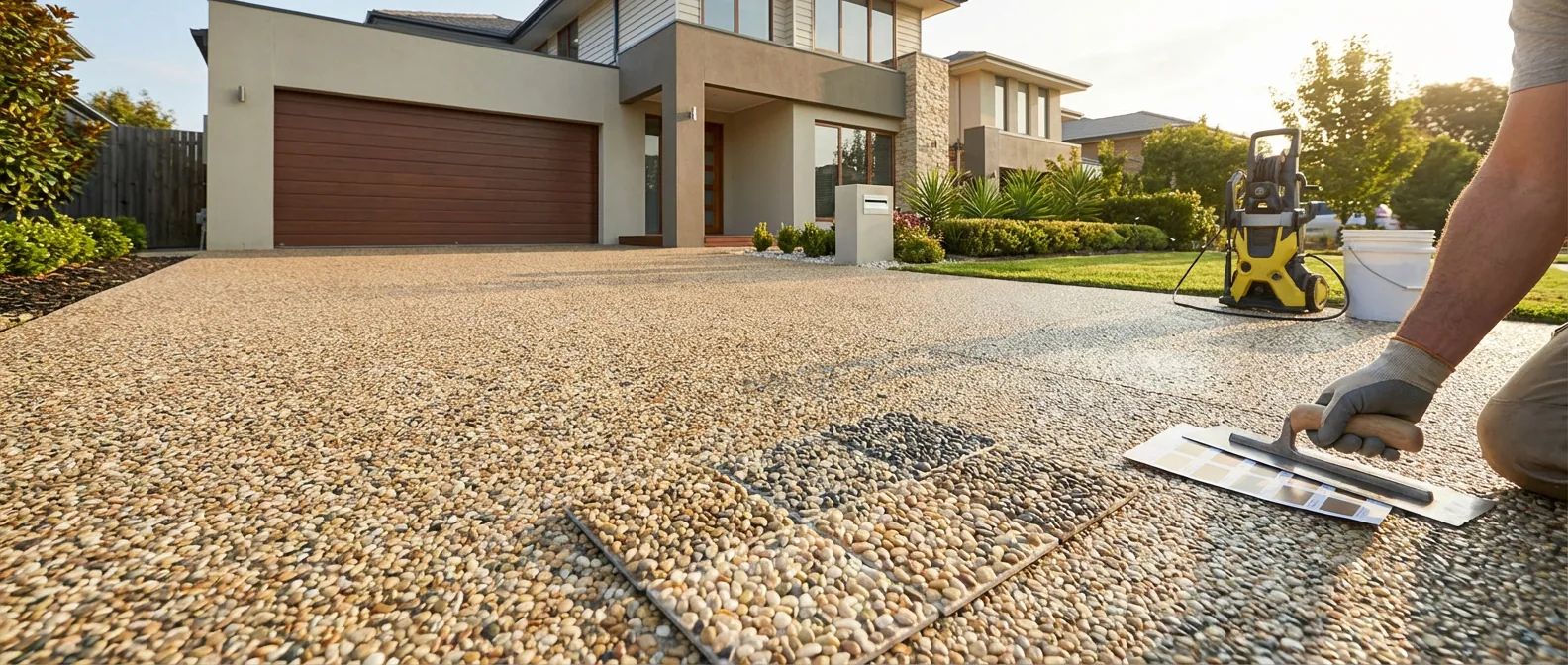
The timeless appeal of a pebblecrete driveway lies in its unique textured finish and natural stone beauty. But over time, colour fading, surface cracking, and weather wear can dull its appeal. This comprehensive guide unpacks everything Melbourne Northern Suburb homeowners and contractors need to know about pebblecrete refresh — from vibrant pebblecrete driveway colours and expert resurfacing steps to durable sealing methods that protect your investment for years.
Whether you’re looking to breathe new life into an aging pebble concrete driveway or learn the best maintenance techniques to extend its lifespan, this article delivers crystal-clear, actionable guidance founded on industry best practices and real-world case studies.
1. Understanding Pebblecrete and Its Unique Characteristics
1.1 What Is Pebblecrete? Composition and Benefits
Pebblecrete, also known as exposed aggregate concrete, is a decorative surfacing technique where natural or coloured pebbles are embedded into a concrete base. The process involves layering a concrete mix and then exposing the aggregate by washing or brushing off the top cement layer before it fully sets, creating a durable and slip-resistant surface.
Benefits of pebblecrete include its natural aesthetic appeal, enhanced traction, and resistance to weathering. According to Cement Concrete & Aggregates Australia (CCAA), pebblecrete surfaces excel in durability and low maintenance, making them popular in residential driveways across Australia.
1.2 Differences Between Pebblecrete and Pebble Concrete
While often used interchangeably, pebblecrete and pebble concrete have subtle differences:
- Pebblecrete refers primarily to exposed aggregate finishes, highlighting the natural texture and colour of embedded pebbles.
- Pebble concrete generally denotes concrete mixes that incorporate pebbles as part of the aggregate but may not expose them on the surface.
This distinction impacts maintenance approaches, as pebblecrete driveways require specialized resurfacing and sealing techniques that preserve the exposed decorative aggregate.
1.3 Typical Issues With Pebblecrete Driveways (Cracking, Fading, Wear)
Common wear types observed in pebblecrete driveways include:
- Surface cracking: Causes include sub-base movement, freeze-thaw cycles, and heavy loads.
- Colour fading: UV exposure in Melbourne’s outdoor climate gradually bleaches pigments in pebbles and cement, dulling vibrancy.
- Wear and erosion: Foot and vehicle traffic erode the pebbleexposed surface, reducing protective cement bond over time.
Understanding these common cracks in pebblecrete and wear patterns is crucial before planning a pebblecrete refresh to ensure lasting results.
With a solid grasp of what pebblecrete is and how it behaves under weather stresses, we can now explore the exciting palette options available to reinvigorate your driveway’s look.
2. Exploring Pebblecrete Driveway Colours: Options and Their Impact
2.1 Popular Pebblecrete Driveway Colours and Colour Finishes
Pebblecrete surfaces can be customised with a wide variety of pebblecrete driveway colours by selecting different pebble types, aggregates, and pigmentation of the concrete mix. Common colour categories include:
- Natural stone colours: Shades of grey, beige, cream, and warm earth tones.
- Coloured pebbles: Reds, browns, blacks, and mix aggregates for variegated textures.
- Concrete pigment finishes: Integral pigments or stains to tint the cement base without masking pebble colours.
The finish can also range from matte natural stone appeal to semi-gloss seal-coated surfaces that highlight pebble sheen.
For homeowners considering a broader palette beyond pebblecrete, exploring popular coloured concrete driveway options can provide additional inspiration tailored to Melbourne’s climate and design trends.
2.2 How Colour Affects Heat Absorption and UV Fading
Colour choice significantly impacts heat reflection and UV fading behaviour:
- Darker pebblecrete colours absorb more heat, leading to surface expansion and potentially accelerated deterioration under intense sun exposure.
- Lighter shades reflect heat, reducing thermal stress but showing dirt more readily.
- UV resistant pigments and sealants help combat fading caused by Melbourne’s strong sunlight, preserving colour longevity.
A 2023 Australian materials science study linked pigment types and aggregate composition to improved UV resilience in exposed aggregate surfaces.
2.3 Selecting Colours Based on Climate and Style Preferences
When choosing pebblecrete driveway colours, align selections with:
- Climate: In Northern Melbourne suburbs, use lighter or UV-resistant colours to mitigate heat damage.
- Style: Coordinate with home facade, garden landscaping, and architectural features.
- Maintenance expectations: Dark colours may conceal stains, while light colours need regular cleaning to avoid dullness.
This strategic approach ensures aesthetic enhancement and material longevity.
Armed with colour knowledge, let’s dive deep into the practical steps of pebblecrete driveway resurfacing—the heart of any effective refresh.
3. The Pebblecrete Refresh Process: Step-By-Step Resurfacing Guide
3.1 Assessing the Existing Driveway Condition and Damage
A thorough condition assessment is the vital first step to deciding refresh pathways. Key checks include:
- Extent and depth of cracks
- Signs of surface spalling or aggregate loss
- Discolouration and UV fading levels
- Drainage and substrate stability
If structural faults are severe, professional evaluation is advised before resurfacing to avoid surface-only remedies on deep issues. Minor surface defects can often be tackled via repairs and overlay.
For a comprehensive breakdown of resurfacing methods and pricing considerations beyond pebblecrete, see our guide on concrete driveway resurfacing options and costs.
For detailed surface prep and resurfacing guidelines, consult Australian Concrete Repair Association’s resurfacing techniques guide.
3.2 Surface Preparation: Concrete Grinding and Cleaning Techniques
Preparation is key to adhesion and durability of new layers. Recommended steps are:
- Grinding the concrete surface to remove loose material, laitance, and create a profiled texture for bonding.
- Thorough cleaning to remove dust, oils, and organic matter—using pressure washing and degreasing agents.
- Allowing the surface to dry fully before applying repair compounds.
Concrete grinding equipment should be chosen based on driveway size and damage severity, with diamond grinding preferred for precision.
3.3 Repairing Common Damages Before Resurfacing
Cracks and spalls need addressing to create a uniform substrate:
- Crack filling: Using epoxy or polyurethane fillers designed for exposed aggregate applications.
- Patching spalled areas: Applying repair mortar mixes compatible with pebblecrete textures.
- Sanding and smoothing repaired zones to level transitions.
Failing to repair before resurfacing risks visible defects and adhesion failure.
3.4 Applying New Pebblecrete Layers: Materials and Methods
The resurfacing mix generally combines:
- High-strength cementitious base
- Selected aggregate pebbles with desired colours and sizing
- Bonding agents to improve layer adhesion
Application methods include:
- Hand troweling pebblecrete mortar over the prepared surface
- Leveling and compacting to ensure even distribution
- Careful washing off of cement paste at specific curing times to reveal aggregate
Consistency, timing, and moisture control are critical to avoid issues such as surface flaking or uneven texture.
3.5 Differences Between DIY and Professional Resurfacing Approaches
DIY resurfacing suits minor repairs and small driveways with the right tools and preparation but requires keen attention to detail, especially for concrete grinding and timing of finishing steps. Safety equipment such as respirators and eye protection is mandatory.
Professional resurfacing ensures access to advanced equipment, certified materials, and expertise to handle complex repairs, intricate colour matching, and large areas efficiently.
While pebblecrete refresh focuses on exposed aggregate finishes, alternative driveway resurfacing options including coloured concrete overlays offer a range of finish choices for Melbourne driveways.
For an overview of spray-on concrete textures and costs, a surface treatment providing unique finishes, see our related guide.
Following this detailed resurfacing walkthrough, preserving your refreshed pebblecrete’s appearance hinges on professional-grade sealing.
4. Sealing Pebblecrete Driveways: Techniques, Products, and Maintenance
4.1 Importance of Sealing to Protect Colour and Surface Integrity
Sealing forms a transparent protective barrier that locks in colour vibrancy, enhances water resistance, and shields pebblecrete from wear, UV damage, and staining. Without sealing, expect accelerated colour fading in pebblecrete and surface degradation, especially under Melbourne’s variable weather stresses.
4.2 Types of Sealants Suitable for Pebblecrete Surfaces
Popular sealant chemistries include:
- Polyurethane sealers: Offer robust abrasion resistance and glossy finishes, ideal for high-traffic areas.
- Acrylic sealers: Provide breathable, UV-stable protection with a natural matte or low-sheen finish.
- Penetrating sealers: Designed to protect deeper layers by repelling water without forming a surface film.
Selecting the right sealant depends on aesthetic goals, climate durability needs, and intended traffic loads.
Comprehensive sealant product specifications and application best practices are available at SealantPro Technical Guides.
4.3 Stepwise Application of Sealants for Maximum Durability
- Ensure the resurfaced pebblecrete is fully cured and clean.
- Apply sealant evenly using rollers, sprayers, or brushes as per product instructions.
- Allow sufficient drying time between coats—commonly two coats are recommended.
- Avoid sealing in extreme heat or rainy conditions to guarantee proper adhesion and film formation.
- Lightly sand previous sealant layers before re-coating during maintenance cycles.
4.4 Troubleshooting Common Sealant Issues (Peeling, Yellowing)
Typical failures arise from:
- Improper surface preparation: Oils, dirt, or moisture prevent sealant bonding, causing peeling.
- Incompatible sealant types layered: Mixing acrylic over polyurethane without removal can cause clouding.
- Over-application in thick coats: Leads to uneven curing and yellowing.
Following manufacturer guidelines and maintaining clean, dry surfaces mitigate these risks significantly.
4.5 Re-sealing Frequency and Tips for Long-Term Maintenance
Re-sealing frequency varies with climate and usage but generally falls between every 2 to 4 years in Northern Melbourne’s outdoor conditions. Signs you need re-sealing include water absorption increase, surface dullness, or visible wear of existing sealant layers.
Routine cleaning with pH-neutral detergents and prompt removal of stains enhance sealant lifespan.
5. Enhancing and Maintaining Pebblecrete Driveways for Longevity
5.1 Combining Resurfacing and Sealing for Best Results
A holistic approach to pebblecrete refresh combines meticulous resurfacing with high-quality sealing, addressing both structural integrity and surface preservation. This synergy prolongs the driveway’s functional and aesthetic lifespan substantially.
5.2 Dealing With Outdoor Weather Impacts: UV Protection and Water Resistance
Extended exposure to ultraviolet radiation and rainfall requires driveways to have UV blockers and hydrophobic sealing agents. Options like advanced acrylic-modified polyurethanes deliver superior UV protection for driveways while significantly reducing water ingress, mitigating freeze-thaw cycles and erosion.
For homeowners interested in alternative resurfacing and protective solutions, spray-on concrete offers varied textures and durable finishes that complement pebblecrete refresh techniques.
5.3 Regular Maintenance Practices to Extend Driveway Lifespan
- Routine cleaning using soft brushes and mild detergents prevents dirt buildup.
- Prompt repair of small cracks or chips avoids escalation.
- Scheduled re-sealing preserves surface protection against the elements.
- Avoid harsh chemicals or pressure washing that can degrade sealants prematurely.
5.4 Case Studies: Before & After Transformations Demonstrating Refresh Techniques
Consider the Northern Melbourne residence where a faded, cracked pebblecrete driveway was completely refreshed using customised earth-tone pebble mixes, extensive surface grinding, and professional sealing. The result was a vibrant, durable surface that enhanced curb appeal and withstood subsequent seasonal weather.
Another example showed a DIY approach where proper preparation and the use of acrylic sealers revitalised a separated driveway zone effectively but required ongoing re-application every three years to maintain water resistance.
These case studies underscore the importance of tailored resurfacing plans matched with the correct sealing system and maintenance for successful pebblecrete driveway refresh.
Conclusion: Refreshing your pebblecrete driveway with thoughtful colour selection, expert resurfacing, and diligent sealing transforms a worn, tired surface into an attractive, durable asset well-suited for Melbourne’s Northern Suburb climate. Whether DIY or professional, adherence to detailed preparation, application, and maintenance steps guarantees long-term beauty and performance.
Take the first step toward renewing your driveway today by evaluating your surface condition and exploring colour palettes that harmonise with your home’s style. For more ideas on finishing options, check out our guide to coloured concrete driveway options. Ready to implement? Consult a trusted professional or equip yourself with the right tools for a confident DIY refresh!
Frequently Asked Questions
What is the difference between pebblecrete and traditional concrete driveways?
Pebblecrete exposes decorative pebbles on the surface, providing texture and natural stone aesthetics, while traditional concrete driveways have smooth or patterned finishes without exposed aggregate. Pebblecrete offers enhanced slip resistance and unique visual appeal compared to plain concrete surfaces.
How does pebblecrete refresh improve the lifespan of a driveway?
A pebblecrete refresh involves resurfacing worn areas and applying sealants that restore colour, repair cracks, and protect against weather damage. This process enhances durability, prevents further erosion, and maintains the driveway’s slip resistance and appearance for years.
Why should I consider professional resurfacing over DIY for large pebble concrete driveways?
Professional resurfacing offers specialised equipment, expertise in mixing and applying pebblecrete, and precise colour matching. This ensures durable results, uniform texture, and effective repairs that are difficult to achieve with DIY methods, especially on larger or heavily damaged driveways.
Which pebblecrete driveway colours are best suited for hot and sunny climates?
Lighter pebblecrete colours with UV-resistant pigments are ideal for hot climates as they reflect sunlight and reduce heat absorption. These choices help minimise thermal expansion and fading, preserving the driveway’s integrity and appearance under intense sun exposure.
Can pebblecrete driveway sealing prevent surface cracking and colour fading?
Yes, proper sealing forms a protective barrier that reduces water penetration and UV damage, which are main causes of cracking and colour fading. Regular sealing extends surface life by maintaining colour vibrancy and reducing wear from weather and traffic.
How does the maintenance of pebblecrete driveways compare to pebble concrete driveways?
Pebblecrete driveways require more specialised maintenance, including regular sealing and surface repairs to protect exposed aggregate. Pebble concrete driveways may need standard concrete upkeep but often lack the textured finish and decorative pebble exposure that require targeted preservation.
When is the best time to reseal a pebblecrete driveway?
The best time to reseal a pebblecrete driveway is every 2 to 4 years, or when water no longer beads on the surface, the finish looks dull, or wear is visible. Ideally, resealing occurs during dry, moderate temperatures to ensure proper adhesion and curing.
Is coloured concrete a viable alternative to pebblecrete for driveway resurfacing?
Yes, coloured concrete provides a smooth, tinted surface without exposed aggregate and offers a variety of finishes. It’s an alternative when a uniform colour or texture is preferred, but it lacks pebblecrete’s natural stone texture and slip-resistant qualities.