
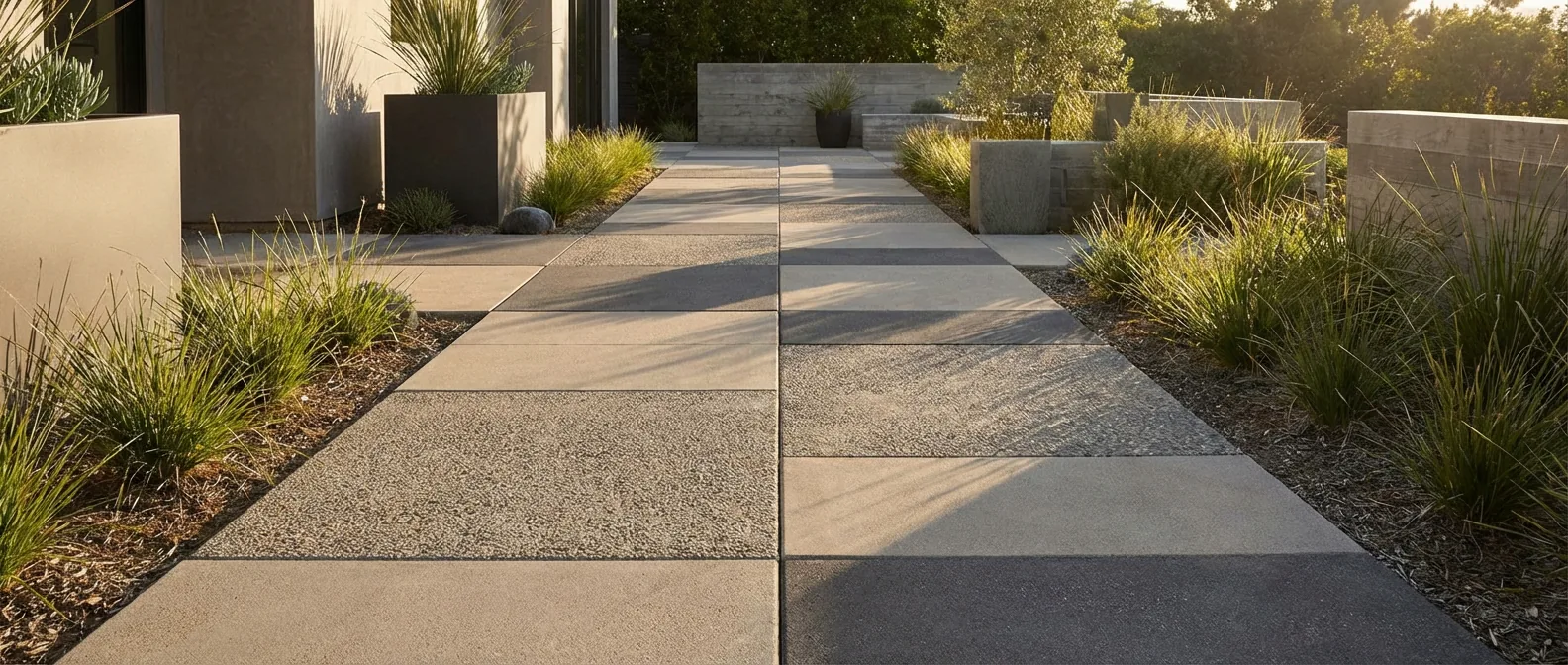
Exposed aggregate concrete transforms ordinary outdoor surfaces into visually stunning and textured features, with colour palettes playing a pivotal role in aesthetic appeal and performance. This comprehensive guide explores the Hanson/Holcim palettes, two of Australia’s foremost providers of decorative concrete solutions, focusing exclusively on their exposed aggregate colour options. Whether you’re a landscape architect, contractor, or a DIY enthusiast in the Melbourne Northern Suburb area, understanding these palettes can streamline your design decisions and ensure your concrete surfaces harmonise with the environment while delivering lasting durability.
From downloadable colour charts and practical visual guides to expert insights on colour retention and application suitability, this resource equips you with essential knowledge and tools for selecting the perfect exposed aggregate colours for your outdoor projects.
Introduction to Hanson and Holcim Exposed Aggregate Colour Palettes
Overview of Hanson and Holcim as Industry Leaders in Decorative Concrete
Hanson and Holcim stand as respected leaders in the Australian decorative concrete industry, each offering extensive ranges of exposed aggregate products tailored for outdoor construction services. Both companies leverage decades of expertise in material science and concrete innovation to supply aggregates and pigments that deliver high-quality, visually appealing finishes. Their strong presence in Victoria, especially in the Melbourne Northern Suburb region, underlines their commitment to meeting local climate challenges with well-engineered exposed aggregate concretes.
Hanson’s focus includes providing a broad spectrum of natural and manufactured aggregates coupled with innovative pigment technologies, while Holcim emphasises sustainable solutions and comprehensive palette versatility. Both brands continuously update their product lines with attention to exposed aggregate colours designed to maintain appeal under Melbourne’s harsh UV exposure and variable weather.
For a comprehensive understanding of why exposed aggregate driveways remain a top choice in Melbourne, including durability and aesthetic benefits, refer to our guide on the benefits of exposed aggregate driveways.
Importance of Colour Choice in Exposed Aggregate Concrete
Colour selection is a cornerstone in exposed aggregate concrete finishes, impacting both the visual tone and functional performance of outdoor concrete. Attractive colour palettes not only influence curb appeal, enhancing paths, patios, and driveways, but also affect heat absorption, glare, and compatibility with surrounding landscaping.
Choosing the right exposed aggregate colours helps optimise maintenance efforts and long-term durability. Darker aggregates may retain heat, impacting expansion cycles, whereas lighter shades reflect sunlight, reducing thermal stress. Pigment stability against UV degradation is equally crucial to minimize fading over time—a consideration factored into both Hanson’s and Holcim’s palette development.
Distinguishing Hanson vs. Holcim Palette Philosophies and Branding
While both companies deliver comprehensive Hanson/Holcim palettes, their branding and palette philosophies diverge subtly. Hanson palettes emphasise a naturalistic, earthy spectrum drawing heavily on local aggregates such as volcanic basalt and sandstone fragments, providing authentic textures and colours true to Australian landscapes. Their palettes often highlight aggregate size variations and surface texture nuances.
Conversely, Holcim’s concrete colours tend to blend innovation with sustainability, incorporating recycled materials and enhanced pigment dispersion techniques to broaden colour options, including bolder shades and finely textured aggregates. Their branding promotes adaptability across diverse outdoor use cases, from commercial pavements to residential patios.
For a comprehensive understanding of why exposed aggregate driveways remain a top choice in Melbourne, including durability and aesthetic benefits, refer to our guide on the benefits of exposed aggregate driveways.
Detailed Hanson Exposed Aggregate Colours and Palettes
Comprehensive List of Hanson Exposed Aggregate Colours
Hanson offers an extensive selection of exposed aggregate colours tailored for the Australian market. Their palettes include a range of natural stone aggregates such as:
- Volcanic Basalt – a deep charcoal grey with fine, durable texture.
- Silica Sand – pale beige tones lending warm, sandy textures.
- Quartz Mix – crystalline aggregates producing subtle sparkle effects.
- Yellow Granite – golden flecks that create vibrant warm surfaces.
- Red Granite – rich red pigments derived from iron oxide blends.
Each colour variant is designed to showcase the unique aggregate composition coupled with Hanson’s pigment technology, suitable for pathways, patios, and commercial landscapes.
Characteristics of Hanson Colour Options (finish, aggregate types, texture)
Hanson’s exposed aggregate finishes feature diverse aggregate sizes from fine (<1mm) to coarse (>10mm), contributing to different surface textures from smooth ‘fine exposed’ to robust ‘multi-sized’. Hanson employs both natural and crushed aggregates, each offering varied reflectance and roughness.
Finish options include:
- Fine Exposed Aggregate: Provides a subtle surface texture emphasizing pigment depth with smaller aggregates.
- Medium to Coarse Exposed Aggregate: Emphasizes aggregate individuality for enhanced texture and slip resistance, especially for pool surrounds or driveways.
- Sealed or Honed Finishes: Available as options to modulate texture look and durability.
The colour pigments use iron oxide-based formulations renowned for strong UV stability, critical under Melbourne’s sun intensity, which helps to preserve vibrancy over long periods.
Accessing Hanson Exposed Aggregate Colours PDF and Chart Resources
For project planning and precise colour matching, Hanson provides downloadable resources such as the Hanson exposed aggregate colours PDF and chart exposed aggregate concrete colors. These documents offer high-resolution swatches, aggregate descriptions, and technical specifications to assist in accurate on-site and digital visualisation.
Using these PDFs is straightforward: match sample codes with project requirements, consider aggregate texture alongside colour tone, and request physical swatches for final approval. The documents are updated in 2024 to reflect current pigment enhancements.
Application Examples Using Hanson Palettes in Outdoor Concrete Projects
Notable uses of Hanson palettes include residential driveway installations in Melbourne’s Northern Suburbs where volcanic basalt aggregates resist staining and maintain a crisp charcoal finish after years of exposure. In commercial footpath projects, pale silica sand mixes have been chosen for their clean, non-slip surfaces aligned with pedestrian safety and ambient heat reduction.
Architectural landscaping projects have favoured Hanson’s quartz mixes to integrate light-reflective characteristics, enhancing garden paths with subtle sparkle. These real-world examples demonstrate the adaptability and aesthetic appeal of Hanson’s colour selections in various climates and applications.
Detailed Holcim Exposed Aggregate Colours and Palettes
Extensive Breakdown of Holcim Exposed Aggregate Colours
Holcim provides a robust spectrum of holcim concrete colours that blend natural aggregates with sustainable innovations. Their palette genres commonly include:
- Natural Stone Series: Incorporating granite, quartz, and sandstone in shades like silver grey, buff beige, and terracotta.
- Urban Mix Collection: Featuring refined aggregates suitable for city landscaping in greys and off-whites.
- EcoBlend Colours: Integrating recycled glass aggregates, offering unique colour speckles and a green building approach.
- Bold Colours Series: Deep reds, greens, and blues achieved via advanced pigment incorporation methods.
Holcim palettes often feature finely balanced aggregate sizes with a focus on uniform colour distribution and consistent texture across large-scale projects.
Features and Variations Within Holcim Colour Collections
Holcim’s exposed aggregate products emphasise pigment dispersion technologies that evenly coat aggregates, preventing colour blotching and enhancing uniformity. Their aggregates vary between naturally rounded stones and specially crushed types for controlled texture profiles and slip resistance.
Variations include:
- Smooth Finish: Designed for patinas and pool surrounds requiring a sleek look with minimal roughness.
- Textured Finish: Engineered for slip resistance in high traffic areas without compromising aesthetic value.
- Colour Intensity Options: From muted natural tones to vibrant, pigment-rich blends tailored for statement outdoor features.
Holcim palettes are often selected for their adaptability to different weather conditions, with added UV inhibitors to retain colour integrity even after prolonged sun exposure common in Melbourne’s northern suburbs.
Downloading Holcim Exposed Aggregate Colours PDF and Colour Charts
Holcim customers can access detailed Holcim exposed aggregate colours PDF and corresponding colour charts directly from the Holcim Australia product portal. These files facilitate comprehensive colour comparisons, aggregate specification insights, and use-case recommendations suited for diverse outdoor concrete applications.
Professional users are encouraged to supplement digital chart reviews with physical swatches for accurate final colour approval due to inherent digital-to-physical colour variations.
Showcasing Holcim Palettes in Outdoor Concrete Applications
Examples of Holcim palette application include public parks in Melbourne’s northern regions where EcoBlend colours integrate recycled materials to meet sustainability targets while maintaining eye-catching surface finishes. The Urban Mix Collection is popular in multifamily residential developments, providing durable yet visually soft planar surfaces for pedestrian zones.
Holcim’s bold colours have been used in artistic landscape designs, offering clients a palette capable of complementing surrounding vegetation and urban fixtures. These practical applications illustrate Holcim’s flexibility in modern exposed aggregate decorative concrete projects.
Comparative Analysis of Hanson vs. Holcim Palettes
Colour Range and Variation Comparison
| Aspect | Hanson Palettes | Holcim Palettes |
|---|---|---|
| Dominant Colour Tones | Natural earth tones, dark basalt, warm granites | Balanced natural shades plus bold pigment-rich blends |
| Aggregate Types | Natural and crushed aggregates; volcanic and sandstone focus | Natural, crushed, recycled glass, and composite blends |
| Finish Range | Fine to coarse exposed aggregate; honed options | Textured, smooth, and slip-resistant specialised finishes |
| UV Resistance and Durability | High-quality iron oxide pigments with proven UV stability | Advanced pigment dispersion and UV inhibitors for enhanced longevity |
| Standard Palette Customisation | Limited bespoke options; mainly off-the-shelf colours | Offers modular colour options and eco-friendly blends |
Aggregate Material Differences Influencing Colour & Texture
Hanson typically utilises coarse volcanic basalts and quartz aggregates that contribute to a rugged, naturalistic texture and deep colour saturation—ideal for robust applications like driveways. Holcim, conversely, balances the use of varied aggregate sources including recycled elements, enabling more textural refinement and expanded colour creativity without compromising durability.
Suitability for Various Outdoors Environments (climate, sunlight exposure)
Both palettes cater well to Melbourne’s Northern Suburb climate, which features high UV levels and seasonal rainfall. Hanson’s iron oxide pigments have demonstrated excellent outdoor colour retention in harsh sunlight, while Holcim’s advanced UV inhibitors provide slightly improved resistance to pigment degradation, especially in vibrant colour variants.
The choice depends on the application:
- Driveways and paths: Hanson’s robust basalt-based palettes perform admirably under heavy traffic and vehicle wear.
- Patios and decorative features: Holcim’s diverse textures and colours offer greater design flexibility with UV protection.
Visual Comparison Tables and Colour Matching Guidance
Below is a simplified colour swatch comparison of popular palettes:
| Colour Sample | Hanson Palette Name | Holcim Palette Name |
|---|---|---|
| Charcoal Grey | Volcanic Basalt | Urban Mix – Silver Slate |
| Beige Sandstone | Silica Sand Blend | Natural Stone – Buff Beige |
| Deep Red | Red Granite | Bold Colours – Terracotta Flame |
For nuanced project selection, reviewing both the aggregate size and pigment levels in respective Hanson exposed aggregate colours pdf and Holcim exposed aggregate colours pdf is recommended. These offer comprehensive visual guides to precisely match palettes with your project vision.
How to Choose the Right Hanson or Holcim Exposed Aggregate Colour Palette
Factors Influencing Colour Selection (aesthetic goals, durability, maintenance)
- Aesthetic Preferences: Consider whether you prefer natural and subtle earth tones (lean Hanson) or vibrant and uniform colours (lean Holcim).
- Durability Requirements: Heavier traffic areas require aggregates with proven abrasion resistance, like Hanson’s volcanic basalt.
- Maintenance Expectations: Darker colours may conceal stains but absorb more heat; lighter colours reduce heat but may show dirt.
- Environmental Compatibility: Account for local climate, sunlight exposure, and surrounding materials to ensure cohesion and longevity.
Matching Palettes to Specific Outdoor Use Cases (driveways, patios, paths)
- Driveways: Choose palettes with coarser aggregates and strong adhesion properties. Hanson’s basalt and coarse finishes excel here.
- Patios and Alfresco Areas: Holcim’s smooth finishes and diverse colours allow for customisation and easier foot traffic comfort.
- Paths and Walkways: Mid-range aggregate sizes from either palette provide slip resistance and tailored aesthetics.
Considering UV Resistance and Long-Term Colour Retention
Opt for palettes citing robust iron oxide or proprietary pigment technologies. Holcim’s inclusion of UV stabilisers across their range is advantageous when selecting bold hues that risk fading. Regular sealing coupled with correct pigment choices can extend colour life by up to 15 years according to Australian Concrete Industry studies (CCAA).
Download the best coloured concrete driveway options for Melbourne to see context-specific palette guidance. Use the PDFs for side-by-side colour and texture reviews, cross-checking with sample swatches under the actual project lighting and environmental conditions.
Practical Resources: Downloadable Colour Charts and PDFs for Hanson & Holcim Palettes
Overview of Available Colour Chart Formats for Both Brands
Both Hanson and Holcim present colour charts in PDF and digital swatch formats highlighting: aggregate composition, finish types, and pigment specifications. These charts include:
- High-definition colour swatches arranged by hue and texture.
- Technical specifications like aggregate size and pigment type.
- Recommended application environments.
- Sample codes for ordering physical samples.
Step-by-Step Guide to Using the PDFs for Project Planning
- Access the latest PDFs from Hanson and Holcim official websites.
- Match your project requirements with colour tone and texture options.
- Use the charts to visualise combinations and verify aggregate suitability.
- Request physical sample swatches for final onsite colour matching.
- Integrate choices into project documentation for contractor reference.
How Colour Sample Swatches Complement Digital Palettes
Since digital screens can alter colour perception, physical sample swatches represent true aggregate textures and colours, factoring in natural lighting and surface finish. Ordering these complements the digital palettes and mitigates risks of colour disappointment post-installation.
Recommended Sources and Official Download Links
- Hanson Exposed Aggregate Colours PDF
- Holcim Exposed Aggregate Colours PDF
- Hanson Exposed Aggregate Colour Chart
- Holcim Colour Chart
Expert Insights on Colour Durability and Maintenance for Exposed Aggregate Concrete
Understanding the Impact of Aggregates and Pigments on UV Stability
According to industry-standard research from the Australian Cement Concrete & Aggregates Australia (CCAA), iron oxide pigments used by both Hanson and Holcim deliver excellent resistance to colour fading from UV exposure. Aggregates such as quartz and granite inherently contribute to colour stability due to their mineral resilience.
Recent studies in the Concrete Sustainability Institute underline that pigment dispersion and surface sealing techniques further safeguard exposed aggregate surfaces against UV and weathering damage, critical for maintaining colour integrity in Melbourne’s climate.
Maintenance Tips to Preserve Colour Vibrancy Over Time
- Regular sealing with high-quality acrylic or penetrating sealers to protect from moisture and stains.
- Periodic cleaning with pH-neutral detergents to avoid surface erosion.
- Prompt removal of organic debris and contaminants to prevent staining.
- Inspect and repair surface cracks to limit water ingress affecting colour and concrete integrity.
Effects of Environmental Factors on Colour Fading or Staining
Environmental pollutants, chlorides from nearby landscaping, and moisture cycles can accelerate pigment degradation without proper maintenance. High traffic areas may also undergo wear-related colour attrition if aggregates are not appropriately selected for abrasion resistance.
Expert Quotes and Industry Standards Regarding Colour Longevity
“Choosing the right pigment and aggregate combination, alongside diligent maintenance, can extend your exposed aggregate concrete’s colour vibrancy well beyond a decade,” says John Edwards, Senior Materials Scientist at Hanson Australia.
Master Builders Australia highlights that UV-resistant pigments and well-compacted surfaces “are essential to achieving lasting decorative concrete in outdoor environments, especially in sun-intense regions like Melbourne.”
For best results in preserving colour vibrancy, combine palette choice with proven techniques for laying exposed aggregate concrete. Learn more about the process in our detailed how-to guide.
Frequently Asked Questions (FAQs) About Hanson and Holcim Exposed Aggregate Colours
Can I mix and match colours from Hanson and Holcim palettes?
While physically possible, mixing colours from both palettes within a single project should be done cautiously. Differences in aggregate size, texture, and pigment technology may result in inconsistent appearances. For cohesive outcomes, it’s preferred to select and stick with one brand’s palette per project phase.
How accurate are the PDF palettes compared to real-life results?
PDF palettes provide a close approximation but can differ due to screen calibration, lighting conditions, and physical aggregate texture. Always complement digital tools with physical sample swatches before finalising colour selection to ensure accuracy.
What are the most popular colours within each palette and why?
Among Hanson palettes, charcoal basalt and warm sandstone blends remain favourites for their natural appeal and versatility. Holcim’s Silver Slate and Buff Beige are popular for urban developments due to their neutrality and contemporary look, while bold terracotta hues are chosen for standout designs.
Are there eco-friendly or low-VOC options within these palettes?
Holcim incorporates eco-friendly aggregates and pigments, including recycled materials and low-VOC adhesives, aligning with sustainable construction practices. Hanson also offers low-emission concrete options consistent with Australian environmental standards.
How do exposed aggregate colours perform in extreme climates?
Both companies engineer their palettes to cope with extremes typical in Melbourne’s northern suburbs—high UV, temperature swings, and seasonal rain. Selecting pigments with proven UV stability and using appropriate sealants greatly improve long-term colour retention and surface durability.
These insights ensure informed palette selections, guiding you through the practicalities and aesthetics of exposed aggregate concrete colour options.
Conclusion: Selecting the right exposed aggregate colours from Hanson or Holcim is critical to crafting outdoor concrete surfaces that blend durability with visual appeal, especially in Melbourne Northern Suburb’s demanding climate. This guide has provided an in-depth exploration of colour options, material characteristics, and expert-backed maintenance tips, complete with practical resources like downloadable PDFs and colour charts.
With these tools and insights, you can confidently select a palette that suits your project’s unique needs — whether it’s a driveway, patio, or pathway — ensuring vibrant, long-lasting finishes that enhance your outdoor spaces.
Start your project today by accessing the official Hanson exposed aggregate colours PDF and Holcim exposed aggregate colours PDF to visualise and plan your ideal outdoor concrete colour palette.
Frequently Asked Questions
What is exposed aggregate concrete and how do Hanson and Holcim palettes enhance it?
Exposed aggregate concrete features a textured surface revealing natural or crushed stones. Hanson and Holcim palettes enhance it by offering varied colour options and aggregate types that improve aesthetics, durability, and UV resistance suitable for outdoor applications.
How do the aggregate sizes in Hanson and Holcim palettes affect the texture of exposed aggregate concrete?
Aggregate size influences surface texture: finer aggregates create smoother finishes, while coarser aggregates provide pronounced texture and slip resistance. Hanson offers a wider range of aggregate sizes, whereas Holcim balances fine and textured finishes suited to diverse project needs.
Why should I consider pigment technology differences when choosing between Hanson and Holcim colours?
Pigment technology affects colour vibrancy and UV resistance. Hanson uses iron oxide pigments for proven stability, while Holcim incorporates advanced pigment dispersion and UV inhibitors to enhance fade resistance, especially in bold or vibrant colours.
Which palette is better suited for driveways: Hanson or Holcim?
Hanson’s palette, featuring robust volcanic basalt aggregates with coarse texture, is ideal for driveways requiring high abrasion resistance. Holcim palettes suit patios or decorative areas but may be less specialized for heavy vehicular traffic surfaces.
Can Holcim’s eco-friendly aggregates affect colour consistency compared to Hanson palettes?
Holcim’s inclusion of recycled glass and eco-friendly aggregates can introduce unique colour speckles and texture variation. While this supports sustainability, it may yield less uniform appearances compared to Hanson’s natural stone-based palettes.
How do environmental factors in Melbourne Northern Suburbs impact the performance of Hanson and Holcim exposed aggregate colours?
High UV exposure and seasonal moisture require pigments with strong UV stability and seals to prevent fading and staining. Both Hanson and Holcim palettes are engineered for these conditions, but Holcim’s UV inhibitors provide additional protection in vibrant colour options.
Is it possible to create custom colour blends using Hanson and Holcim exposed aggregate palettes?
Both brands offer mainly standard palettes with limited bespoke options. Holcim provides more modular and eco-friendly blends for design flexibility, while Hanson focuses on off-the-shelf natural stone colours without extensive customisation.
What is the best way to preview Hanson and Holcim exposed aggregate colours before installation?
Using downloadable colour PDFs alongside ordering physical sample swatches ensures accurate colour and texture evaluation. This visualisation helps mitigate discrepancies caused by screen calibration or lighting differences at the installation site.