
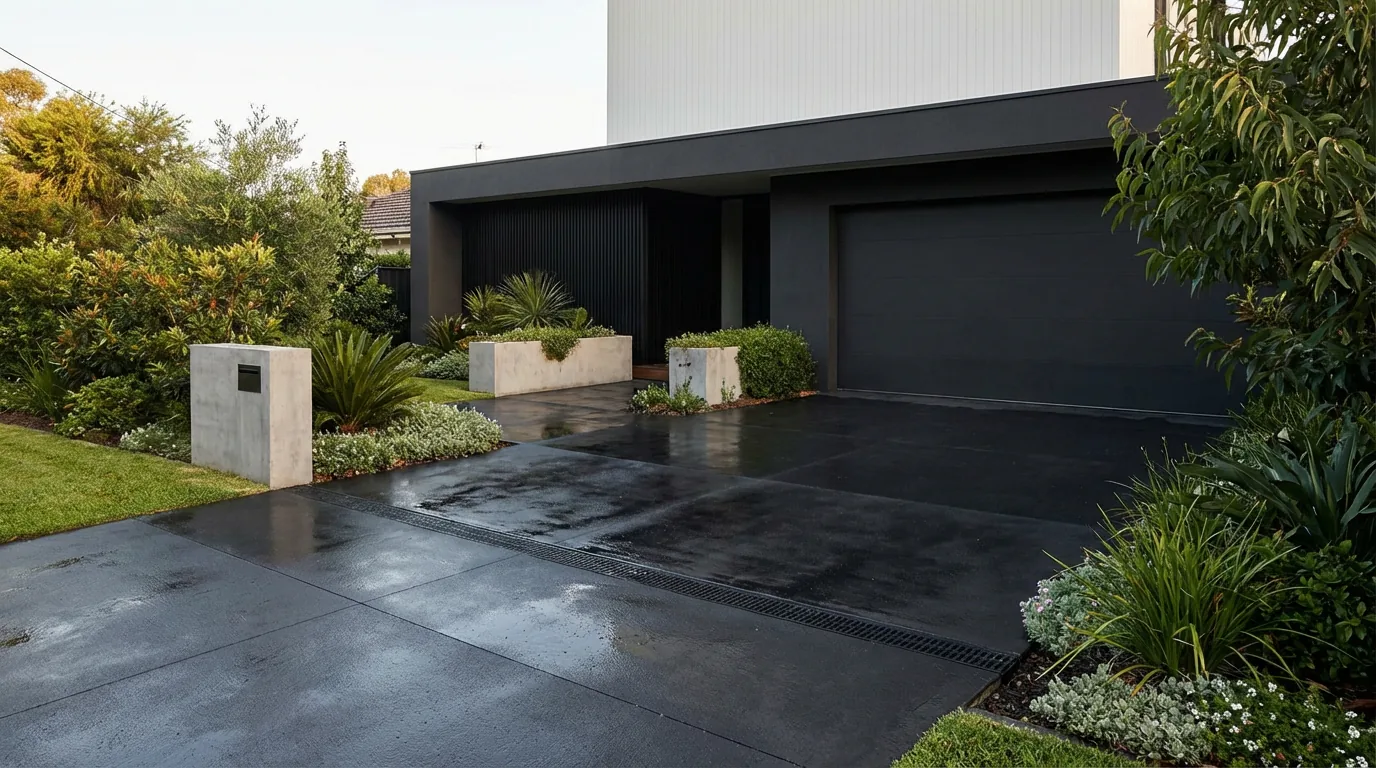
Black/charcoal finishes deliver striking, sophisticated appeal to driveways, forging a bold statement that enhances curb appeal in Melbourne’s northern suburbs. Achieving a deep, lasting charcoal or black colour on concrete surfaces demands more than simply choosing a dark pigment; it requires careful selection of colour tones, sealers, and maintenance strategies tailored to outdoor conditions and local climate stressors. This comprehensive guide unpacks expert tips to preserve vibrancy and durability in black concrete and charcoal coloured concrete driveways that stand the test of time.
Understanding Black and Charcoal Concrete Finishes for Driveways
Defining Black Concrete, Charcoal Coloured Concrete, and Blackened Concrete
Black concrete typically involves integrating dark pigments to achieve a rich, nearly opaque black hue. This finish can be produced by mineral oxide pigments or blackened additives that penetrate the concrete mix or topcoat. In contrast, charcoal coloured concrete presents a softer, muted dark grey tone, reflective of subtle mixtures of black and grey pigments. Blackened concrete often refers to surfaces that have undergone additional treatments—such as charcoal staining or black oxide washes—to intensify surface darkness and texture.
Each variant offers different aesthetic and functional benefits, with charcoal blends often preferred for their ability to mask dirt and minor surface wear better than pure black counterparts, which can sometimes highlight imperfections.
Key Characteristics of Dark Concrete in Outdoor Settings
Dark concretes, including black and charcoal finishes, display unique characteristics outdoors:
- Heat absorption: Dark surfaces absorb more solar radiation, potentially leading to higher surface temperatures that can accelerate pigment breakdown if unprotected.
- Visibility of wear: Darker tones tend to make surface wear, such as scratches or fading patches, more conspicuous.
- Maintenance requirements: These finishes demand careful sealing and upkeep to prevent chalking, fading, and staining.
Due to these factors, understanding the specific properties of black and charcoal concretes informs better installation and care that enhance longevity.
Colour Stability Challenges Specific to Black/Charcoal Concrete
The most significant challenge for black and charcoal coloured concretes is colour fading, primarily driven by:
- UV degradation: Melbourne’s strong sun exposure accelerates pigment breakdown, leading to surface lightening or chalking.
- Alkali-silica reactions: Intrinsic concrete chemistry can cause microchemical changes that affect pigmentation.
- Surface wear: Mechanical abrasion exposes lighter aggregate or underlying material, dulling the dark finish.
- Environmental staining: Moisture, organic matter, and pollutants can leave marks more visible on dark surfaces.
Mitigating these issues relies heavily on choosing the right colour tone and protective sealers coupled with appropriate cleaning practices.
With this foundation, we move into expert strategies for selecting durable black and charcoal shades designed for Melbourne’s northern suburban climate.
Selecting The Ideal Charcoal or Black Concrete Colour Tone
Factors Influencing Colour Choice for Durability and Fading Resistance
Choosing the optimal dark concrete colour extends beyond visual preference. Crucial factors influencing durability and fade resistance include:
- Pigment type and concentration: Mineral oxide pigments offer excellent UV stability, but higher pigment loading increases cost and can impact concrete workability.
- Shade depth: Extremely black finishes (true black) are more susceptible to heat accumulation and UV fading compared to softer charcoal tones, which reflect slightly more light.
- Surface texture: Matte or lightly textured surfaces retain sealers better than highly polished ones, enhancing colour retention.
- Mix homogeneity: Uniform pigment dispersion avoids patchy fading and uneven colour.
Considering these factors balances aesthetics with practical fade resistance, integral for lasting driveways.
Comparing Colour Depth: Charcoal vs True Black Concrete Shades
| Feature | Charcoal Concrete | True Black Concrete |
|---|---|---|
| Colour Tone | Deep grey-black with muted softness | Intense, nearly absolute black |
| Heat Absorption | Moderate, reflects some light | High, absorbs more solar heat |
| Fade Resistance | Better, less obvious fading | More prone to visible fading and chalking |
| Visual Hardness | Less stark, hides wear better | Very bold but highlights imperfections |
| Maintenance | Easier upkeep, requires less frequent sealing | Needs diligent maintenance and resealing |
Many Melbourne homeowners opt for charcoal coloured concrete for its pragmatic balance of longevity and aesthetics, though true black concrete still holds appeal for statement installations with superior protection.
Choosing Complementary Charcoal Pavers 400 x 400 — Aesthetic and Practical Aspects
Integrating charcoal pavers 400 x 400 with black or charcoal concrete extends durability and visual cohesion across the driveway. Benefits include:
- Consistent colour flow: Matching pavers create a seamless palette that accentuates the driveway’s dark theme, enhancing property curb appeal.
- Improved traction: Textured pavers reduce slip risks, important during wet Melbourne winters.
- Modular repair: Pavers can be replaced individually, extending overall driveway lifespan.
- Drainage aid: Well-laid paving facilitates water runoff and limits pooling, mitigating staining and wear.
For design inspiration and a broader perspective,
best coloured concrete options for Melbourne offer expanded colour choices beyond charcoal and black finishes.
With a curated colour choice, the next critical step is evaluating sealers that lock in the dark pigments for years to come.
Evaluating Sealers for Longevity of Black/Charcoal Concrete Finishes
Differences Between Charcoal Concrete Sealer and Black Concrete Sealer
While often used interchangeably, charcoal concrete sealer and black concrete sealer formulations can differ based on pigment loading and resin compatibility:
- Charcoal concrete sealers usually contain semi-transparent tints optimized for medium-dark tones, enhancing charcoal surfaces without oversaturation.
- Black concrete sealers have higher tint concentrations or may include black pigments, designed to deepen black finishes maximally.
Choosing the correct sealer aligns with the existing colour shade to prevent unintended hue shifts or dulling.
Sealer Properties Critical for UV Protection and Colour Retention
Key sealer characteristics impacting protective performance include:
- UV blockers: Essential for absorbing or deflecting UV rays that degrade pigment molecules. Look for sealers with embedded nanoparticles or UV stabilizers.
- Breathability: Allows moisture vapour to escape, preventing blistering or peeling under Melbourne’s variable climate.
- Durability: Resistance to abrasion and weathering maintains the sealing film’s integrity over multiple driving cycles.
- Eco-friendly/Low-VOC: Sealers compliant with environmental standards reduce harmful emissions without sacrificing efficacy.
Application Techniques and Best Practices for Dark Concrete Sealers
Proper sealer application is vital for achieving optimal protection and appearance:
- Surface Preparation: Clean thoroughly to remove dirt, stains, and previous sealer residues. A neutral pH cleaner is recommended to avoid pigment damage.
- Test Area: Always trial the sealer on a small patch to confirm colour results and adhesion.
- Uniform Application: Use low-pressure sprayers or rollers for consistent coat thickness. Avoid pooling or heavy spots.
- Layering: Applying multiple thin coats generally outperforms a single heavy coat in durability.
- Drying Times: Allow sufficient curing per product guidelines, typically 24–48 hours before light use.
- Maintenance Resealing: Plan resealing every 2–3 years, adjusted to wear patterns and UV exposure.
For deeper insights into colour application methods influencing sealer choice,
concrete paint vs dye vs integral colour.
Installation following these protective measures is crucial to preserving dark concrete’s integrity.
Installation and Construction Techniques for Durable Charcoal Driveways
Concrete Mixing and Pouring Considerations for Dark Finishes
Maintaining pigment integrity begins during concrete mixing:
- Consistent Pigment Distribution: Add mineral oxide pigments slowly and mix thoroughly to prevent colour streaks.
- Optimized Slump: Maintain workable slump (100-150mm) to avoid segregation of pigments and aggregates.
- Aggregate Selection: Use fine aggregates with low reflective properties to enhance colour depth.
- Admixtures: Employ plasticizers to maintain workability without adding excess water, which can dilute pigments.
Surface Preparation for Optimal Sealer Adhesion
Before sealing, preparation must include:
- Surface Profiling: Light mechanical abrasion or acid etching to produce a slightly rough texture improves sealer bonding.
- Degreasing: Remove oils and contaminants that impede sealer penetration.
- Moisture Check: Verify substrate dryness; excess moisture reduces sealer effectiveness and adhesion.
Recommended Driveway Construction Practices for Melbourne’s Climate
Given Melbourne’s climate — strong UVI averaging 6-7 in summer (Bureau of Meteorology, 2023), moderate rainfall, and temperature fluctuations — best practices include:
- Proper Concrete Curing: Use curing compounds or water curing for at least seven days to minimise cracking and enhance pigment fixation.
- Thermal Control: Schedule pours during cooler periods and incorporate thermal blankets if needed to avoid thermal stress.
- Drainage Planning: Design sufficient slope and drainage channels to prevent water pooling and potential pigment washout.
- Expansion Joints: Install joints to accommodate thermal expansion and contraction, reducing surface damage.
Further details on local installation strategies are available in our extensive guide to
coloured concrete driveway options in Melbourne.
Maintenance, Cleaning, and Restoration Tips for Dark Concrete Surfaces
Routine Cleaning Approaches That Preserve Dark Concrete Colour
- Gentle Cleaning Agents: Use pH-neutral detergents or specially formulated concrete cleaners that do not strip sealers or fade pigments.
- Regular Sweeping and Washing: Remove abrasive dirt and organic debris frequently, especially following Melbourne’s rainy spells.
- Avoid Harsh Chemicals: Steer clear of acidic or alkaline products like bleach and muriatic acid.
- Pressure Washing: Use low-pressure settings (<1500 psi) to avoid surface etching and sealer damage.
Reapplying Sealers: Timing, Methods, and Product Recommendations
Keep dark concrete vibrant by:
- Monitoring Wear Early: Schedule inspections annually, focusing on glossy finish loss or water absorption increase.
- Reapplication Interval: Typically every 2-3 years, but in high-traffic or exposed areas, yearly touch-ups may be beneficial.
- Recommended Sealers: Use same-brand charcoal or black concrete sealers to ensure chemical compatibility and consistent colour.
- Preparation: Follow the same cleaning and surface prep steps as initial application to optimize adhesion.
For those considering alternative colour application methods, understanding concrete paint vs dye vs integral colour techniques can help optimise maintenance schedules and colour retention.
Addressing Common Issues: Fading, Staining, and Surface Wear
Proactive remedies include:
- Early Fading: Spot-treat with specialised stain removers and reseal the area promptly.
- Stains: Remove oil or organic stains immediately with appropriate degreasers to prevent permanent discolouration.
- Surface Cracks: Repair small cracks using dark tinted fillers to maintain seamless appearance.
- Chalking: Use mild abrasive techniques followed by resealing to restore depth.
For additional strategies involving colour retention and maintenance schedules, see our note on concrete paint vs dye vs integral colour methods.
Design Inspirations and Integrating Charcoal Paving in Driveway Layouts
Using Charcoal Pavers 400 x 400 for Visual Harmony and Functionality
Modular charcoal pavers 400 x 400 provide design versatility:
- Pattern Flexibility: Arrange in grids, herringbone, or staggered patterns to add texture and interest.
- Visual Adaptability: Complement charcoal or black concrete expanses by breaking monotony and easing transitions to landscaping.
- Load Management: Ideal for distributing vehicle loads and accommodating ground movement without cracking.
Pairing Dark Concrete with Landscape and Architectural Elements
Dark concrete driveways pair elegantly with:
- Light foliage and grasses: Eucalyptus or silver-leaf plants provide striking contrast.
- Stone accents: Light sandstone or bluestone edging highlights charcoal tones.
- Metal fixtures: Matte black or gunmetal lighting and house numbers unify the palette.
Case Studies: Successful Black/Charcoal Driveway Projects in Melbourne
Recent installations in northern Melbourne suburbs showcase:
- Use of charcoal coloured concrete enhanced with tone-matched charcoal concrete sealers maintaining colour vibrancy over 5+ years.
- Integration of charcoal pavers 400 x 400 to create functional yet aesthetically unified driveway borders.
- Adaptive sealing schedules tailored around Melbourne’s UV exposure peaks and seasonal rainfall.
For additional inspiration on broader concrete finish techniques,
best concrete finishes for modern Melbourne homes.
Frequently Asked Questions and Troubleshooting for Black and Charcoal Concrete Finishes
How to Identify the Best Sealer for Different Dark Concrete Types?
Select sealers by matching sealer tint concentration to the existing concrete hue and ensuring product specifications include UV blockers, breathability, and abrasion resistance appropriate for Melbourne’s environment.
What Are Signs of Sealer Failure and How to Fix Them?
Look for peeling, dulling, water absorption increase, or chalky residue buildup. Remedy involves cleaning the surface, light sanding, and applying a fresh sealer coat—start with spot tests to ensure compatibility.
How Climate Impacts Dark Concrete and Protective Measures?
Melbourne’s high UV index and varied weather cycles accelerate pigment degradation and surface wear. Preventative measures include using UV-resistant sealers, ensuring proper drainage, and scheduling routine maintenance and resealing every 2-3 years.
With these answers and comprehensive guidance, you’re equipped to create a compelling black or charcoal concrete driveway that combines stunning aesthetics with long-term durability.
By blending expert colour selection, sealer evaluation, and disciplined maintenance tailored for Melbourne’s northern suburbs, your charcoal or black concrete driveway will preserve its rich, deep tones for years. Ready to begin your project? Contact local specialists to discuss customised colour options and sealing plans that fit your home’s unique style and climatic demands.
Frequently Asked Questions
What is the difference between charcoal coloured concrete and blackened concrete?
Charcoal coloured concrete features a muted dark grey tone from mixed black and grey pigments, while blackened concrete refers to surfaces treated with additional charcoal staining or black oxide washes to deepen colour and texture.
How do charcoal pavers 400 x 400 enhance a dark concrete driveway?
Charcoal pavers 400 x 400 provide modular design flexibility, improve traction, ease repairs by replacing individual pavers, and help manage water drainage, enhancing both the durability and aesthetics of a dark concrete driveway.
Which factors should homeowners consider when choosing between true black and charcoal concrete finishes?
Homeowners should weigh heat absorption, fade resistance, maintenance frequency, and visual hardness; charcoal finishes reflect more light and resist fading better, whereas true black offers bolder aesthetics but requires more diligent upkeep.
When is the best time to apply sealers on black or charcoal concrete surfaces?
Sealers should be applied after thorough surface preparation on dry, clean concrete, ideally in mild weather to allow proper curing over 24 to 48 hours, with resealing recommended every 2 to 3 years based on wear and exposure.
Can black concrete sealers and charcoal concrete sealers be used interchangeably?
While similar, black concrete sealers have stronger pigments for deeper black tones, and charcoal concrete sealers are semi-transparent tints suited for medium-dark shades; using sealers matched to the existing colour ensures colour accuracy and prevents dulling.
Why is UV protection important for black and charcoal concrete finishes?
UV protection prevents pigment breakdown caused by sun exposure, reducing colour fading, chalking, and surface deterioration, thus preserving the deep tones and durability of black and charcoal concrete finishes.
How does Melbourne’s climate affect the maintenance of dark concrete driveways?
Melbourne’s strong UV exposure and seasonal wet weather accelerate wear and pigment fading in dark concrete, making regular sealing, proper drainage, and gentle cleaning essential to maintain colour vibrancy and surface integrity.
What preparation steps improve sealer adhesion on charcoal or black concrete surfaces?
Effective preparation includes cleaning contaminants, ensuring the surface is dry, performing light abrasion or acid etching to create a rough texture, and degreasing to enhance sealer bonding and long-term protection.