
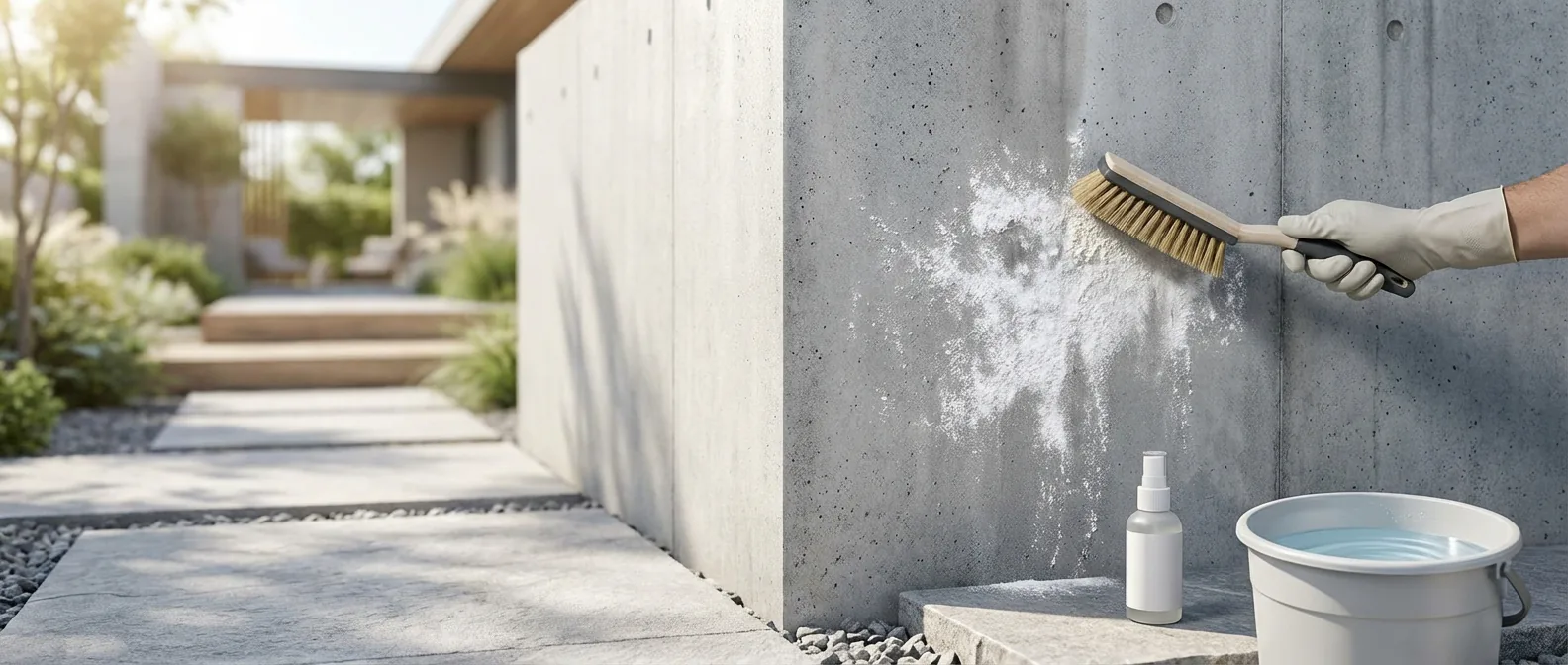
Concrete efflorescence is a common yet stubborn problem that mars the appearance and durability of concrete surfaces in Melbourne’s Northern Suburbs. This article unveils precisely how to safely perform an efflorescence fix using chemical treatments like hydrochloric and muriatic acid, while prioritising safety and environmental responsibility.
Whether a homeowner, builder, or maintenance professional, you’ll discover detailed identification techniques, step-by-step chemical cleaning protocols, eco-friendly alternatives, and crucial prevention strategies. Read on to master practical, safe efflorescence removal solutions that protect your concrete investment long-term.
Understanding Concrete Efflorescence: Causes and Identification
What is Efflorescence and Why Does it Appear on Concrete?
Efflorescence manifests as a white, powdery deposit of salt crystals on concrete surfaces. It occurs when water-soluble salts migrate through the porous concrete matrix to the surface, where the water evaporates, leaving crystallised salts behind. This crystallisation process creates what is often described as a salt bloom or white powder on concrete.
Concrete efflorescence results primarily from the presence of dissolved salts within the substrate or environment and the movement of moisture vapor transporting these salts outwards. Common salts involved include calcium carbonate and sodium sulfate.
Common Signs of Concrete Efflorescence
The telltale sign is the appearance of white or greyish powdery deposits on walls, driveways, or patios. At early stages, efflorescence looks like salt dust; over time, it may crystallise into flaky or crusty layers. Unlike stains from dirt or rust, these deposits can often be brushed away relatively easily, though sometimes they bind tightly to the surface.
Role of Moisture Migration in Efflorescence Formation
Moisture migration within concrete is the driving force behind efflorescence. Water moves from wetter areas inside or beneath the concrete to drier external surfaces via capillary action and vapor diffusion. This moisture carries soluble salts, which concentrate as the water evaporates. Without moisture movement, no efflorescence forms.
This continuous inward and outward moisture pathway means places with poor drainage, groundwater intrusion, or high humidity are prone to persistent efflorescence challenges.
Differentiating Efflorescence from Other Concrete Surface Stains and Damage
Not all white deposits are efflorescence. Other surface stains may include:
- Concrete spalling or surface flaking caused by freeze-thaw cycles or mechanical stresses
- Mold or mildew that appears as dark or greenish patches
- Rust stains from embedded metals
Efflorescence typically has a chalky, powdery texture and can often be distinguished by lightly scraping or brushing which removes the deposit, unlike deeper deterioration.
Understanding these causes and signs sets the foundation for an effective efflorescence fix. To learn more about how surface conditions relate to appearance and durability, explore best coloured concrete options for durability and appearance.
Preparing for Efflorescence Fix: Safety and Surface Preparation
Essential Safety Equipment for Handling Efflorescence Cleaner and Acids
Handling acids and chemical efflorescence removers demands strict safety precautions:
- Protective gloves: Use acid-resistant gloves such as neoprene or nitrile to prevent skin burns.
- Safety goggles or face shield: Protect eyes from splashes during mixing and application.
- Respiratory mask: Use masks rated for chemical vapors to avoid inhaling fumes, especially when using acids like hydrochloric acid.
- Protective clothing: Wear long sleeves and acid-resistant aprons to protect skin.
- Ventilation: Ensure the working area is well ventilated or conduct cleaning outdoors.
Refer to OSHA’s chemical safety guidelines for detailed personal protective equipment standards applicable to acid use.
Surface Cleaning and Preparation Before Applying Chemicals
A proper surface preparation maximises cleaning effectiveness:
- Remove loose debris: Sweeping or vacuuming dust and dirt yields cleaner acid contact.
- Pre-wash surface: Lightly rinse concrete with water or mild detergent to eliminate oils and grease that hinder chemical action.
- Dry surface partially: A damp but not waterlogged surface promotes even acid absorption.
- Test patch: Always perform a small inconspicuous patch test with the efflo remover to check for discoloration or adverse reactions.
Environmental Considerations and Containment Measures
Contain acid run-off to protect nearby vegetation, storm drains, and soil. Use plastic sheeting, barriers, or absorbents around the work area. Always dispose of acid solutions following local regulations to minimise environmental impact.
Before applying chemicals, inspect concrete for deep cracks or spalling, which may need attention first. For professional repair guidance, see our article on professional methods to fix concrete cracks and spalling.
Step-by-Step Guide to Using Chemical Efflorescence Removers
Overview of Efflorescence Remover Types: Efflo Remover vs. Other Cleaners
Efflorescence removers vary in formulation:
- Acid-based removers: Typically muriatic acid or hydrochloric acid diluted for safety, highly effective for stubborn salts.
- Non-acidic removers: Safer but usually slower acting and less potent on heavy deposits.
- Commercial Efflo Remover products: Often blend acids with detergents and surfactants for balanced cleaning.
Choosing the right product hinges on the severity of the efflorescence and sensitivity of the concrete surface.
Safely Using Hydrochloric Acid and Muriatic Acid on Concrete
Follow these critical safety steps when using hydrochloric acid or muriatic acid:
- Dilution: Always dilute the acid to 5%-10% concentration. For example, mix one part acid to 10-20 parts water. Never pour water into acid; always add acid to water slowly.
- Application: Use a plastic or acid-resistant brush or sprayer to apply evenly. Work in small sections to control treatment.
- Dwell time: Allow acid to react for 3-5 minutes but do not let it dry out.
- Rinsing: Flush treated areas thoroughly with plenty of clean water immediately after dwell time.
- Neutralization: After rinsing, apply a neutralizing agent such as a baking soda solution (1 cup baking soda per gallon of water) to balance pH and prevent acid residue.
Refer to OSHA publications for proper handling and protective gear recommendations during acid use.
How to Apply and Neutralize Concrete Cleaning Acid
- Dilute acid outdoors or in a well-ventilated area.
- Wet concrete surface slightly before acid application.
- Apply acid solution uniformly with a brush or garden sprayer.
- Scrub lightly with a nylon brush if necessary.
- Rinse immediately and thoroughly with a hose or pressure washer, avoiding runoff.
- Spray or mop neutralizing baking soda solution to halt acid action.
- Rinse neutralizer off thoroughly with fresh water.
- Allow concrete to dry completely before inspection.
Post-Cleaning Procedures and Rinsing Techniques
After neutralization, inspect the surface for remaining efflorescence or acid damage. Repeat treatment if necessary, but never exceed two acid applications to avoid etching or surface weakening. Use low-pressure water washing, as high-pressure blasting can damage concrete.
Dispose of rinse water in accordance with local environmental protection laws.
Alternative and Eco-Friendly Efflorescence Cleaning Methods
Non-Acidic Chemical Cleaners and Their Effectiveness
Several non-acidic efflorescence cleaners use chelating agents and mild surfactants to dissolve salts without harsh acids. These are safer for the environment and easier for DIY users, although they may require longer application times and multiple treatments for heavy efflorescence.
Mechanical Methods: Scrubbing and Pressure Washing
Physical removal through scrubbing with stiff brushes or low-pressure washing can effectively remove light deposits. These methods avoid chemicals but may wear the surface if too aggressive.
Using Baking Soda and Other Neutralizers for Cleaning
Baking soda can also act as a gentle abrasive and neutralizer when mixed with water. In some cases, a baking soda paste applied and scrubbed on efflorescence helps lift deposits non-destructively.
Comparing Safety and Environmental Impact of Alternatives
| Method | Effectiveness | Safety | Environmental Impact |
|---|---|---|---|
| Acid-Based Cleaners (Hydrochloric/Muriatic Acid) | High; rapid removal of crystallised salts | Low; requires PPE, risk of burns and fumes | Moderate; needs careful disposal to avoid pollution |
| Non-Acidic Chemical Cleaners | Moderate; safer but slower acting | High; fewer health hazards | Low; biodegradable options available |
| Mechanical Cleaning (Scrubbing, Pressure Washing) | Good for light deposits | High if used carefully | Low; no chemicals used |
| Baking Soda and Natural Neutralizers | Low to moderate for stubborn deposits | Very high; mild on skin and surfaces | Very low; environmentally benign |
Preventing Recurrence: Long-Term Efflorescence Management
Understanding Concrete Sealing and Its Role Against Efflorescence
Applying concrete sealers helps block moisture penetration and thus the transport of salts. Properly selected sealants can maintain breathability while repelling liquid water, greatly reducing efflorescence risks.
When considering surface treatments, homeowners should also explore coloured concrete driveway options in Melbourne, balancing aesthetics, durability, and moisture resistance.
Controlling Moisture Migration Through Drainage and Vapor Barriers
Effective moisture management under and around concrete is critical. Implement measures such as:
- Installing vapor barriers beneath slabs during construction
- Improving site drainage to divert water away
- Considering concrete leveling and jack pumping for moisture control as needed (concrete leveling and jack pumping for moisture control)
Regular Maintenance Practices to Minimize Efflorescence Fix Needs
Routine cleaning, timely sealing reapplication, and inspection for cracks or water ingress prevent efflorescence recurrence. Incorporate seasonal checks especially in wet months common to Melbourne’s Northern Suburbs.
Handling and Disposal of Chemicals Used in Concrete Efflorescence Cleaning
Safe Storage Practices for Hydrochloric and Muriatic Acid
Store acids in sealed, labelled containers away from sunlight and incompatible materials such as alkalis or organic matter. Place liquids in secondary containment trays to catch leaks. Always store in a cool, ventilated area inaccessible to children or pets.
Neutralization Before Disposal: Best Practices
Neutralize leftover acid solutions with baking soda or lime until fizzing stops and pH reaches near-neutral (pH 6-8). This neutralized liquid can often be safely disposed of onto soil or sanitary sewers per local regulations.
Local Regulations and Environmental Compliance for Chemical Disposal
Adhere strictly to municipal and state environmental agency rules. The EPA hazardous waste guidelines specify how to manage hazardous chemical wastes, including requirements for transport, reporting, and disposal.
Frequently Asked Questions on Efflorescence Fix
Can Efflorescence Damage Concrete?
Efflorescence itself does not structurally weaken concrete but signals moisture movement, which can cause long-term issues like freeze-thaw damage or corrosion of embedded metals if left unaddressed.
How Often Should Efflorescence Cleaning Be Done?
The frequency depends on moisture conditions and concrete use. In Melbourne’s Northern Suburbs, inspect and clean annually or bi-annually, especially after wet seasons.
What Are Common Mistakes When Using Acid Cleaners?
- Using undiluted or overly concentrated acid leading to surface etching
- Applying acid on hot or dry surfaces causing uneven cleaning
- Insufficient rinsing and neutralization causing ongoing corrosion
- Neglecting personal protective equipment and safety protocols
Can Sealing Concrete Completely Prevent Efflorescence?
No sealant can guarantee a 100% efflorescence-proof surface, but quality sealing reduces moisture ingress substantially. Combined with effective moisture control and maintenance, sealing is a critical prevention component.
For further repair considerations beyond surface cleaning, review our expert content on professional methods to fix concrete cracks and spalling.
In conclusion, mastering the safe removal of concrete efflorescence starts with understanding its causes and careful preparation. Applying diluted acids like hydrochloric or muriatic acid with appropriate safety gear, followed by thorough rinsing and neutralization, delivers effective results. For environmentally conscious homeowners, non-acidic alternatives and mechanical methods offer safer but sometimes slower solutions. Long-term moisture control through sealing, drainage, and maintenance remains essential to prevent recurrence.
Take the first step to restore and protect your concrete surfaces today—equip yourself with proper safety, be methodical in application, and safeguard your investment against recurring efflorescence.
Frequently Asked Questions
What causes efflorescence on concrete surfaces?
Efflorescence on concrete is caused by water-soluble salts migrating through porous concrete. When moisture evaporates at the surface, salts crystallize and deposit as white, powdery residue, often due to moisture intrusion or poor drainage.
How does using muriatic acid compare to non-acidic removers for efflorescence?
Muriatic acid works quickly and effectively on heavy efflorescence but poses health and environmental risks. Non-acidic removers are safer and eco-friendlier but act slower and may require repeated treatments for stubborn deposits.
Which safety precautions are most important when applying hydrochloric acid to concrete?
Key safety precautions include wearing acid-resistant gloves, goggles, respirators, and protective clothing, working in a well-ventilated area, and always adding acid to water slowly to prevent splashes and fumes.
When is it necessary to neutralize acid after cleaning concrete efflorescence?
Neutralizing acid is essential immediately after rinsing off hydrochloric or muriatic acid to stop corrosive reactions and prevent surface damage, typically using baking soda or lime solutions until pH is near neutral.
Can baking soda effectively remove efflorescence compared to commercial cleaners?
Baking soda is a mild abrasive and neutralizer that can lift light efflorescence safely, but commercial cleaners, especially acid-based ones, provide faster and stronger removal for heavy or crystallized deposits.
How do moisture barriers help in preventing concrete efflorescence?
Moisture barriers block water intrusion under concrete slabs, reducing salt migration through concrete pores. This limits moisture-driven salt crystallization, cutting efflorescence formation at its source.
Is it safe to use pressure washing alone for efflorescence removal?
Pressure washing can remove light efflorescence deposits when applied at low pressure, but it is often insufficient alone for heavy buildup and risks surface damage if high pressure or harsh tools are used.
What is the difference between hydrochloric acid and muriatic acid used in efflorescence cleaning?
Muriatic acid is a commercial-grade, diluted form of hydrochloric acid, commonly used for concrete cleaning. Though chemically similar, muriatic acid may contain impurities and is less pure than lab-grade hydrochloric acid.